
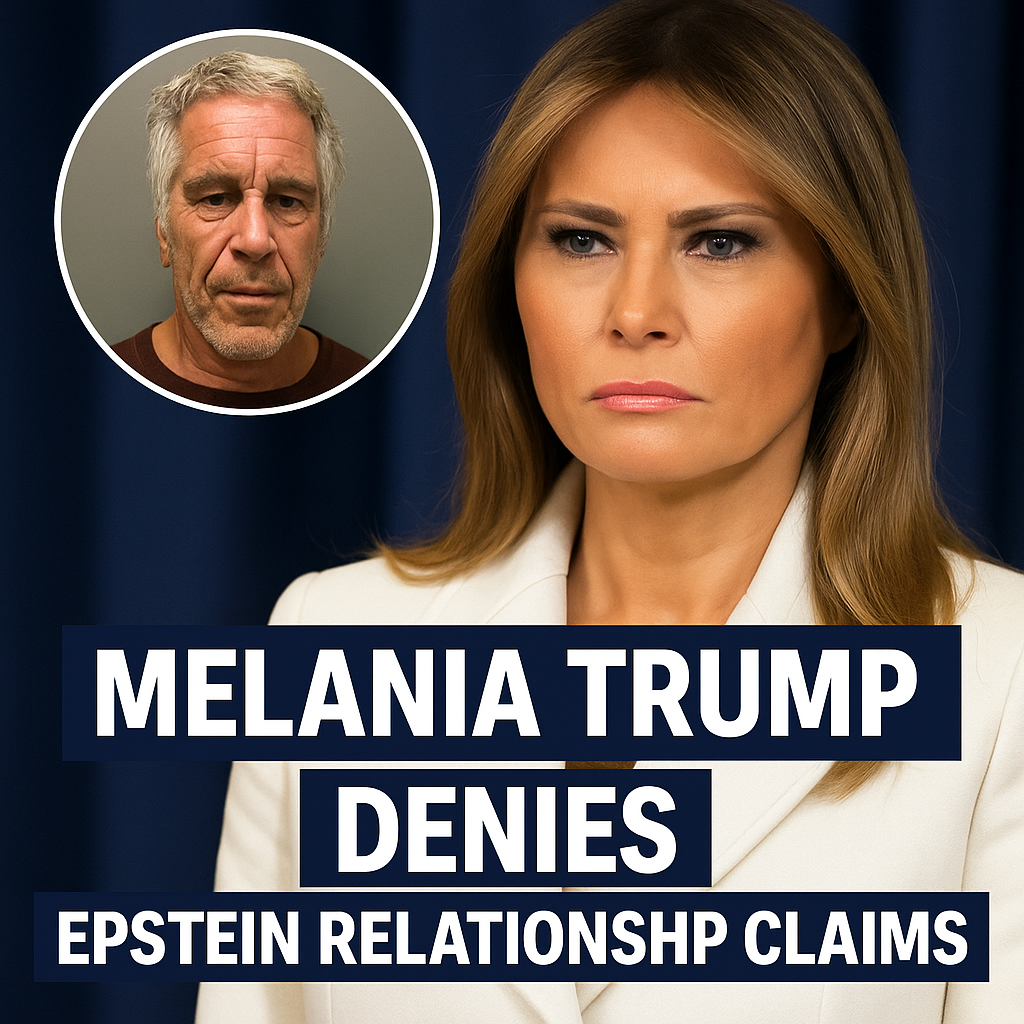
Melania Trump Denies Epstein Relationship Claims

Melania Trump Denies Epstein Relationship Claims
In a recent wave of media scrutiny, Melania Trump has firmly denied any relationship with the late financier Jeffrey Epstein, a figure notorious for his ties to various high-profile individuals and his serious legal controversies. The former First Lady’s strong rebuttal of these claims reflects the complexities surrounding public perceptions and personal connections associated with Epstein’s legacy.

Understanding the Allegations
The allegations surrounding Melania Trump involve claims of social interactions with Epstein during the 1990s and early 2000s. This time period coincides with Epstein’s rising prominence among the elite in various social circles, which included celebrities and politicians. However, Melania Trump, through a statement issued via her representatives, labeled these allegations as “false” and “ridiculous.” In her response, she emphasized that she had never been involved with Epstein, nor had she associated with him beyond mere social settings.


While Melania Trump has categorically rejected the allegations, some commentators have pointed out the broader implications of such claims in today’s media environment. For many, the mere association with Epstein can instigate intense public interest and speculation, often detached from substantive evidence. These dynamics raise questions about how public figures navigate their reputations amid swirling rumors connected to controversial individuals.


The Media Landscape
The coverage of Melania Trump’s denial has not been uniform across all news platforms. For instance, Al Jazeera highlighted Trump’s emphatic denial, showcasing a deliberate effort to counter the narrative framing her and Epstein together. On the other hand, other media outlets like RT and Sky News echoed her denial but delved deeper into the implications of Epstein’s relationships with other prominent figures, hinting at a broader context in which these allegations exist.
This disparity in coverage reflects differing editorial choices and audience focus. Some outlets leverage this controversy to explore the societal impacts of Epstein’s connections, while others concentrate solely on the veracity of Melania Trump’s denial.
Public Discourse and Implications
The nuances of public discourse surrounding this case illuminate the evolving attitudes toward accountability and reputational risk in the context of the entertainment and political elite. Melania Trump’s denial serves as a reminder that allegations, especially those tied to infamous figures like Epstein, can linger in public consciousness, regardless of their foundation in fact.
Moreover, the challenge for public figures today is navigating an omnipresent media landscape that thrives on sensationalism. Each denial and statement is scrutinized, leaving no room for ambiguity. The fallout from such allegations can lead to significant reputational damage, regardless of the truth behind them.
In assessing the complexity of these allegations, the absence of evidence linking Melania Trump to any wrongdoing stands out. Critics may argue that association alone can tarnish reputations, but mainstream discourse suggests a need for substantial proof before accepting claims as factual. As the story develops, it remains vital for audiences to approach with critical thinking the tensions between media narratives and personal reputations.
Conclusion: The Impact of Allegations
In conclusion, Melania Trump’s firm denial of any relationship with Jeffrey Epstein invites a broader discussion about how society handles allegations, reputation, and accountability. While Melania’s perspective underscores her commitment to distancing herself from Epstein’s controversial legacy, it also serves as a case study for understanding the intertwining of personal relationships and public perception.
The landscape surrounding Epstein continues to evolve, raising important questions about how allegations are formed, disseminated, and perceived. It is essential for both the media and the public to navigate these discussions thoughtfully, ensuring that claims are grounded in fact and conveyed responsibly. As we continue to process these narratives, the call for a balanced and fair depiction of events becomes increasingly necessary in achieving clarity and understanding in such intricate matters.















