
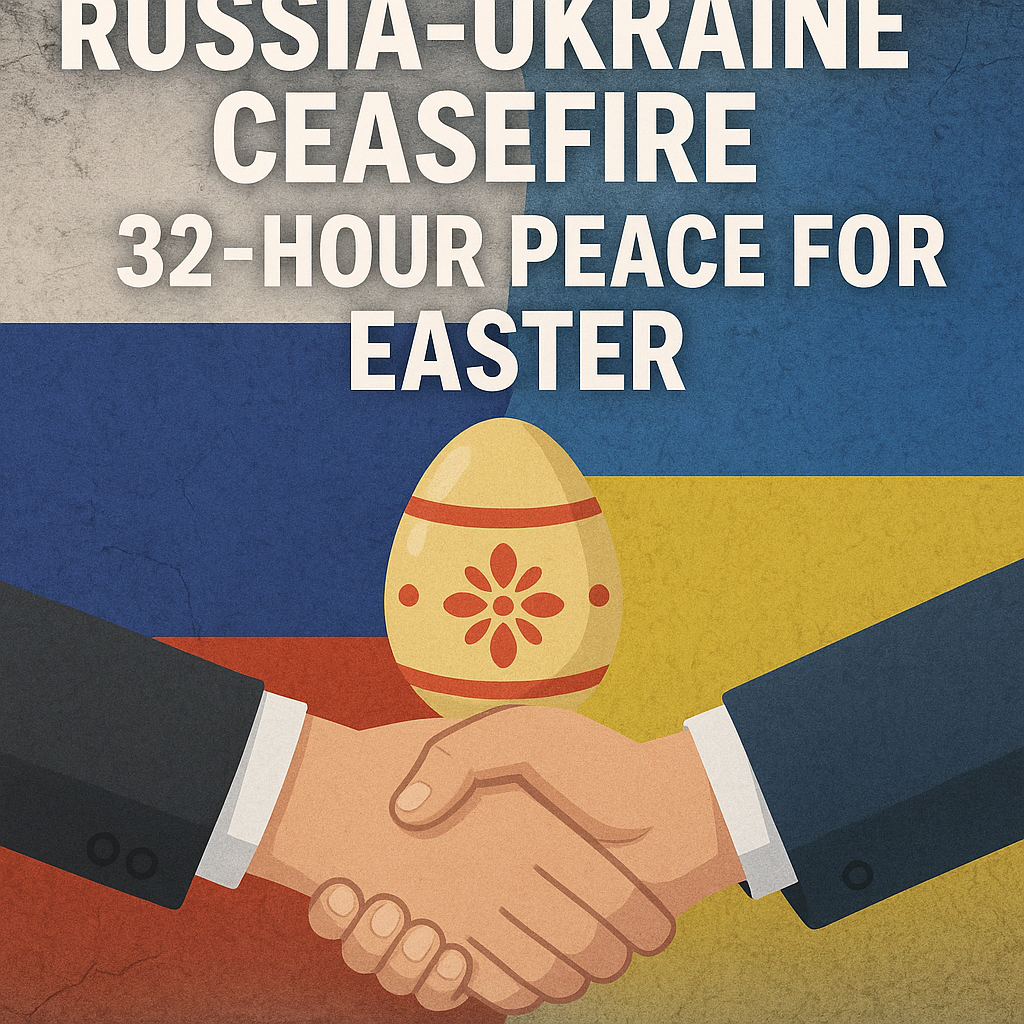
Russia Ukraine Ceasefire: 32-Hour Peace for Easter

A Fragile Hope: The 32-Hour Ceasefire Between Russia and Ukraine
In a bid to bring some semblance of peace during the Orthodox Easter celebrations, Russia and Ukraine agreed to a temporary 32-hour ceasefire. This event comes amidst a backdrop of escalating tensions and relentless fighting, inviting a complex deliberation on both the opportunities and drawbacks of such a fragile truce.

A Glimpse into the Ceasefire Agreement
The ceasefire, as reported by multiple news outlets including Sky News, was meant to facilitate humanitarian efforts and allow civilians to mark the religious holiday with relative peace. Positioned against the backdrop of a protracted conflict that has sacrificed countless lives and displaced millions, even a brief pause in hostilities is a welcome change. The ceasefire agreement became a focal point for many as it aimed to ease the humanitarian toll on war-affected communities.


However, analysts have raised questions regarding the actual effectiveness of the ceasefire. Al Jazeera reported that while both parties expressed intentions to adhere to the truce, the practicality of enforcing it on the ground is fraught with complications. Distrust runs deep, fueled by previous instances where temporary pauses were either ignored or exploited by both sides for tactical advantages.


Conflicting Perspectives on the Ceasefire’s Efficacy
The reports surrounding this ceasefire reveal a divide in sentiment. On one hand, some believe this truce serves as a fleeting yet necessary step toward dialogue and peaceful resolution. Local leaders and international diplomats view this as a chance for critical humanitarian aid to reach those trapped in combat zones. For citizens who have been enduring the ravages of war, any opportunity for relief, however temporary, carries an intrinsic value.
Conversely, many analysts remain skeptical about the potential for a sustainable ceasefire. According to insights from RT News, the short duration raises concerns about its impact on broader negotiations. With Easter being a time of spiritual reflection, apprehensions exist that this ceasefire may ultimately serve as a mere symbolic gesture rather than a stepping stone towards lasting peace.
The Humanitarian Angle: Why This Matters
Despite the skepticism, the humanitarian implications cannot be understated. The temporary ceasefire presents a crucial opportunity for aid organizations to deliver essentials like food, water, and medical supplies to those in desperate need. As noted by various humanitarian agencies, the ongoing conflict has severely impacted infrastructure, making the timely delivery of aid more critical than ever.
This facet of the ceasefire reflects the ongoing conflict’s toll on everyday people. With civilians frequently caught in crossfire or forced to flee their homes, the need for intermittent truces is vital, albeit not a permanent solution. Many communities have expressed hope that this brief pause could pave the way for more extensive conversations aimed at resolving the broader conflict.
The Road Ahead: Moving from Ceasefire to Peace
The 32-hour ceasefire offers a momentary reprieve, but the question remains: What happens next? Historical context suggests that such short-term truces often provide only a glimpse of what could be achieved with a sustained commitment to dialogue and compromise.
Moving forward, both Russia and Ukraine must confront the intricacies of their political realities and the broader geopolitical stakes at play. As the international community continues to advocate for peace talks, the focus should remain on facilitating a longer-term approach rather than relying on temporary measures.
In conclusion, while the 32-hour ceasefire for Orthodox Easter may provide a brief respite for affected civilians, it also underscores the complex, multifaceted nature of the conflict. Embracing this moment with cautious optimism, stakeholders must work toward ensuring that these brief pauses evolve into more meaningful negotiations, potentially leading to durable peace down the line.















