
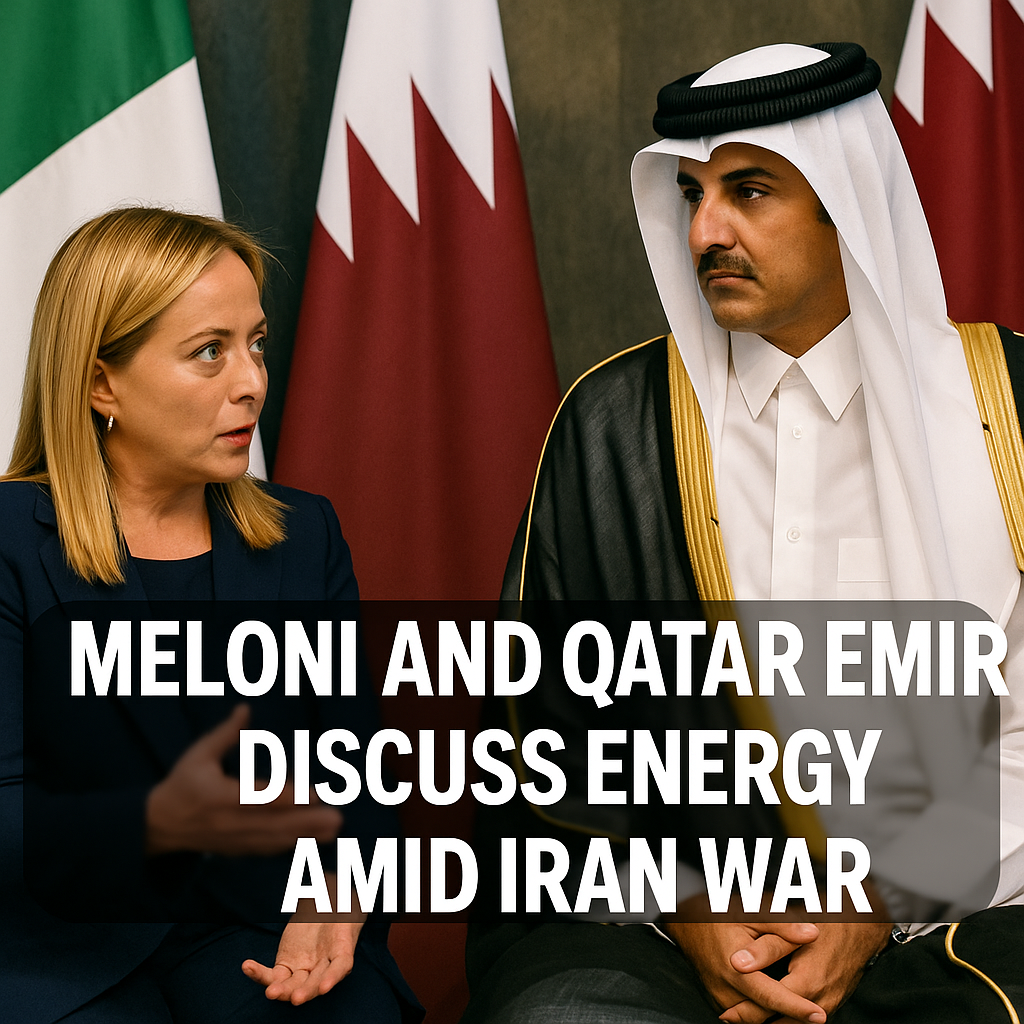
Meloni and Qatar Emir Discuss Energy Amid Iran War

Meloni and Qatar Emir Discuss Energy Amid Iran War
The recent meeting between Italy’s Prime Minister Giorgia Meloni and Qatar’s Emir Sheikh Tamim bin Hamad Al Thani signifies a critical moment in international energy discussions, particularly in the backdrop of ongoing tensions related to the Iran War. This dialogue underscores not only the geopolitics of energy supply but also the broader implications for regional stability.

The Energy Landscape Shaping Relations
The urgency for energy diversification has never been more pronounced, with countries worldwide seeking to reduce their dependency on traditional oil and gas sources. As both European nations and global leaders are re-evaluating their energy strategies, discussions like the one between Meloni and the Qatari Emir are pivotal.


Reports indicate that the focus of their talks revolved around enhancing cooperation in energy supply. Italy, reliant on imports for nearly 90% of its energy needs, is particularly looking towards partnerships with energy-rich nations like Qatar to fortify its energy security. Amidst the complexities introduced by the Iran War, this meeting allowed Italy to strengthen its ties with a key player in the Middle East.


Contrasting Perspectives on Energy Policy
While both leaders emphasized the importance of cooperation, there is a notable divergence in their respective geopolitical positions. On one hand, Qatar views its role as that of a stabilizing energy supplier, keen to bolster its global influence through energy diplomacy. On the other hand, Italy, and by extension the European Union, are navigating a precarious balance of sustaining energy supplies while grappling with the fallout from Iran’s regional ambitions.
Many analysts suggest that Meloni’s government is keen on moving away from reliance on Russia, especially in light of the energy crises borne out of the Ukraine conflict. The Italian Prime Minister’s pivot to Qatar represents a strategic shift towards ensuring diversified energy sources. However, critics of this approach question the long-term sustainability of relying on a Middle Eastern regime, given the historical context of human rights concerns and regional volatility.
Geopolitical Implications and Future Prospects
The ramifications of this summit extend beyond mere energy supply agreements. Heightened discussion on energy can be viewed as part of a broader strategy by European nations to secure their positions in a shifting global order, where power dynamics are under constant flux due to conflicts like the one in Iran.
As energy markets react to geopolitical instability, the coalition formed between Italy and Qatar could serve as a template for other nations seeking to navigate similar challenges. Yet, with Iran’s influence still potent within the region, the complexities of energy negotiations will likely remain fraught with complication.
Additionally, the recent developments in the Iran War reveal a precarious balance of power. Varying opinions within the international community highlight differing strategies toward Iran. Some nations aim to isolate Tehran through sanctions, while others suggest engaging in dialogue. This schism could complicate the energy landscape further, making future agreements susceptible to derailment from shifting political tides.
Conclusion: Navigating a Complex Future
The meeting between Meloni and the Emir may symbolize a fledgling alliance in the energy arena, but it also surfaces a multitude of uncertainties inherent in contemporary geopolitics. The quest for stable energy supplies in the wake of regional conflicts stands as a pressing contemporary challenge that affects not just Italy and Qatar, but the international community at large.
Although immediate benefits may be gleaned from such discussions, the sustainability of these partnerships will depend on the evolving political climate, especially concerning Iran. Engaging with energy-rich countries like Qatar may offer a lifeline for Italy’s energy woes, but long-term strategies must carefully weigh both geopolitical realities and ethical considerations.
As the energy landscapes continue to shift, alliances forged in the present must adapt to the demands of the future. In this turbulent backdrop, Meloni’s engagement with Qatar highlights not only immediate energy interests but also the intricate web of relationships that nations must navigate in an era of uncertainty.















