
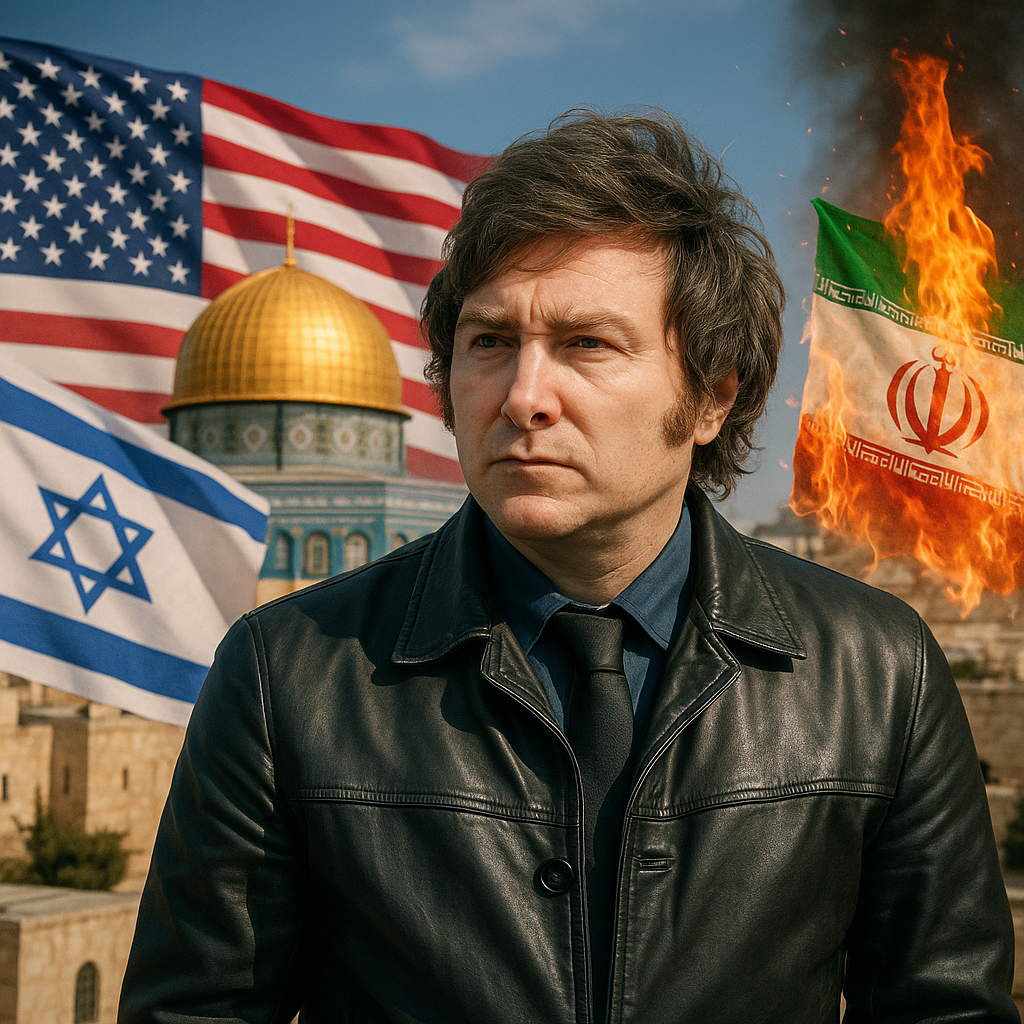
Milei Supports US-Israel Actions Against Iran in Jerusalem

Milei Supports US-Israel Actions Against Iran in Jerusalem: A Complex Geopolitical Landscape
Javier Milei, the newly elected president of Argentina, has expressed his strong support for recent US and Israeli actions against Iran during his visit to Jerusalem. This endorsement reflects not only his administration’s foreign policy ambitions but also the broader geopolitical dynamics in the Middle East. As various nations grapple with Iran’s regional influence, Milei’s stance invites scrutiny, both for its implications for Argentina and its reflection of changing alliances on the global stage.

A Bold Declaration of Support
During his Jerusalem visit, Milei stated, “Iran poses a direct threat to security in the region, and it is essential for free nations to unite against such challenges.” His remarks echo similar sentiments shared by the US and Israeli governments, who have increasingly adopted aggressive postures towards Iran in light of its nuclear ambitions and support for militant groups in the region.


Milei’s administration appears keen to align itself closely with both Washington and Tel Aviv, portraying this partnership as beneficial for enhancing Argentina’s international standing. Notably, the shift in U.S. foreign policy under the Biden administration has emphasized a collaborative approach with allies in countering Iranian influence. The implications of this partnership could be significant, not just for Argentina’s diplomatic relations but also for its economic ties, especially in defense procurement and technology exchange.


Diverse Reactions to Milei’s Embrace of Aggressive Postures
Not everyone shares Milei’s enthusiasm for confronting Iran. Critics have pointed out that such a stance risks embroiling Argentina in international conflicts that have historically led to backlash against nations perceived as foreign puppets. There are concerns that this alignment could alienate potential partners in Latin America and beyond, where sentiments against U.S. interference remain prevalent.
Furthermore, analysts argue that while Iran’s influence in the region is undeniable, a broader dialogue may be more effective than escalating military support for Israel. Countries like Brazil and Mexico have taken more moderate positions, advocating for negotiations rather than confrontations. This divergence indicates a complex landscape where Milei’s position may not resonate uniformly across different political factions within Argentina or the broader Latin American context.
The Broader Strategic Context
Milei’s support for US-Israel actions also brings into focus the evolving geopolitical dynamics in the Middle East. Iran’s involvement in proxy conflicts, its nuclear program, and its support for groups like Hezbollah are pivotal elements that underscore the urgency felt by both the US and Israel. However, this confrontation also raises questions about the potential for conflict escalation.
The contention against Iran is further complicated by competing narratives and interests. For instance, Russia and China have elevated their partnerships with Iran, countering Western influence and presenting Tehran as a key player in a multipolar world. As such, Milei’s endorsement places Argentina within a faction that seeks to reinforce traditional Western alliances at a time when global power dynamics are shifting.
Concerns About Regional Stability
Milei’s ardent support for US and Israeli actions against Iran also highlights the concerns regarding regional stability. Experts warn that aggressive stances may exacerbate tensions and lead to unintended consequences, including potential retaliatory actions from Iran or its allies. The threat of heightened military engagements could destabilize not only the Middle East but also ripple outward, affecting global oil markets and international relations more broadly.
While Milei’s approach may resonate with certain segments of the Argentine electorate, it is essential to consider the ramifications. The aspirations of aligning more closely with Western powers might lead to domestic discontent among those who believe that foreign policy should prioritize neutrality and engagement rather than confrontation.
Conclusion: The Path Ahead for Milei and Argentina
As Javier Milei forges ahead with his support for US-Israel actions against Iran, the path appears fraught with both opportunity and peril. The endorsement signifies a strategic pivot aimed at enhancing Argentina’s role on the global stage, but it raises legitimate concerns regarding its impact on regional stability and domestic politics.
In a world where geopolitical alliances are continually evolving, Milei’s administration must navigate these complexities with a keen understanding of both international pressures and national interests. The coming months will likely reveal whether this bold stance will pay dividends or lead to challenges that complicate not only Argentina’s foreign relations but also its internal cohesion. The question remains: can Milei balance the aspirations of his administration with the realities facing an increasingly polarized global landscape?















