
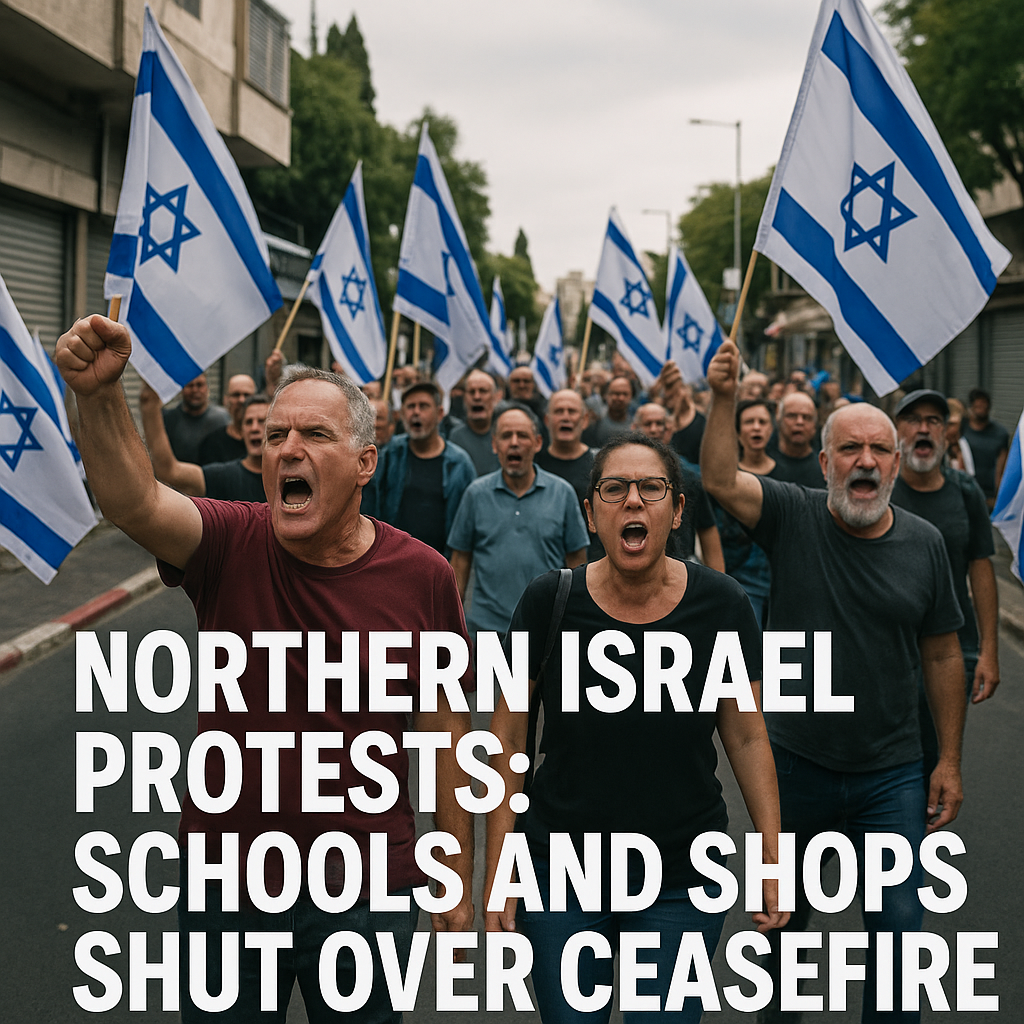
Northern Israel Protests: Schools and Shops Shut Over Ceasefire

Northern Israel Protests: Schools and Shops Shut Over Ceasefire
In a remarkable display of civil dissent, protests in northern Israel have led to a significant disruption, with schools and shops shutting down in response to the ongoing ceasefire developments. The public outcry reflects deep-seated frustrations among local communities affected by the geopolitical turmoil in the region.

Understanding the Context of the Protests
The protests erupted amidst a tense backdrop of regional hostilities, particularly concerning the ceasefire between Israel and militant groups based in Lebanon. The situation in northern Israel is particularly sensitive due to its proximity to conflict zones and the palpable anxiety among residents regarding security and economic stability.


Many citizens expressed their anger over what they perceive as a failure of leadership to protect their interests and safety. Reports indicate that various towns transformed into makeshift protest sites, with demonstrators voicing their demands for a more robust response from the government regarding regional peace and security measures.


Voices of Dissent: Diverse Perspectives
Opinions among residents vary widely, shedding light on the complexity of public sentiment. On one hand, many demonstrators emphasize the urgency for the government to address their grievances regarding national security and economic opportunities. A protester from Haifa articulated a widespread sentiment: “We want to feel safe in our homes, without the constant fear of rocket attacks from across the border.”
Conversely, others argue that protests and shutdowns are counterproductive. Some shop owners expressed concern that their actions might exacerbate existing tensions, as highlighted in a report on RT, where one business owner remarked, “Shutting my shop sends a message, but it also affects my livelihood and the community’s economy.” This sentiment points to a more pragmatic approach among those who believe dialogue and constructive engagement may yield better results than acts of civil disobedience.
The Economic Impact of Protests
The protests have generated significant economic implications for the region. With shops shuttered and schools closed, local businesses and families face daunting challenges, emphasizing the delicate balance between civil rights activities and economic livelihood. Economic analysts suggest that prolonged protests could lead to deeper financial strain in an area already impacted by instability.
Furthermore, educational disruptions might hinder the academic progress of students, as teachers and parents struggle with the uncertainty of returning to normalcy. The community’s concerns regarding education intensify, drawing the attention of educational authorities who are urged to seek solutions that ensure both safety and continued learning opportunities.
Towards a Sustainable Resolution
As protests continue, many are advocating for a long-term solution to the ongoing hostilities affecting daily life in northern Israel. Local leaders have begun to call for more diplomatic engagement and grassroots initiatives aimed at fostering dialogue among different factions.
Though a clear consensus on the best path forward remains elusive, the urgency of the situation cannot be denied. Some activists propose community-building efforts that create platforms for dialogue among various groups to tackle the root causes of conflict. As one activist stated, “True peace comes not just from a ceasefire, but from understanding and cooperation.”
Conclusion: The Path Ahead
The protests in northern Israel underscore the intricate web of emotions, economic realities, and political demands that define this region’s landscape. While the immediate unrest casts a shadow on daily life, it also highlights an enduring will among its residents to seek solutions that ensure both security and prosperity.
In moving forward, it is essential for leaders on all sides to recognize the broader implications of their decisions and actions. Engaging with community voices may provide the necessary momentum towards peace, while continued protests serve as a poignant reminder of the residents’ hopes and frustrations in a complicated geopolitical climate. As the situation evolves, the people of northern Israel remain in a delicate position, seeking clarity in a time of uncertainty.















