
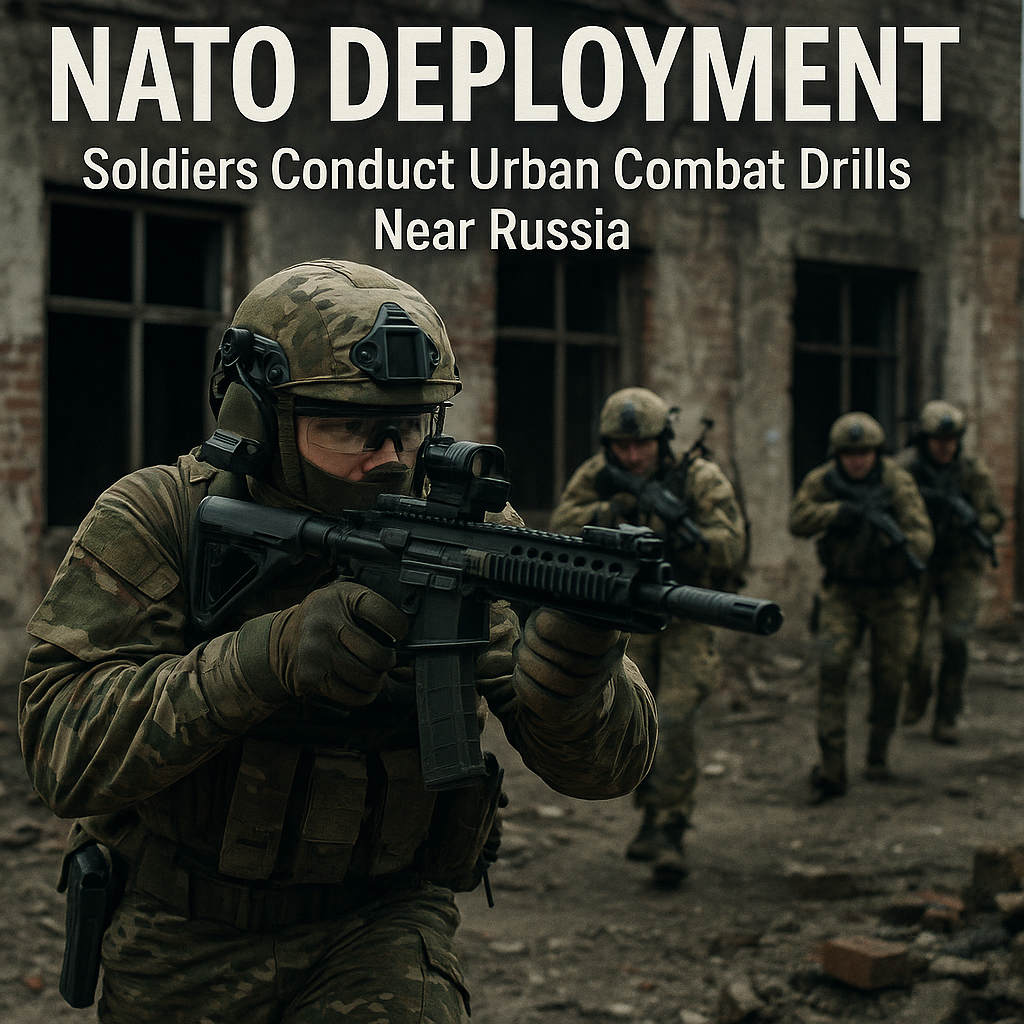
NATO Deployment: Soldiers Conduct Urban Combat Drills Near Russia

NATO Deployment: Soldiers Conduct Urban Combat Drills Near Russia
NATO’s recent urban combat drills conducted near the Russian border signify not just military preparation but also the evolving geopolitical landscape in Eastern Europe. As tensions simmer between NATO forces and Russia, the ongoing exercises serve as a focal point for understanding the implications of such military maneuvers.

Understanding the Context of NATO’s Exercises
The NATO deployment in Eastern Europe, particularly the urban combat drills by Scottish soldiers in Estonia, illustrates the alliance’s commitment to ensuring the security of its member states. As highlighted in a recent report, these drills focus on enhancing infantry skills in urban warfare, aimed at adapting to potential future conflicts in crowded environments. This scenario is particularly relevant given the complexities of modern warfare, where urban areas can become battlegrounds.


Perspectives on NATO’s Strategic Goals
Supporters of NATO’s enhanced military presence argue that such preparations reflect a necessary response to perceived threats from Russia. In the wake of the ongoing tensions following Russia’s annexation of Crimea in 2014 and more recent military actions, NATO has focused on bolstering defenses in member states situated near Russia. This appears to resonate with the narratives presented by mainstream media outlets, which emphasize the importance of readiness and solidarity among member states.


Conversely, critics point out that escalating NATO military activities can further destabilize the region and provoke a confrontation with Russia. For instance, some analysts suggest that urban drills might be interpreted by Moscow as an aggressive posture, potentially heightening tensions. Russian state-funded media has echoed this sentiment, framing NATO’s actions as a threat to regional stability and sovereignty. The Kremlin has previously condemned such drills, claiming they increase the risk of misunderstandings and military escalation.
The Broader Implications of Military Exercises
There are broader implications tied to NATO’s urban combat drills beyond immediate military preparedness. The exercises not only boost the readiness of forces but also strengthen alliance cohesion amid uncertainty. With various member states witnessing their own unique security concerns, these drills serve as a unifying factor for NATO, reinforcing the principle of collective defense enshrined in Article 5 of the North Atlantic Treaty.
However, the exercises also underscore the complexities of international relations. They serve as a barometer for the fluctuating balance of power in the region and raise fundamental questions about deterrence strategies. How does NATO plan to respond to potential aggression from Russia while avoiding an all-out confrontation? The drills provide an opportunity to gauge readiness, but they also risk escalating a delicate situation if miscalculated.
The Role of Public Opinion in Military Affairs
Public sentiment regarding military exercises is also an essential factor in shaping strategy. In NATO countries, there is generally a strong support base for military readiness against Russia, primarily driven by concerns over security and territorial integrity. However, there are diverging opinions among the populace regarding the scale and intensity of military activities in close proximity to potential adversaries.
For instance, some citizens express apprehension that constant military posturing may inadvertently invite conflict rather than prevent it. This contrasts with voices advocating a robust defense, arguing it is critical to deter any aggressive moves by Russia. Understanding this spectrum of public opinion is vital for policymakers as they navigate military deployments and international relations.
Conclusion: Navigating Tensions in a Complex Landscape
NATO’s urban combat drills near Russia present a multifaceted issue that blends military preparedness with nuanced geopolitical sentiments. While the exercises serve to enhance the alliance’s defensive capabilities, they also risk aggravating existing tensions with Russia. It is crucial for NATO to balance these drills, reflecting on the implications of its actions in a predominantly charged atmosphere.
As the situation evolves, so too will the dialogue surrounding NATO’s role in Eastern Europe. A continued emphasis on diplomacy alongside military readiness may prove essential in preventing misunderstandings and fostering a more stable regional environment. The path forward remains intricate, demanding careful navigation amidst the realities of modern geopolitical dynamics.















