
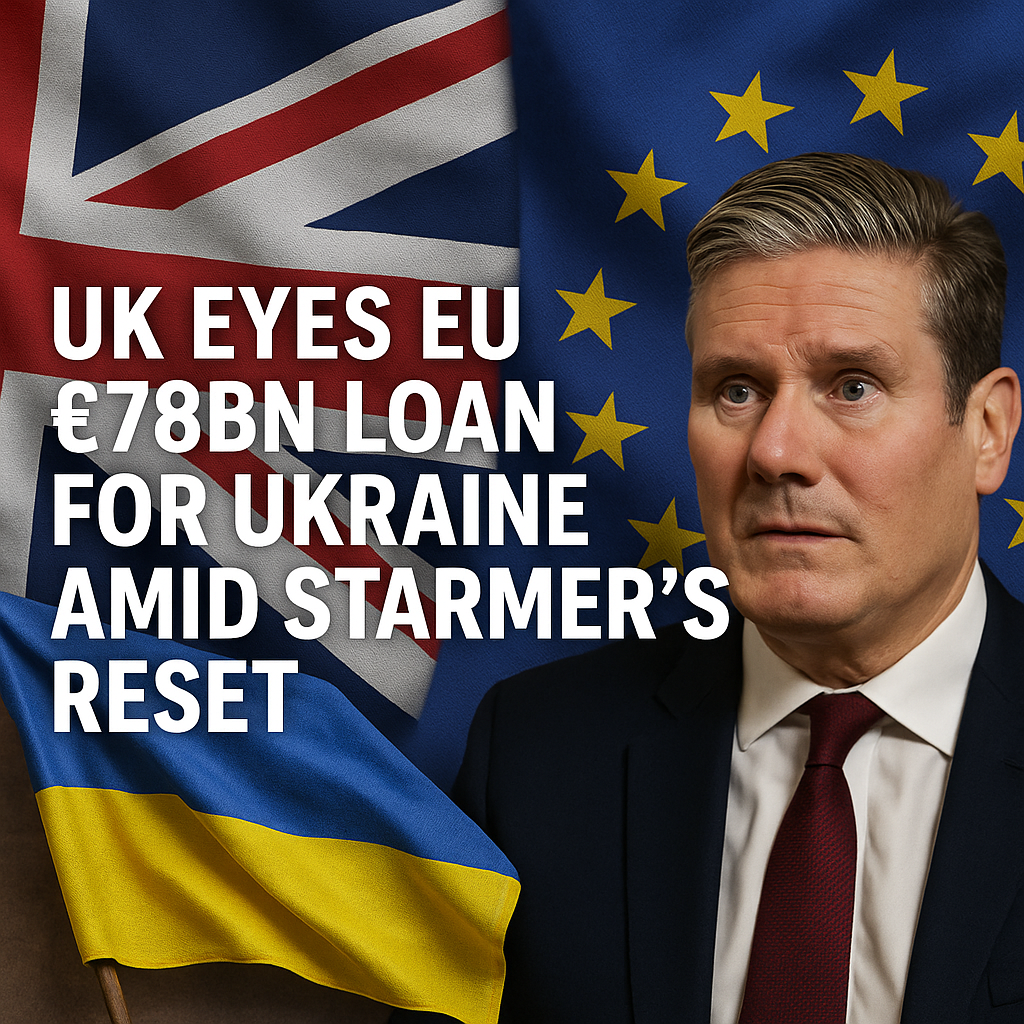
UK Eyes EU £78bn Loan for Ukraine Amid Starmer’s Reset

UK Eyes EU £78bn Loan for Ukraine Amid Starmer’s Reset
As the geopolitical landscape continues to shift, the UK’s potential participation in the European Union’s £78 billion loan plan for Ukraine presents a significant moment in both the nation’s foreign policy and its relationship with Europe. This development comes at a time when Labour leader Keir Starmer is seeking a reset in party dynamics and policy directions, indicating a potential pivot toward more collaborative engagements with the EU.

Broader Context: The EU’s Loan Initiative
The £78 billion loan set forth by the EU aims to bolster Ukraine’s economy amid ongoing conflict and recovery efforts following the devastating war instigated by Russia. As the situation escalates, economic support remains crucial for Ukraine’s resilience and long-term stability. Sources indicate that the EU sees this loan not only as a means of immediate assistance but also as a strategic investment in European security, recognizing that a stable and prosperous Ukraine directly benefits the region.


According to the UK’s transmission to Brussels, which has been characterized by mixed sentiments regarding its future role in Europe, participation in this loan initiative could signal a shift from past Brexit tensions. The provision of financial assistance paints the UK as a cooperative partner in addressing shared security challenges and humanitarian concerns. For instance, Al Jazeera highlights the importance of international cooperation necessary to support Ukraine’s infrastructure and governance, framing the loan as an essential step in ensuring democracy and sovereignty are preserved in the face of aggression.


Starmer’s Reset: A Shift in Political Landscape
Keir Starmer’s push for a reset involves more than just foreign policy; it embodies a broader ideological evolution within the Labour Party. This strategic move intends to reaffirm Labour’s commitment to international solidarity and a nuanced approach to Brexit, especially concerning relationships with EU nations. Political analysts have pointed out that Starmer’s adaptation might indicate a long-term vision for enhancing the UK’s collaborative roles in global affairs, as fears of isolationism persist among some factions.
Critics, however, are already questioning whether Starmer’s push for an enhanced engagement with Europe is merely a reaction to internal party pressures. RT underscores that some within the Labour Party remain skeptical, viewing this shift as a superficial change rather than a sustained strategic commitment. Detractors argue that until substantial political changes occur within governmental structures, these overtures may lack real effectiveness or depth.
Nonetheless, the discussions surrounding the loan offer present an opportunity for the Labour Party to connect with a more centrist and pro-European electorate. As the landscape of British politics evolves, aligning with a significant economic initiative like the EU loan could potentially enhance Starmer’s position, fostering a sense of unity amongst more diverse factions of the party.
The Road Ahead: Opportunities and Challenges
Participating in the EU loan opens up a multifaceted dialogue about future economic policies and international cooperation. However, it could come with its own set of challenges. For instance:
– Public Sentiment: Public opinion remains divided on the EU and its initiatives following Brexit. Any perceived concession by the UK government may alienate hardline Brexit supporters, complicating Starmer’s efforts to unify the party.
– Regional Relations: The relationship with EU member states could face scrutiny, particularly from the Conservative Party, which may leverage any participation as evidence of Labour’s alleged capitulation to European influence.
– Political Implications: Starmer’s ambition to reset Labour’s trajectory may inadvertently harden partisan divides, as opponents frame the engagement with the EU as an abandonment of the party’s foundational values.
Despite these potential obstacles, the loan initiative could serve as a pivotal moment for both domestic politics and international relations. If executed with clear communication and a robust understanding of constituents’ concerns, it may well lay the groundwork for a more resilient UK-EU relationship moving forward.
Conclusion: Navigating Complex Dynamics
As the UK considers its position regarding the EU loan for Ukraine, it stands at a vital crossroads. The implications extend far beyond immediate financial assistance; they delve into the heart of national identity, partnership, and response to contemporary geopolitical crises.
While the opportunity for collaboration is promising, the complexities surrounding domestic politics, public perception, and the evolving landscape of UK-EU relations introduce uncertainty. Starmer’s efforts for a reset provide an interesting, if precarious, path forward for Labour and the broader narrative of British politics. Ultimately, how this unfolds will significantly impact not just Ukraine’s prospects but also how the United Kingdom redefines its role in a changing Europe.















