
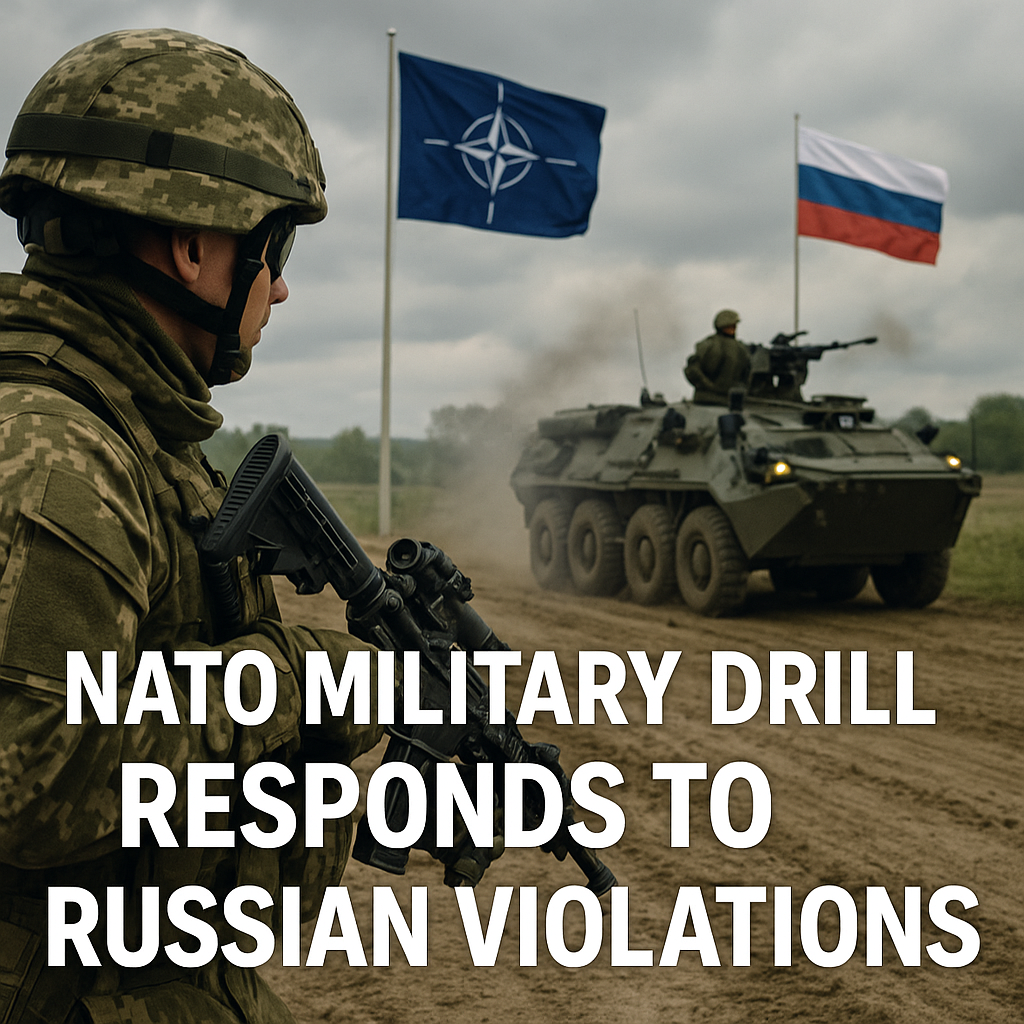
NATO Military Drill Responds to Russian Violations

NATO Military Drill Responds to Russian Violations
The recent NATO military drill has become a focal point in international relations, particularly in how it responds to perceived violations by Russia. As tensions escalate in Eastern Europe, NATO’s military exercises reflect a complex interplay of deterrence and diplomacy, creating various perspectives in the global discourse.

Understanding the Context of NATO’s Military Exercises
In recent months, NATO has conducted significant military drills involving thousands of troops across multiple member nations. These exercises aim to bolster readiness and demonstrate solidarity among member states amid growing concerns about Russian military activities near its borders. A prime example is the exercise “Defender Europe 2023,” which focuses on swift deployment capabilities and the collective defense principles laid out in NATO’s founding treaty.


Russia’s Provocative Actions
According to multiple reports, including those from RT and Sky News, Russia’s military maneuvers—such as troop deployments near Ukraine and increased aerial activity in contested regions—have heightened anxiety within NATO member countries. These actions are often interpreted as direct violations of established international norms, leading to an intensified NATO response.


A spokesperson for NATO emphasized the necessity of these drills as a precautionary measure: “We aim to ensure that our forces remain ready to respond to any potential threat.” This assertion highlights NATO’s dual aim: to enhance defense mechanics while discouraging further Russian aggression.
Diverging Perspectives on NATO’s Response
While NATO’s military drills are framed as necessary for collective security, opinions diverge on their implications and effectiveness. Some analysts argue that these exercises escalate tensions further rather than promote stability. Critics argue that showcasing military might can provoke reactions rather than deter them, mirroring sentiments expressed in various articles from Al Jazeera and independent analyses.
Support for Strengthening Defense
Supporters of NATO’s military strategies argue that showcasing united military strength is crucial in deterring any aggressive posturing from Russia. An Al Jazeera report outlined the concerns of Eastern European nations, emphasizing that consistent NATO presence is crucial for regional security. Countries like Poland and the Baltic states, located near potential hotspots, echo these concerns, advocating for more significant military support and forward deployment of NATO troops.
The Balance Between Deterrence and Diplomacy
Yet, there is a growing voice advocating for a balanced approach. Experts caution that excessive military drills may alienate Russia and complicate diplomatic efforts. Diplomatic channels remain vital, especially since military posturing can lead to miscalculations on both sides. Acknowledging these complexities, some commentators suggest that a comprehensive security dialogue involving Russia could alleviate tensions while maintaining defense readiness.
The Broader Implications for Global Security
The global security landscape is more nuanced than a binary conflict, encompassing broader geopolitical strategies, alliances, and public sentiment towards military establishments. The implication of NATO’s military drills extends beyond the immediate regions of concern, influencing public perception internationally.
Uncertainties in the Continued Escalation
As NATO continues to adapt its military presence in response to Russian actions, uncertainties remain on whether this approach will yield long-term stability or exacerbate hostilities. The debate about the efficacy of military exercises against the backdrop of ongoing diplomatic efforts illustrates a significant divide among policymakers and scholars alike.
In conclusion, NATO’s military drills serve as both a response to Russian violations and a reflection of the complex dynamics of modern geopolitical relations. Those in favor of such military readiness see it as vital for deterrence, whereas critics warn of the implications that military escalation might have on diplomatic avenues. Understanding this multi-faceted issue requires a careful examination of all viewpoints, ensuring that future strategies effectively promote peace and security rather than deepen divisions.















