
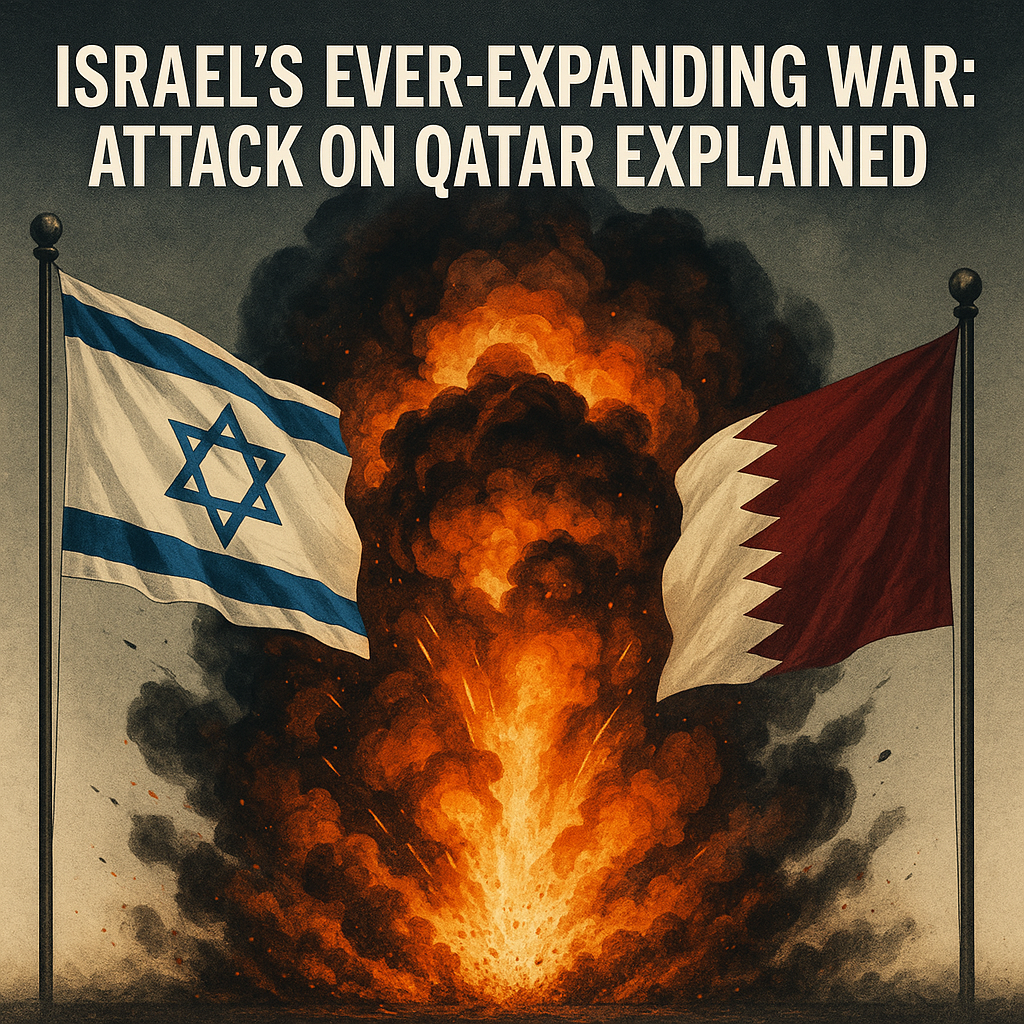
Israel’s Ever-Expanding War: Attack on Qatar Explained

Israel’s Ever-Expanding War: Attack on Qatar Explained
The recent unrest in the Middle East has brought Israel’s military operations into sharp focus, particularly its latest actions involving Qatar. As tensions escalate, understanding the nuances behind these military maneuvers becomes increasingly essential.

The Context Behind Israel’s Actions
To grasp the full scope of Israel’s expanding military engagements, it is crucial to consider the backdrop of ongoing regional instability. The Israeli government has framed its military interventions as necessary responses to perceived threats posed by hostile entities in the region.


Reports indicate that Israel’s attacks on Qatar are part of a broader strategy aimed at destabilizing groups affiliated with Iran that maintain a foothold in the Gulf. In this context, Israel appears to be bolstering its offensive posture, portraying its actions as preemptive strikes designed to protect national security. Supporters of this narrative argue that by targeting military and logistical bases, Israel not only disrupts adversary capabilities but also acts in self-defense.


Conversely, critics assert that these attacks exacerbate an already volatile situation, risking broader conflict. The humanitarian implications are equally distressing; civilian populations often bear the brunt of military actions, leading to accusations of disproportionate responses.
Diverse Perspectives: Regional and International Reactions
Support for Israeli Actions
Many proponents of Israel’s military strategy cite the existential threats posed by militant factions in Gaza and Lebanon, often closely tied to Iran. Al Jazeera noted that such actions have garnered backing from certain Western nations, which view these strikes as part of a legitimate defense posture. Proponents point to intelligence reports indicating that these groups pose an immediate danger to Israel’s existence.
Condemnation and Calls for Restraint
On the opposing side, international humanitarian organizations and certain governments have expressed grave concerns over Israel’s military actions in Qatar. Reports released by the RT network mention heightened anxieties about civilian casualties and the potential for escalation across neighboring countries. Critics argue that further military action could destabilize not just the region, but also international peace efforts.
The juxtaposition of these viewpoints underscores the complexities involved in interpreting Israel’s motives and actions. While some advocate for strong military responses to perceived threats, others call for more diplomatic approaches to conflict resolution.
The Uncertain Future: A Call for Dialogue
As the situation evolves, uncertainty remains a predominant theme. Israel’s military strategy continues to draw both accolades and condemnation, reflecting the intricate nature of geopolitics in the Middle East. The lack of consensus among stakeholders raises pressing questions: Will military actions bring about a sustainable peace or will they only serve to provoke further conflict?
International dynamics further complicate the picture. Countries like the United States have historically aligned with Israel, but emerging alliances in the region, such as those between Gulf nations and Iran, could shift the landscape dramatically. The stakes are high, and the potential for miscalculation looms large.
A Broader Perspective: The Need for Comprehensive Solutions
The ongoing conflict necessitates a comprehensive engagement that goes beyond military solutions. Regional dialogue, involving all key players—including Iran, Gulf states, and the various factions in Palestine—could lay a foundation for peace. A nuanced approach that considers the multifaceted nature of the conflict may yet yield a path toward resolving deep-seated grievances on both sides.
Moreover, international mediators should play a more active role, fostering conversations that address root causes rather than merely responding to symptoms of conflict. Understanding each party’s grievances can pave the way for lasting solutions, even amid escalating military actions and diplomatic tensions.
Conclusion: Navigating the Complexities
In conclusion, Israel’s military actions against Qatar symbolize a complex web of geopolitical challenges. These actions, while framed by some as necessary for defense, raise significant ethical questions regarding civilian impact and the long-term implications for peace in the region.
As various stakeholders weigh in, from military support to calls for dialogue, the urgency for a balanced and comprehensive approach to conflict resolution has never been clearer. Addressing the humanity at the core of this conflict is essential to achieving stability in the Middle East, as military might alone cannot pave the way for sustainable peace.















