
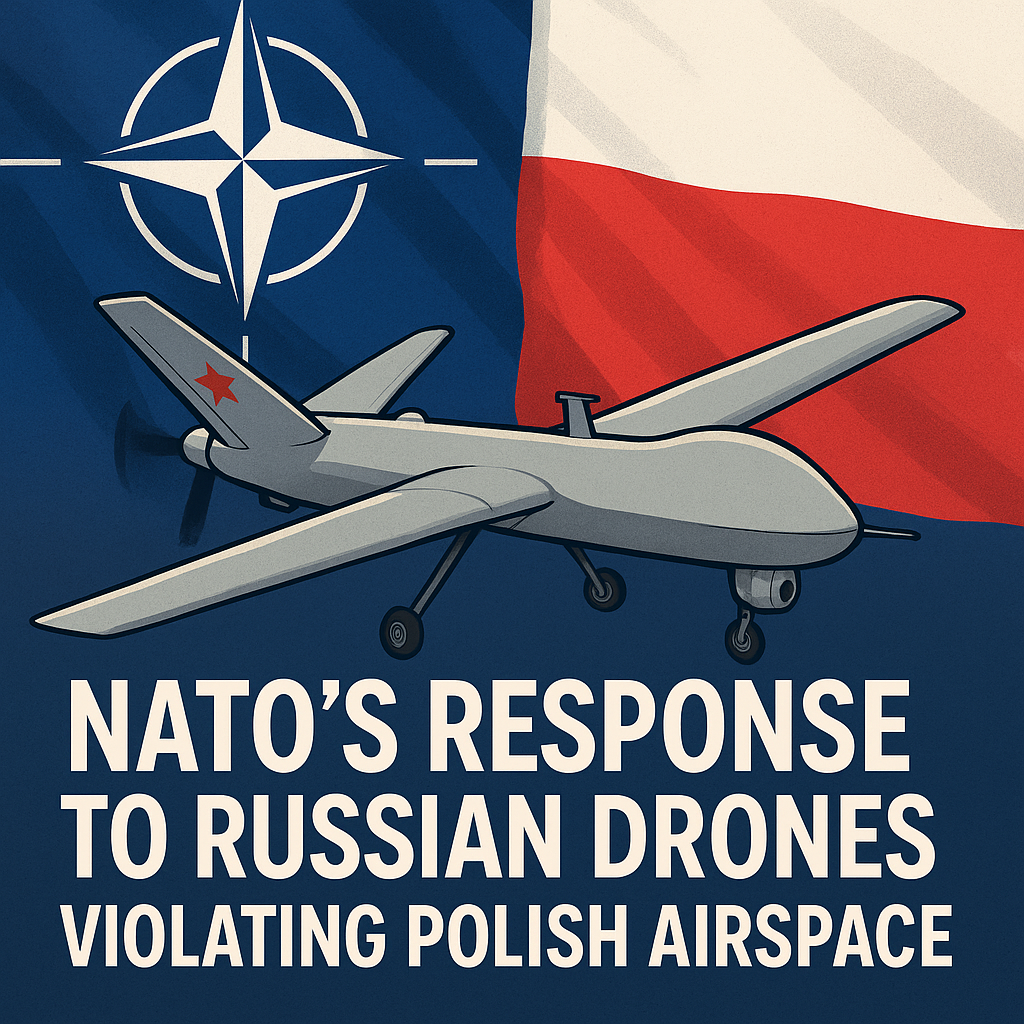
NATO’s Response to Russian Drones Violating Polish Airspace

NATO’s Response to Russian Drones Violating Polish Airspace
In recent weeks, the significant increase in Russian drone activity in Eastern Europe has raised serious concerns for NATO, particularly regarding its implications for security in Poland. As drones reportedly violated Polish airspace, the alliance faces critical questions about its strategic response and its broader objectives in the region.

The Context of Rising Tensions
The backdrop of escalating tensions between NATO and Russia cannot be understated. Following the invasion of Ukraine, Russia has employed various military tactics, including drone warfare, which appears to be aimed at testing NATO’s resolve. According to reports from Sky News, these drone incursions into Polish airspace are not just random acts but may be part of a broader strategy to gauge NATO’s reaction. This revelation underscores the precarious nature of security in Eastern Europe and how easily it can tip into a larger conflict.


Moreover, Al Jazeera has highlighted that the potential use of drones serves multiple purposes for Russia. Beyond direct military objectives, it sends a message to NATO about the geopolitical calculations at play, possibly aiming to unsettle the alliance’s members. The intentionality behind these actions prompts a critical look at NATO’s defense posturing and operational readiness.


Diverse Perspectives on NATO’s Strategic Course
Responses from NATO member states vary, illustrating a spectrum of viewpoints on how to handle the drone incursions. Some military experts advocate for a robust, immediate response. For instance, enhancing surveillance capabilities and bolstering air defenses in Poland can send a clear signal to Moscow that NATO will not tolerate violations of sovereign airspace.
Conversely, others argue for a more measured approach. From this perspective, escalating military responses could lead to a miscalculation, further heightening tensions. The RT network brings forth voices that caution against overreacting. They suggest diplomacy should remain central to strategies aimed at de-escalating the situation, urging NATO to engage with Russia to clarify intentions and prevent misunderstandings.
Weighing the Evidence
The contrast in viewpoints highlights the complexities involved in NATO’s decision-making process. On one hand, a strong, unified response would reaffirm NATO’s commitment to collective defense, an essential article of the alliance’s founding treaty. The ramifications of failing to respond adequately could embolden further Russian aggression, not only in Poland but across Eastern Europe.
On the other hand, if NATO chooses to escalate militarily without clear justification, it risks contributing to a cycle of provocation and retaliation. The stakes are extraordinarily high, considering that misunderstandings could quickly spiral into broader military confrontations. This uncertainty reflects the delicate balance NATO must navigate, ensuring that it remains strong in its commitments while avoiding actions that could provoke heightened conflict.
Future Implications and NATO’s Strategic Evolution
As this situation continues to unfold, NATO’s response will likely influence its evolution as an alliance. The recent actions concerning Russian drones may serve as a catalyst for reevaluating defense strategies across member nations. This could involve:
– Investing in Advanced Surveillance: Enhanced capabilities may become a priority, ensuring that NATO can monitor potential threats more effectively.
– Strengthening Alliances in Eastern Europe: Increased cooperation with Eastern European states could bolster regional security, emphasizing not just NATO’s collective defense but also the individual sovereignty of member states.
It’s crucial to note that while there is a unified consensus within NATO regarding the desire to contain aggression, the tactics and strategies are still subjects of deliberation and debate.
Conclusion: Navigating Uncertainty
In conclusion, the violation of Polish airspace by Russian drones exemplifies the multifaceted challenges NATO faces in a rapidly changing security landscape. Although opinions on how to respond differ among member states, the need for a balanced approach remains paramount. As NATO navigates this precarious situation, it must reinforce its commitment to collective defense while remaining cautious of unintended escalations.
The landscape of European security is evolving, and NATO’s decisions today could set the tone for future relations with Russia and define the alliance’s strategic posture in the years to come. Balancing assertiveness with diplomacy will be key to not only addressing the current provocations but also to fostering long-term stability in the region.















