
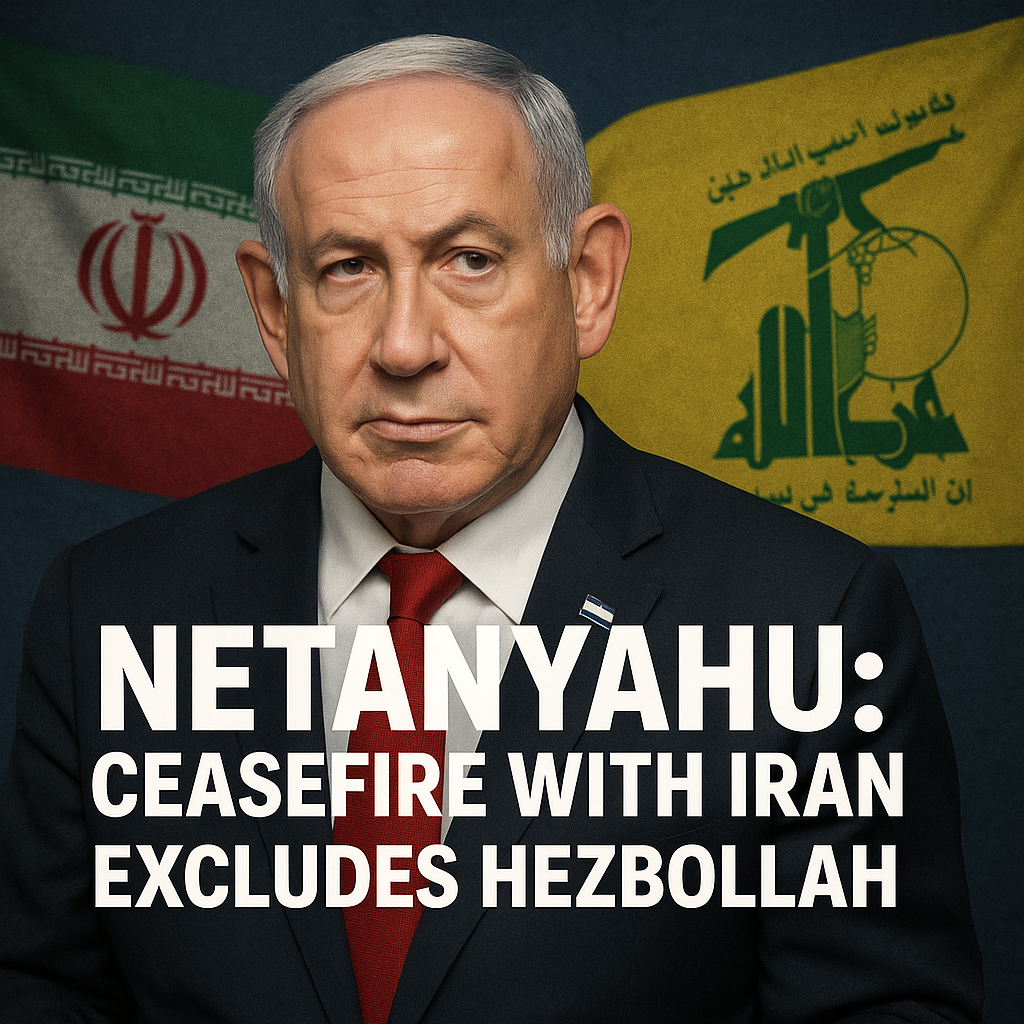
Netanyahu: Ceasefire with Iran Excludes Hezbollah

Netanyahu: Ceasefire with Iran Excludes Hezbollah
Israeli Prime Minister Benjamin Netanyahu has announced that any ceasefire agreements with Iran will not include the militant group Hezbollah, a key ally of Tehran. This statement underscores the complexity of Middle Eastern geopolitics, where alliances and rivalries intertwine, complicating peace efforts in a region historically fraught with conflict.

The Broader Context of Ceasefires in the Region
The ongoing tensions between Israel and Iran have piqued global interest, spawning various discussions about the potential for peace and stability in the Middle East. Netanyahu’s insistence that Hezbollah must be excluded from any ceasefire negotiations reflects both a military calculus and a deep-seated apprehension towards the militant group, believed to significantly bolster Iran’s influence in Lebanon and beyond.


Iran’s Role and Hezbollah’s Influence
Iran has long been accused by Israel of orchestrating regional chaos through its support for proxy groups like Hezbollah. Observers note that Hezbollah’s vast military capabilities, coupled with its ideological commitment to oppose Israel, present a formidable challenge to any peace efforts. As Hezbollah continues to conduct military operations and bolster its position in Syria and Lebanon, Israel sees the group as a persistent threat that complicates its security landscape.


Reports from various news outlets emphasize that for Israel, discussions about ceasefires are never straightforward. “Iran’s influence in the region directly enhances Hezbollah’s operational capability,” noted a political analyst from Al Jazeera. As such, Netanyahu’s position seems to resonate with a broader Israeli sentiment that views any concession to Tehran as potentially empowering Hezbollah.
Divergent Views on Ceasefires
While Netanyahu stands firm on excluding Hezbollah from peace discussions with Iran, perspectives on the implications of this stance differ significantly. Some commentators argue that this rigid approach may undermine broader regional stability. Critics assert that keeping Hezbollah in a sidelined position may heighten tensions rather than ease them.
Conversely, proponents of Netanyahu’s viewpoint suggest that leaving Hezbollah out of negotiations is vital for Israel’s defense strategies. “Given their history of aggression,” an RT News analyst stated, “it’s critical that we don’t legitimize Hezbollah’s position as a stakeholder in any future agreements.”
The Potential for Regional Diplomacy
The question then arises: can effective regional diplomacy exist without acknowledging Hezbollah? Analysts from Sky News indicate that any peace framework addressing Iranian influence must consider the group’s role, albeit marginalized. They argue that failing to incorporate all key players—however troublesome—could lead to the framework’s fragility.
Furthermore, other regional actors like Saudi Arabia and the Gulf states have begun reevaluating their stances towards Iran, potentially setting the stage for a broader dialogue that might one day include Hezbollah. Yet, Netanyahu’s firm stance complicates these possibilities.
A Delicate Balance of Interests
In weighing these perspectives, it’s essential to recognize the delicate balance of interests at play. Israel’s priority is its national security—an understandable stance given its historical and ongoing skirmishes with Hezbollah and Iran. Yet, a rigid refusal to negotiate with Hezbollah may also result in missed opportunities for de-escalation and peace.
As geopolitical tensions surge, the urgency for a framework that includes comprehensive discussions becomes ever more evident. The historical backdrop suggests an ingrained skepticism towards dialogue, yet transformative diplomacy may yet provide a path toward long-term resolution.
Conclusion: Uncertainty in the Quest for Peace
Netanyahu’s assertion that a ceasefire with Iran will not include Hezbollah reflects the complex web of alliances in the Middle East. While it resonates with a significant segment of Israeli society, it also risks perpetuating a cycle of conflict that may further entrench the violence.
As diplomacy advances, the path to peace remains inherently uncertain. With myriad factors influencing the region—from local militias to global superpowers—the quest for a lasting ceasefire is fraught with challenges. Moving forward, it is clear that a multi-faceted approach acknowledging all stakeholders, even those as contentious as Hezbollah, may ultimately be necessary for any meaningful resolution in this long-standing conflict.
In sum, the broader implications of excluding Hezbollah from ceasefire discussions with Iran remain deeply complex, with potential repercussions that extend far beyond the borders of Israel and Lebanon.















