
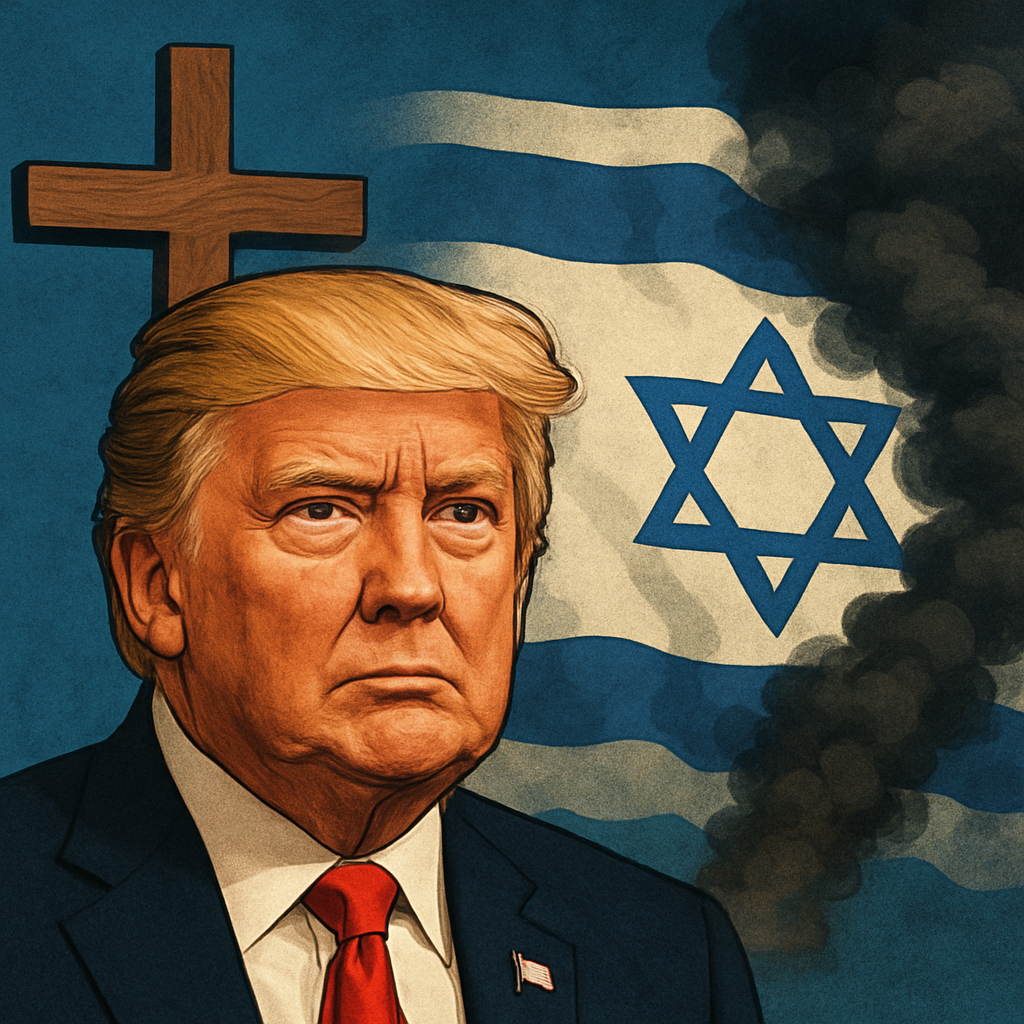
Trump’s Christian Influence: Israel Acts with Impunity

Trump’s Christian Influence: Israel Acts with Impunity
In recent years, the intersection of President Donald Trump’s administration, evangelical Christianity, and U.S.-Israel relations has created a complex tapestry of geopolitics and ideology. Understanding how Trump’s Christian influence has shaped Israel’s actions requires a nuanced look at the interplay of religion, politics, and international relations.

The Rise of Evangelical Support for Israel
At the heart of this dynamic is the significant support that evangelical Christians in the United States have extended toward Israel. This demographic sees Israel as a crucial player in biblical prophecy and a vital ally in the fight against what they perceive as increasing secularism and globalism. Trump, who has identified heavily with evangelical beliefs, has capitalized on this sentiment to fortify U.S.-Israel ties.


A report from RT outlines how Trump’s presidency has been characterized by direct actions that showcase this alignment, such as recognizing Jerusalem as Israel’s capital and moving the U.S. embassy there. This decision was lauded by many evangelical leaders, who believe that such actions fulfill biblical prophecies and signify American support for the Jewish state. However, critics argue that these moves have emboldened Israel to act with impunity in the region, often exacerbating tensions with Palestinians and neighboring nations.


Israel’s Strategic Calculations
On the flip side, Israel’s government has shown a willingness to leverage U.S. support in its strategic calculations. A recent analysis emphasizes that the consistent backing from a U.S. administration that aligns with evangelical values has encouraged Israel to adopt more aggressive policies, both in terms of territorial expansion and military actions against Palestine.
This increasing boldness can be seen in Israel’s continued settlement expansions in the West Bank and ongoing military operations in Gaza. Many argue that these actions are undertaken with a belief that U.S. support—especially one rooted in a stronger evangelical influence—will remain unwavering, regardless of international law or humanitarian concerns.
Conversely, critics from outlets like Al Jazeera highlight the consequences of these policies on the Palestinian people, who face increased oppression and marginalization. The perception that Israel is acting without accountability is echoed in multiple reports, prompting calls for a reevaluation of U.S. foreign policy towards the region.
The Tensions within Christian Support
Interestingly, the support for Israel among Christian communities is not monolithic. While evangelical groups are often seen as the main proponents, there are also moderate and progressive Christian voices that criticize Israel’s policies toward Palestinians. This faction urges for a more balanced approach that respects the rights and humanity of all individuals involved, irrespective of their religious or ethnic backgrounds.
Efforts from these groups can be seen as attempts to reframe U.S.-Israel relations, advocating for peace based on justice rather than one-sided support. The complexity of faith in politics thus takes center stage, creating a notable tension within the broader Christian community regarding how best to support Israel without ignoring the plight of Palestinians.
Balancing Perspectives in U.S. Foreign Policy
As Trump’s influence wanes post-presidency, the conversation surrounding U.S. foreign policy in the Middle East continues without resolution. While some analysts believe that the Biden administration may restore a more moderate stance, others argue that the foundational shift in U.S.-Israel relations initiated under Trump may not easily revert.
The idea of balancing support for Israel with an equitable approach towards Palestinians suggests an ongoing evolution in how faith intersects with global politics. Acknowledging this complexity is vital for future discourse, as both communities engage in a dialogue about shared values without sacrificing one for the other.
The evidence suggests that the U.S. will need to grapple with its historical ties to Israel, moderated by an equally strong commitment to human rights. As the geopolitical landscape transforms, there remains a significant uncertainty about how future administrations will navigate this intricate relationship.
Conclusion
In summary, Trump’s Christian influence on U.S.-Israel relations has led to a situation where Israel often acts with a sense of impunity, underpinned by firm evangelical support. While this relationship has been politically advantageous for both parties, it has raised profound ethical questions regarding the treatment of Palestinians and international law. The challenge lies ahead for all involved: how to foster a relationship that honors both the place of Israel in biblical prophecy while promoting peace, justice, and human rights for all. As the dialogue continues, the hope is that a more balanced, respectful approach can emerge—one that takes into account the nuances of faith, politics, and humanity.















