
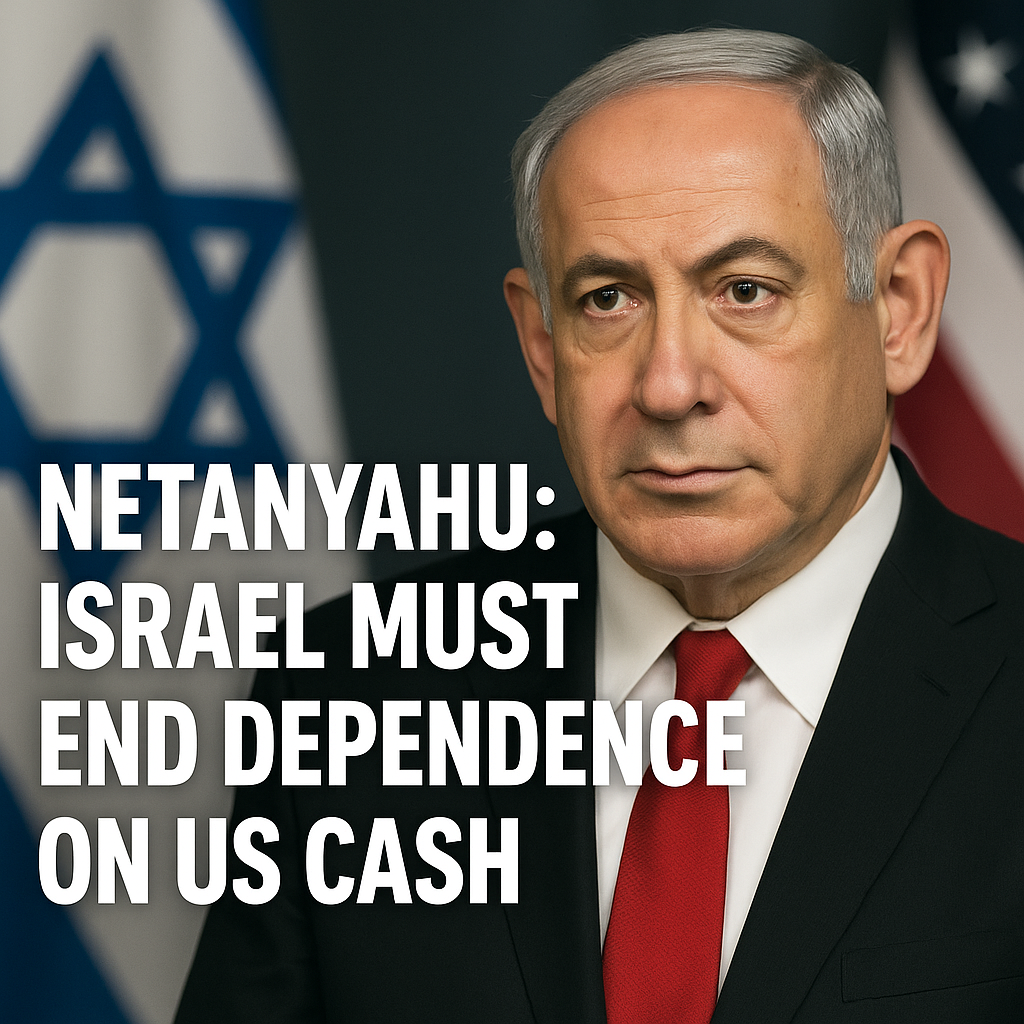
Netanyahu: Israel Must End Dependence on US Cash

In a recent statement, Israeli Prime Minister Benjamin Netanyahu emphasized the need for Israel to reduce its reliance on U.S. financial aid. This declaration invites discussion about the intricate relationship between Israel and the United States, highlighting economic, political, and social dimensions.

The Context of U.S. Aid to Israel
For decades, the U.S. has been a principal supporter of Israel, providing approximately $3.8 billion annually in military assistance as part of a larger $38 billion aid package spanning ten years. This funding is crucial for Israel’s defense capabilities, yet Netanyahu’s recent comments resonate with a sentiment that is growing among some Israeli leadership circles: the pursuit of economic independence from U.S. support.


As reported by various sources, including RT, Netanyahu’s remarks come against the backdrop of shifting U.S. foreign policy priorities and increasing domestic demands for transparency regarding foreign aid. The Prime Minister highlighted the dangers of dependency, suggesting that economic self-sufficiency may enhance Israel’s sovereignty and decision-making independence in international affairs.


Weighing the Pros and Cons of Aid Dependency
While some proponents argue that U.S. aid is vital for Israel’s national security, critics of the aid dependence suggest it may undermine Israel’s ability to navigate its foreign policy independently.
Arguments for Continuing U.S. Aid
1. Military Necessity: U.S. assistance ensures Israel maintains a qualitative military edge in a volatile region. The Israeli Defense Forces (IDF) heavily rely on U.S. technology and funding, which provide advanced weaponry and defense systems.
2. Geopolitical Stability: Support from the U.S. not only benefits Israel but acts as a stabilizing factor in the Middle East. This relationship is perceived as essential for the balance of power in the region, particularly in relation to Iran and extremist groups.
3. Economic Support: Significant portions of U.S. aid are channeled into the Israeli economy, promoting technological advancements and economic growth.
Concerns Regarding Dependency
1. Loss of Sovereignty: Critics argue that reliance on U.S. funds may limit Israel’s actions on the global stage. Decisions influenced by bureaucratic pressures from U.S. administrations could lead to compromises detrimental to Israeli interests.
2. Domestic Priorities: Aid funding could divert attention from broader economic reforms needed within Israel itself. Increased focus on self-funding could allow for more significant investments in social and infrastructure projects.
3. Public Sentiment: Growing numbers of Israeli citizens are voicing concerns over the perceived strings attached to U.S. aid, where they feel certain aspects of internal governance and policy decisions may be unduly swayed by American interests.
The Road Ahead: Possible Scenarios
Netanyahu’s position calls for a strategic shift, but the pathway forward is complex. The Israeli government may explore alternative funding mechanisms or partnerships to mitigate reliance on U.S. aid. The focus on economic growth could pave the way for diversifying national resources, thus promoting self-reliance.
Potential Alternatives
1. International Partnerships: Now might be an opportune time for Israel to strengthen ties with other countries—be it European nations or emerging economies in Asia and Africa.
2. Investment in Technology and Innovation: By cultivating its strengths in technology and innovation, Israel could explore new avenues of revenue generation that do not rely on foreign aid.
3. Increased Tax Revenues: Implementing policies aimed at increasing domestic revenues could shift the focus from outside dependency to internal economic growth.
However, it is essential to recognize the uncertainties surrounding this transition. The potential for securing sufficient alternative funding sources remains an open question, as does the degree to which Israeli citizens would support a move away from established reliance on the U.S.
Conclusion
Netanyahu’s call to end Israel’s dependence on U.S. financial aid is a reflection of the evolving geopolitical landscape. As debates continue around the necessity and implications of such a shift, the discussions underscore a vital complexity inherent to international relations. The impacts of these decisions will not only influence Israel’s future but could also redefine U.S.-Israel relations in the years ahead. Balancing these facets requires careful consideration by Israeli leadership, as they navigate both domestic priorities and the broader international stage.















