
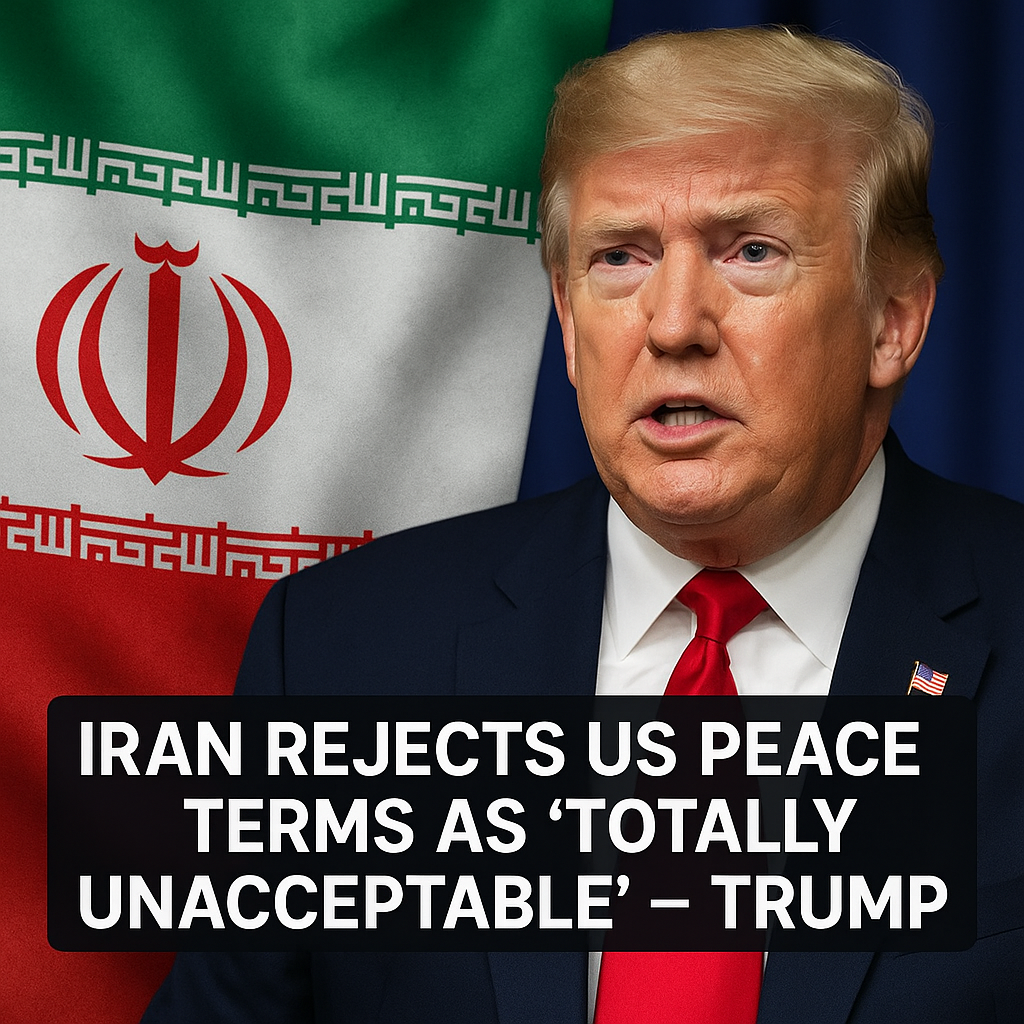
Iran Rejects US Peace Terms as ‘Totally Unacceptable’ – Trump

Iran Rejects US Peace Terms as ‘Totally Unacceptable’
Tensions between Iran and the United States continue to escalate as Iran dismisses the latest U.S. peace proposals according to statements made by former President Donald Trump. Iran’s leadership has characterized these terms as “totally unacceptable,” heightening concerns over diplomatic relations in an already fraught geopolitical climate.

Contextual Background
The U.S. and Iran have been at odds for decades, particularly since the withdrawal of the U.S. from the 2015 nuclear deal in 2018 under Trump’s administration. The deal aimed to limit Iran’s nuclear capabilities in exchange for easing economic sanctions. In the years since, Iran has gradually increased its nuclear activities, which has raised alarms both internationally and within the U.S. government, particularly as tensions flare over regional security and influence.


Recent statements by Trump indicate an ongoing rift between the two nations, presenting a stark contrast to any hope for diplomatic resolution. He claims that Iran’s leadership is not interested in coming to the table, portraying them instead as hostile and unwilling to negotiate in good faith. This depiction aligns with hardline positions from various quarters within the U.S., suggesting that a tough stance may be the only viable approach.


However, this analysis can be nuanced. Iran’s rejection is not merely a knee-jerk reaction but part of a broader strategy. Some Iranian officials argue that the U.S. peace terms are laden with conditions that would essentially perpetuate sanctions and limit Iran’s sovereign decision-making. This rejection can also be viewed within the context of Iran’s own domestic politics, where a strong anti-U.S. narrative resonates with the populace, making concessions particularly politically risky for its leaders.
A Divergent Perspective
While Trump’s assessment views Iran through a lens of defiance, other commentators emphasize a more complex picture. Critics of Trump’s foreign policy approach argue that such rigid stances only exacerbate tensions and diminish the possibilities for a peaceful resolution. They assert that diplomatic engagement, although fraught with challenges, remains crucial to addressing broader issues such as regional stability, the fight against extremism, and the management of nuclear proliferation.
For instance, analysts from Al Jazeera highlight that Iran’s rejection of the U.S. peace proposal is rooted in deep-seated grievances regarding sanctions and a perceived lack of trust in U.S. intentions. These sentiments underscore a widespread belief in Tehran that the U.S. has historically sought regime change rather than genuine stability in the region. This perspective calls for a reevaluation of U.S. tactics, suggesting that dialogue, rather than condemnation, might yield more fruitful outcomes in securing lasting peace.
The Path Forward: Diplomacy or Escalation?
The current stalemate poses significant questions about the future of U.S.-Iran relations. Some commentators urge a reconsideration of past diplomatic channels, advocating for renewed negotiations that prioritize mutual understanding and respect. They recommend that any future talks take into account Iran’s security concerns and seek to build trust gradually.
In contrast, the hardline view, represented by Trump’s stance, underscores a belief that only through pressure, including sanctions and military deterrence, can Iran be persuaded to moderate its behavior. This binary viewpoint risks solidifying divisions rather than fostering engagement. The question remains whether the U.S. will pursue a path of assertive diplomacy or continue down a road where confrontation and hostility dominate.
As these dynamics play out, the international community watches closely. Allies in the region, particularly Israel and Saudi Arabia, have their own vested interests and potential stakes in the U.S. strategy towards Iran, complicating any simple resolutions. Historic grievances, the lingering impact of sanctions, and regional power struggles all converge in this fraught situation, making the prospects for peace increasingly tenuous.
Ultimately, the rejection of U.S. peace terms by Iran signifies a critical juncture. It reflects not just immediate diplomatic challenges but also deeper ideological divides that have characterized U.S.-Iran relations for decades. The ongoing exchanges of rhetoric serve as a reminder that while the potential for diplomacy exists, so too does the ever-present risk of escalation. As both sides navigate this complex landscape, only time will tell whether a path towards understanding can be forged or if the status quo of animosity will prevail.















