
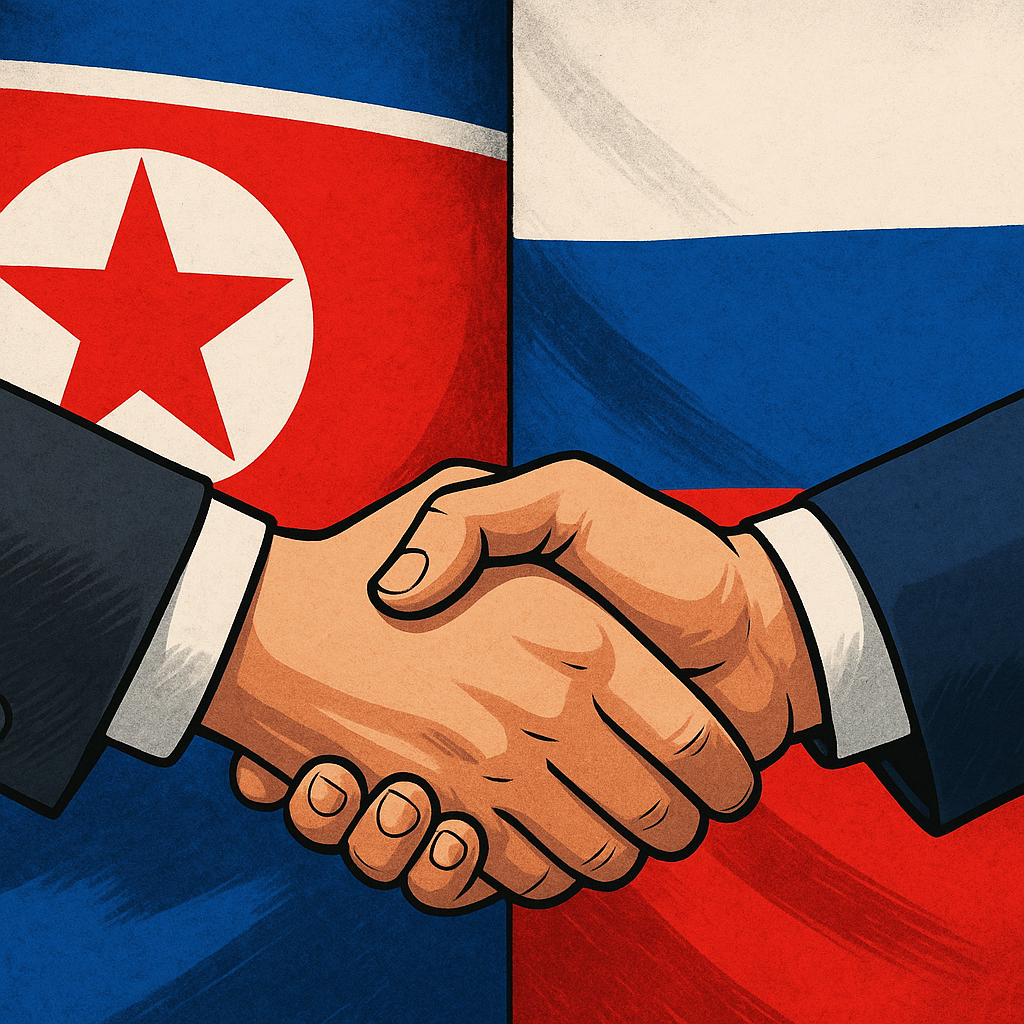
North Korea’s Commitment to Support Russia

North Korea’s Commitment to Support Russia
North Korea’s commitment to support Russia marks a significant moment in international relations, reflecting both geopolitical alliances and the shifting landscapes of power. As global tensions continue to escalate, both nations appear to find common ground, leveraging their mutual interests against the backdrop of Western opposition.

Strengthening Alliances
Recent reports highlight a meeting between North Korean leader Kim Jong-un and Russian President Vladimir Putin, signaling a deepening alliance that dates back to historical ties during the Cold War. According to RT, Kim expressed a “fraternal duty” to support Russia, particularly as the conflict with Ukraine continues. This sentiment resonates with the longstanding ideological kinship between the two nations, though it also raises concerns about the implications for regional stability in East Asia and Europe.


Conversely, Al Jazeera provides a nuanced perspective on this alliance. While acknowledging the strengthening ties, the outlet underscores that the relationship is not merely ideological but also transactional. The economic sanctions imposed on both countries by the West act as a catalyst for collaborative ventures. For instance, North Korea may benefit from military technology and resources in exchange for munitions and logistical support.


Economic and Military Motives
The motivations for this alliance are complex. North Korea’s economy has faced severe challenges, exacerbated by international sanctions and the global pandemic. In seeking military cooperation, Kim aims to bolster his regime against perceived threats from the United States and South Korea. Reports indicate that North Korea could supply artillery and ammunition to Russia, a gesture that would not only provide aid to Russia’s military efforts but also signal North Korea’s commitment to countering Western influence.
On the other hand, Sky News stresses that Russia, currently embroiled in the ongoing conflict in Ukraine, is in desperate need of military supplies. The acknowledgment that “Russia is increasingly isolated” serves as a clear indication that its partnership with North Korea is born out of necessity rather than a genuine ideological alignment. It raises questions about how this collaboration could further international tensions, particularly in the Asia-Pacific region.
International Reactions and Implications
The international community is still grappling with the potential fallout from this burgeoning relationship. Analysts warn that increased military collaboration between North Korea and Russia could embolden both nations to take more aggressive stances in their respective spheres of influence. The nature of their alliance raises alarms for neighboring countries, particularly South Korea and Japan, which are already on high alert regarding North Korea’s missile tests.
Moreover, the United States has condemned the partnership, emphasizing the need for a coordinated global response to counter illicit arms trade. This condemnation highlights the deeper divide that is shaping current geopolitical dynamics: the West versus the Eastern bloc, which is increasingly coalescing around shared grievances against U.S. influence.
The Broader Picture
While there appears to be a significant shift in North Korea’s foreign policy orientation, it is essential to recognize the broader context. The alignment of interests between North Korea and Russia may be stronger now than in previous years, yet it is still susceptible to the vicissitudes of international diplomacy. Each country has its own distinct national interests that occasionally collide, meaning that their cooperation could face obstacles in the future.
Moreover, it is imperative to consider the potential consequences of these relationships for global security. As both nations enhance their military ties, the possibility of an arms race in the region becomes increasingly plausible. This could lead to heightened tensions that may provoke a stronger military response from the United States and its allies, compounding existing conflicts rather than ameliorating them.
Conclusion
North Korea’s commitment to support Russia is multifaceted, rooted in historical ties, economic necessity, and military strategy. Both nations stand to gain from this alliance, yet the potential implications for global stability cannot be ignored. As the international landscape evolves, so too will the intricacies of these partnerships, leaving many uncertainties about future geopolitical dynamics. Ultimately, the world watches closely to gauge how this relationship will influence broader issues, with the hope that dialogue and diplomacy can prevail amidst escalating tensions.















