
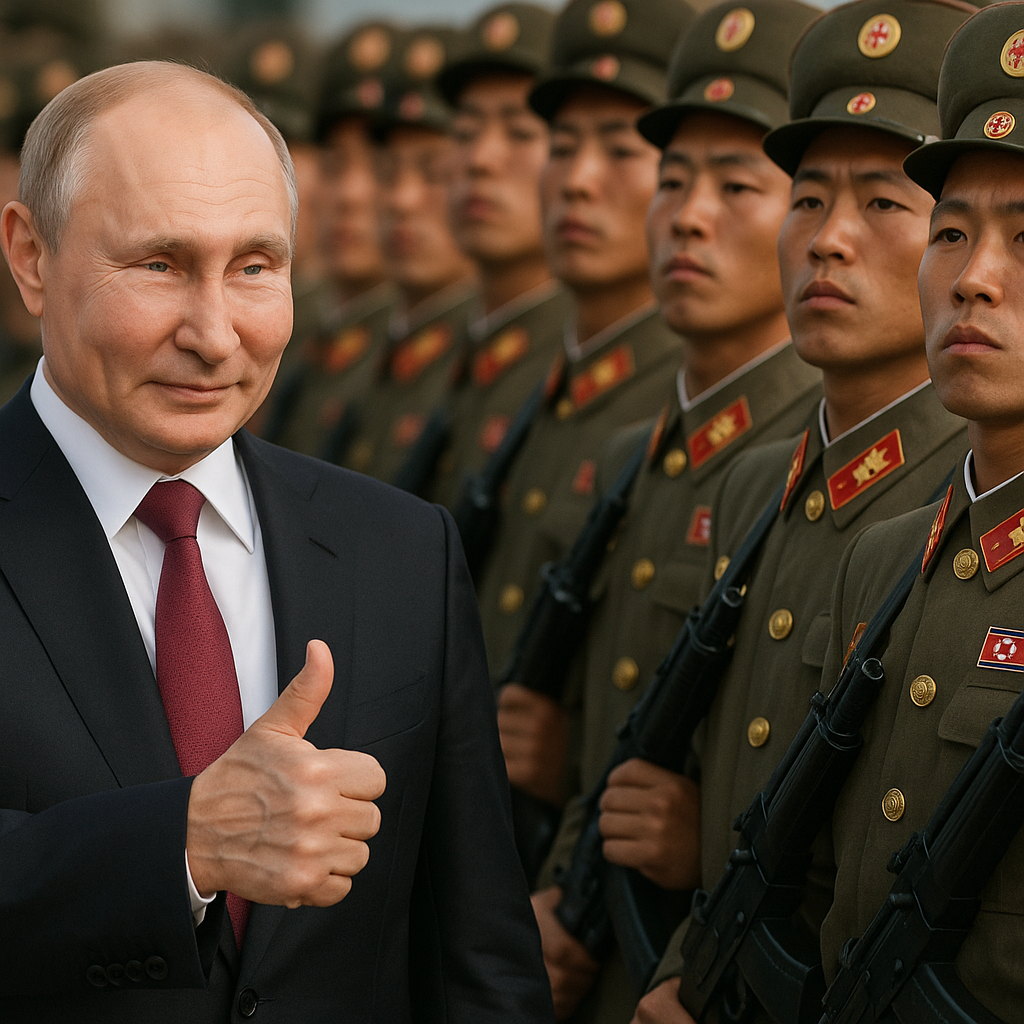
Putin Praises North Korean Soldiers for Russian Support

Understanding the Dynamics: Putin’s Praise for North Korean Soldiers
In a recent statement, Russian President Vladimir Putin expressed appreciation for the North Korean soldiers who have supported Russian military efforts. This acknowledgment, while straightforward on the surface, unveils a complex interplay of geopolitical alliances, historical ties, and the ongoing conflict in Ukraine.

The Context of Military Alliances
Putin’s praise comes against the backdrop of escalating tensions in Eastern Europe, notably due to Russia’s actions in Ukraine.


The Strategic Partnership
Historically, Russia and North Korea have maintained a fraught but significant relationship. Their ties date back to the Korean War, when the Soviet Union supported North Korea against U.S.-backed South Korea. Fast forward to today, as geopolitical landscapes shift, this older bond is being revived, particularly in light of mutual adversities faced on the international stage.


Only recently, Russia has been seeking additional manpower amid its ongoing military operations. Reports suggest that North Korean soldiers are being trained for combat roles, which Putin’s sentiments seem to reinforce. This support could mean a potential influx of trained personnel aimed at bolstering Russian forces in Ukraine, where they have struggled against both military and logistical challenges.
Diverse Perspectives on Military Collaboration
Reactions to this emerging alliance are varied. On one hand, proponents of Russian-North Korean cooperation argue that strengthening military ties could serve as a counterbalance to Western alliances, particularly NATO. The shared political ideologies of authoritarian governance and hostility towards Western nations fuel this perspective. Analysts from RT, for instance, praise the collaboration as a pragmatic move, designed to fortify both nations in a world increasingly polarized along ideological lines.
Conversely, critics warn of the risks involved. North Korea has long been an international pariah due to its aggressive military posture and human rights violations. Al Jazeera points out that increased military cooperation with North Korea could further isolate Russia, drawing the ire of Western nations and leading to more stringent sanctions. This sentiment urges caution, highlighting that while seeking allies is strategic, the potential for destabilizing effects cannot be overlooked.
The Historical Echoes and Future Implications
The historical foundations of this partnership reveal much about the current geopolitical climate.
Reflections on Past Alliances
Both nations bear the scars of decades-long international isolation. North Korea’s crippling economic state relies heavily on China and, to a lesser extent, Russia. For Putin, aligning with a state that understands the pressures of sanctions is strategically valuable. The shared experiences create a bond that moves beyond mere military needs; it is about survival and influence amid an increasingly antagonistic global order.
However, there are broader implications to consider. Analysts are skeptical about how much ground this partnership will cover. For instance, while North Korea’s military capability poses a unique advantage, the effectiveness of these soldiers in a modern warfare context—particularly within the intricacies of Ukraine’s battlefield—remains debatable. Reports suggest that the training North Korean soldiers receive might not align with the fast-evolving technological demands of contemporary conflicts.
International Reactions and Uncertainties
International reactions to Putin’s praise vary significantly. Some see it as a mere expression of loyalty, while others highlight the potential repercussions of deepening military ties. Acknowledging this uncertainty is crucial. The alliances may seem promising for both parties in the short term, but history shows that such partnerships can be precarious.
For instance, North Korea’s relationship with Russia has been historically opportunistic—a situation that could lead to caution from Moscow regarding how much influence it is willing to cede to Pyongyang. There’s also an ever-present risk of miscalculations in military engagements, which could lead to unintended escalations.
Conclusion: A Complex Future
In summary, Vladimir Putin’s commendation of North Korean soldiers represents more than mere rhetoric. It signals a calculated attempt to forge deeper military ties that reflect a shared adversarial stance against Western powers. However, this partnership raises intricate questions about the future stability of both nations in an already complicated geopolitical landscape.
As global players continue to navigate these alliances, the full ramifications of this collaboration remain uncertain. One thing is clear: as long as tensions exist, both nations may continue to seek mutual support, but the pathways to conflict resolution will be as complex and multifaceted as the relationships they are building.















