
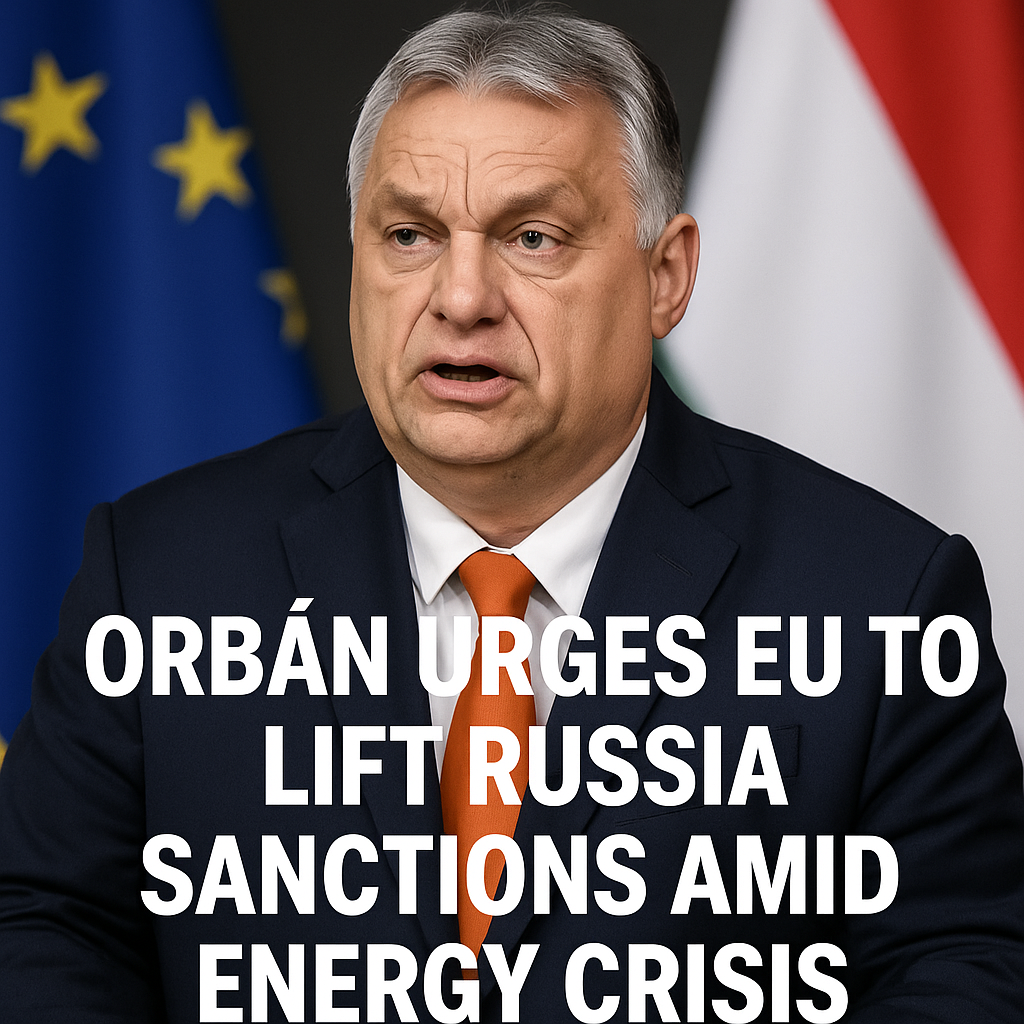
Orban Urges EU to Lift Russia Sanctions Amid Energy Crisis

Orban Urges EU to Lift Russia Sanctions Amid Energy Crisis
As Europe grapples with a significant energy crisis, Hungarian Prime Minister Viktor Orban is making headlines by urging the European Union to reconsider its sanctions on Russia. This call has ignited a heated debate across the continent, highlighting the complexities of the ongoing geopolitical landscape.

The Context of Energy Dependency
The current energy crisis in Europe has put a spotlight on the continent’s reliance on Russian gas. Following the onset of the war in Ukraine, the European Union implemented a series of sanctions against Russia, aiming to weaken its economic power and limit its ability to finance military actions. However, the repercussions of these sanctions have echoed through Europe, leading to soaring energy prices and concerns over supply shortages.


According to reports, Orban argues that Hungary and other EU nations are suffering economically due to high energy costs. He emphasizes that the sanctions are ineffective and suggests that lifting them might alleviate some of the immediate challenges faced by EU member states. This viewpoint finds some support among other countries that are also experiencing energy shortages and rising costs.


Diverse Opinions Within the EU
While Hungary’s stance is clear, opinions across the EU vary significantly. Some member states echo Orban’s concerns, stressing the need for pragmatic solutions to sustain energy supplies and protect their economies from recession. For instance, countries like Italy and certain Eastern European nations have voiced similar worries about the economic impact of continued sanctions.
On the contrary, many EU leaders firmly believe that maintaining sanctions is crucial for showing solidarity with Ukraine and holding Russia accountable for its actions. For them, the idea of lifting sanctions is seen as capitulating to aggression and undermining European unity. They argue that sanctions must remain in place as a critical tool for achieving long-term geopolitical goals, even if it entails temporary economic pain.
This division within the EU reflects the varying degrees of energy dependency among member states and showcases the difficulty of reaching consensus in times of crisis.
Weighing Economic Interests Against Political Values
The debate over lifting sanctions places EU nations at a crossroads: should economic stability take precedence over political values and solidarity? Orban’s position raises essential questions about the balance between short-term energy needs and the long-term geopolitical strategy of the EU.
Evidence from various sources illustrates that Orban’s appeal is not merely a nationalistic response but rather a reflection of genuine economic hardship. Countries like Spain and Portugal, which are less reliant on Russian energy, argue that the existing sanctions are necessary and sustainable in the long run. They point to the need for a united front against aggressors like Russia, while simultaneously pushing for investments in renewable energy as a more sustainable solution to the crisis.
The tension between these perspectives reveals the underlying conflicts within the EU, with some countries prioritizing immediate economic relief while others advocate for enduring sanctions as a demonstration of commitment to democratic values and human rights.
The Uncertain Road Ahead
As the crisis unfolds, the future of EU energy policy remains uncertain. Leaders must navigate these competing interests while considering the long-term consequences of their decisions on both energy security and geopolitical stability. While Orban’s call to lift sanctions resonates with some nations under economic duress, it has also sparked a counter-narrative advocating for continued pressure on Russia.
This dynamic showcases the multidimensional challenges facing the EU as it attempts to balance economic needs with fundamental principles. Experts caution that any decision to lift sanctions could have far-reaching implications for the EU’s credibility on the global stage. This reality is particularly pressing given the context of rising inflation and economic downturns exacerbated by the ongoing crisis.
Ultimately, the debate is far from settled. As the EU considers its next steps, it must weigh the immediate reality of energy needs against the larger frameworks of policy and ethics that have guided its postures toward Russia. Whether a consensus can be reached on this divisive issue remains to be seen as member states grapple with conflicting priorities in an increasingly complex geopolitical landscape.















