
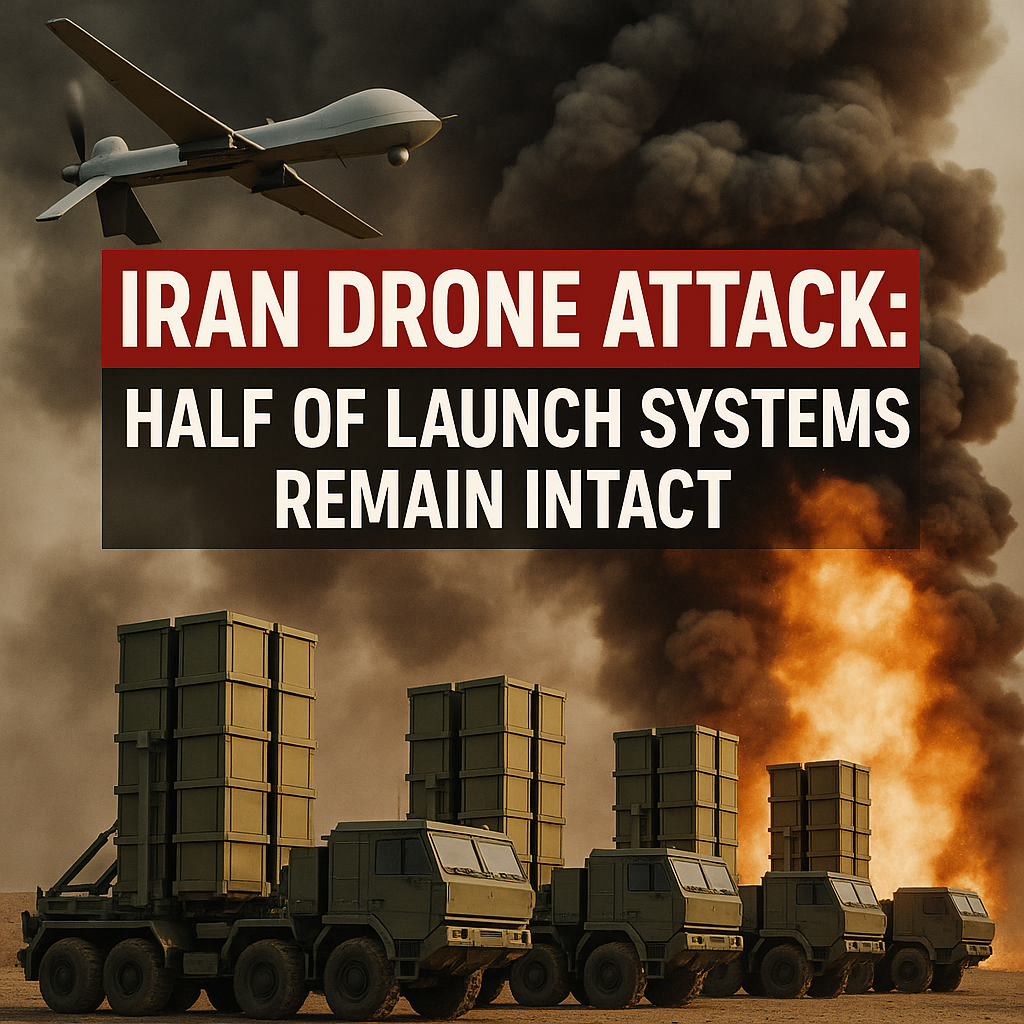
Iran Drone Attack: Half of Launch Systems Remain Intact

Iran Drone Attack: Half of Launch Systems Remain Intact
The recent drone attack attributed to Iran underscores the ongoing tensions in the region and raises significant concerns about military capabilities and geopolitical stability. Reports indicate that approximately half of Iran’s drone launch systems remain operational following these strikes, emphasizing the resilience of its military infrastructure. This situation invites an even deeper exploration of the implications for regional security and international relations.

The Resilience of Iran’s Drone Capabilities
Iran has been increasingly vocal about its military advancements, particularly in drone technology, which it views as crucial for deterrence and operational effectiveness. According to reports from RT, recent assessments suggest that even after targeted strikes, Iran’s drone capability remains largely unaffected, with “nearly half of its launch systems still intact.” This resilience is vital for a nation that has made significant investments in developing a sophisticated network of unmanned aerial vehicles (UAVs), aimed at countering adversaries in and outside the region.


Al Jazeera highlights that this situation demonstrates not only the challenges posed to military responses but also the strategic calculations involved for neighboring countries. With Iran’s launch capabilities largely preserved, there are fears that it could bolster its influence in proxy conflicts across the Middle East, consequently impacting regional stability.


Geopolitical Implications
The ongoing developments surrounding Iran’s drone capabilities present a complex web of implications for both regional and global politics. Several nations are compelled to reevaluate their defense strategies in light of Iran’s apparent capacity to continue drone operations, even after suffering strikes. Sky News points out that the enhanced surveillance and combat abilities conferred by these drones can serve pivotal roles in conflicts in Syria, Iraq, and Yemen, intensifying existing tensions with nations such as Israel and Saudi Arabia.
Moreover, these incidents echo the larger narrative of military posturing by Iran, insinuating that it may still be able to project power despite external pressures. The reported operational status of half of its drone systems indicates that Iran’s defense mechanisms are not as vulnerable as expected. This revelation challenges the notion that military action can effectively dismantle Iran’s strategic capabilities and suggests that any future engagements may require a more nuanced approach to diplomacy and deterrence.
Diverging Perspectives on Military Readiness
While some analysts emphasize the importance of these developments in understanding Iran’s military readiness, others express skepticism about the actual effectiveness of its drone capabilities. Critics argue that despite operational drones, Iran may struggle with the logistics of deployment and real-time strategic decision-making in high-pressure environments.
As noted by various commentators, the apparent durability of Iran’s military assets raises questions about the efficacy of strategies employed by adversaries aiming to limit Iran’s influence. If half of Iran’s drone launch systems are operational following purported successful strikes, it leads to a broader discussion about the potential for an arms race and the overarching strategies to counteract Tehran’s regional ambitions.
Uncertainties and Future Considerations
The situation is further complicated by the ongoing evolution of drone technology worldwide. As nations increasingly adopt UAVs for various military and reconnaissance purposes, the stakes continue to rise. Experts suggest that the ongoing developments may lead to a recalibration of diplomatic engagements in the Middle East, necessitating stakeholders to engage in dialogue that promotes de-escalation rather than exacerbation of tensions.
In conclusion, while the attack on Iran’s drone systems might initially appear as a tactical success for adversaries, the reality is more complex. Reports indicate that almost half of the systems reportedly remain intact, challenging previous assumptions about the effectiveness of military strikes. Moving forward, both regional and global powers must grapple with the implications of Iran’s resilient drone capabilities, which may shift tactical and strategic calculations across the geopolitical landscape. Recognizing the multifaceted nature of this issue will be essential in developing comprehensive strategies to enhance security and stability in the region.















