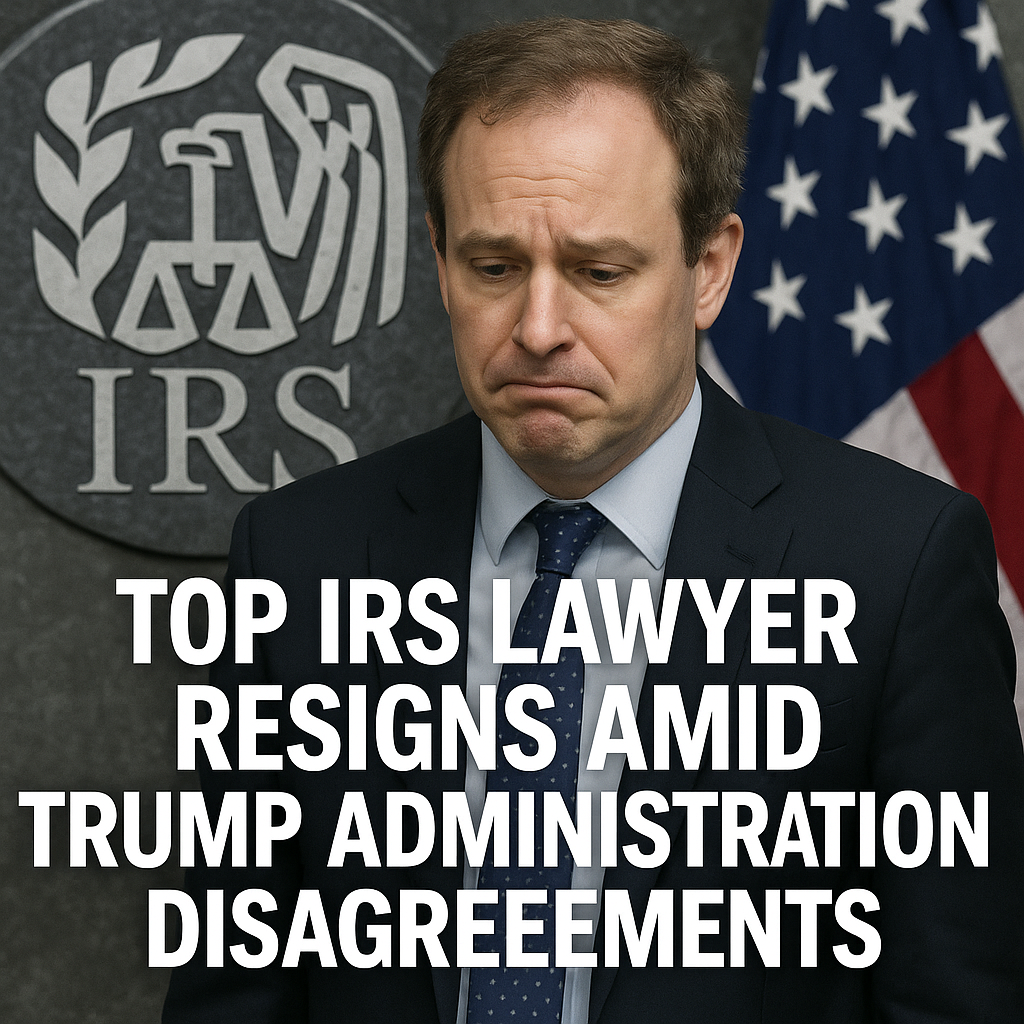
Top IRS Lawyer Resigns Amid Trump Administration Disagreements
Top IRS Lawyer Resigns Amid Disagreements with Trump Administration
The recent resignation of a top IRS lawyer has sparked discussions about the complex relationship between the Internal Revenue Service and the Trump administration, highlighting ongoing tensions within federal agencies. As the political landscape intensifies, this development raises questions about the credibility and direction of tax enforcement in the coming years.

Background and Context
The IRS has often found itself at the center of political debates, particularly during administration shifts. The resignation of LaTonia Smith, the agency’s chief legal counsel, comes amid reports of significant discord between her office and the Trump administration over various policy directions. Sources indicate that Smith’s concerns revolved around the administration’s priorities, especially those that could be seen as undermining the agency’s core mission of tax enforcement and compliance.

Compounding these tensions are the stark contrasts in governance styles between the Trump administration and traditional IRS practices. While the administration has claimed to focus on tax cuts and deregulation to stimulate the economy, critics argue that this approach may be detrimental to the integrity of IRS operations. Smith’s departure serves as a poignant reminder that leadership within such agencies is often influenced by broader political objectives.

Divergent Perspectives on the Resignation
On one hand, supporters of the Trump administration view Smith’s resignation as part of the natural ebb and flow of political appointments. The administration’s proponents argue that restructuring within federal agencies is necessary to align them more closely with the administration’s goals and to eliminate perceived bureaucratic inefficiencies.
Conversely, opponents contend that the resignation demonstrates a troubling trend within the government, where independence and impartiality are being compromised. Critics fear that replacing attorneys and officials who uphold legal norms with those who favor political alignment could jeopardize the IRS’s ability to enforce tax laws fairly. These sentiments reflect broader concerns about how political motives can dictate agency policies, which traditionally were expected to remain apolitical.
Implications for the IRS and Future Administration Relationships
The resignation raises significant implications for the IRS and its functioning. Experts argue that as leadership shifts occur, the agency must maintain its commitment to enforcing tax laws impartially. If the agency’s legal counsel is more aligned with political leadership than with established legal frameworks, public trust in the IRS could diminish further.
Tax compliance is vital for the federal government, and an effective IRS relies heavily on its legal counsel to navigate complex laws and implement policy changes. The effectiveness of tax policy directly affects government revenues and the ability to fund essential services. Therefore, maintaining continuity and expertise within the IRS is essential, particularly as the political winds shift.
The Path Forward
Moving ahead, it is crucial for the IRS to cultivate a culture that balances political considerations with its legal responsibilities. One potential avenue could involve clearer guidelines concerning the independence of legal counsel in federal agencies to protect them from undue political pressure. Ensuring that appointments to key positions within the agency reflect expertise rather than political loyalty could help restore public confidence in tax enforcement.
As we reflect on the resignation of LaTonia Smith, it’s clear that the relationship between the IRS and the current administration remains complex and fraught with challenges. The coming months will reveal how these dynamics evolve and what they mean for governance and tax policy in the United States. While there remains uncertainty about the future direction of the IRS, it is vital for policymakers and agency leaders to commit to upholding the integrity of the tax system amidst political changes. Ultimately, the accountability and effectiveness of the IRS depend on its ability to navigate these tensions without losing sight of its fundamental mission.