
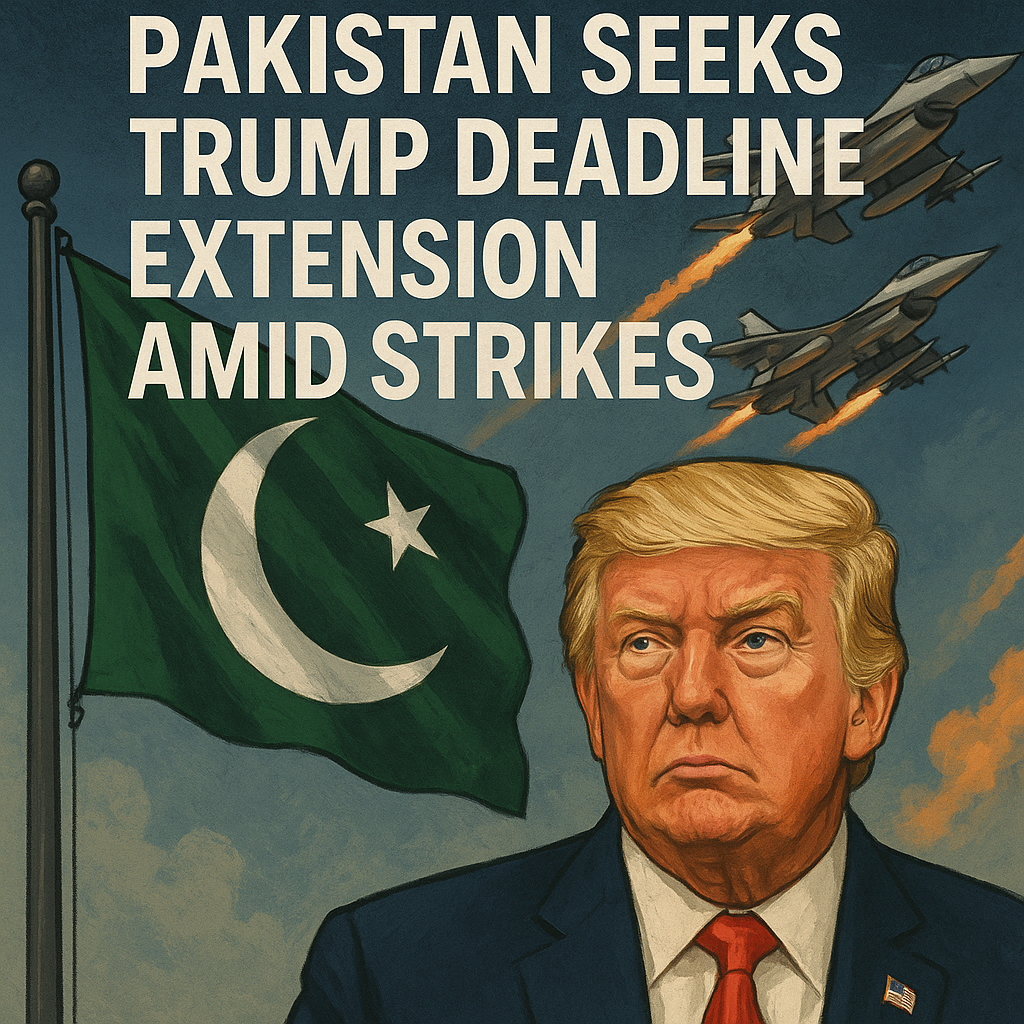
Pakistan Seeks Trump Deadline Extension Amid Strikes

Pakistan Seeks Trump Deadline Extension Amid Strikes
In a time of heightened geopolitical tensions, Pakistan is now seeking an extension regarding deadlines set forth by former President Donald Trump concerning its nuclear proliferation policies. This move reflects the shifting dynamics in global diplomacy, particularly amid ongoing military strikes attributed to regional conflicts.

Context of the Deadline
The Trump administration laid down conditions that significantly affected Pakistan’s foreign relations and its internal security policies. These measures aimed to curb the proliferation of nuclear weapons, reflecting the broader strategy of the U.S. to stabilize regions perceived as threats. However, as new developments unfold, Islamabad’s attempts to negotiate an extension represent not just a tactical maneuver but a complex reevaluation of its strategic priorities amidst external pressures.


The Strikes and Their Implications
Recent strikes in Iran, specifically around Kharg Island, have drawn international attention. These actions are often seen as proxies in a broader regional struggle involving multiple players, including the U.S. and Iran. According to reports, these military operations have not only escalated tensions but also influenced the decisions of neighboring countries like Pakistan. With the specter of military conflict looming, Pakistan’s call for an extension of U.S. deadlines becomes more understandable.


– Military Dynamics: The continued military operations in Iran could lead to a significant restructuring of alliances and security pacts in South Asia. The fragility of peace in the region places Pakistan in a precarious situation, necessitating swift diplomatic action.
– Internal Pressures: Domestically, Pakistan is grappling with economic struggles and political unrest. The renewed demands from the U.S. for stricter compliance on nuclear policies add another layer of complexity to its domestic governance.
Diverging Opinions on the Path Forward
Opinions on Pakistan’s request for an extension vary widely among international analysts. Some argue that such a negotiation could provide Islamabad with breathing room to address its internal issues, while others caution against the potential ramifications of extending these deadlines.
Balancing Act for Islamabad
1. Strategic Negotiation: Supporters of Pakistan’s extension claim that thoughtful diplomacy may allow the country to navigate its security needs while also building more robust internal frameworks. This could reinforce the idea that long-term stability might be achieved through negotiation rather than outright compliance with rigid foreign demands.
2. Risk of Desperation: Conversely, critics assert that seeking a deadline extension may signal a lack of resolve within Pakistani leadership, potentially undermining its position internationally. They warn that showing weakness may embolden both regional adversaries and internal groups that oppose government policies.
International Reactions
The global reaction to Pakistan’s request varies significantly. According to Al Jazeera, some analysts emphasize the importance of U.S. commitment to stabilizing the region. If the U.S. were to grant Pakistan this extension, it may demonstrate a willingness to engage with its allies under challenging circumstances. However, other commentators on outlets such as Sky News suggest that this could lead to a precedent where other nations might also seek extensions in compliance with international norms, ultimately undermining global non-proliferation efforts.
The Uncertain Future
As events unfold, the implications of Pakistan’s request remain deeply uncertain. While there are compelling arguments from both sides, the crux of the issue is whether this extension will ultimately enhance regional stability or erode U.S. leverage in South Asia. Continued monitoring of both the strikes in Iran and Pakistan’s diplomatic maneuvers will be essential to understanding the evolving landscape.
Conclusion
Pakistan’s pursuit of a deadline extension from the U.S. speaks to the complexities of contemporary geopolitics. With military conflicts shaping the backdrop, Islamabad finds itself at a crossroads: should it hold fast against the pressures of international diplomacy, or adapt its policies in pursuit of long-term stability? As the situation develops, the global community will be watching closely, eager to see how this delicate balance will ultimately play out in the increasingly interconnected world of international relations.















