
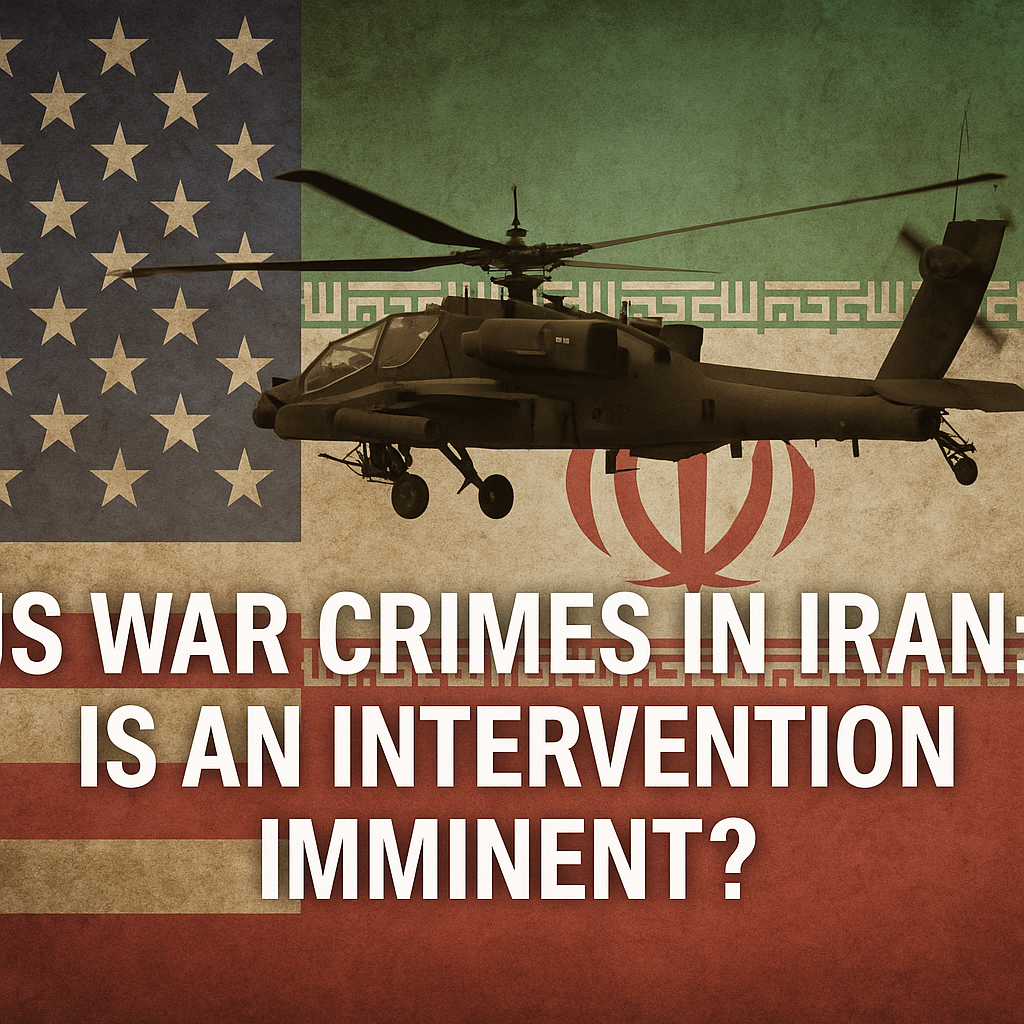
US War Crimes in Iran: Is an Intervention Imminent?

US War Crimes in Iran: Is an Intervention Imminent?
The discussion surrounding potential US military intervention in Iran has escalated in recent months, raising eyebrows about the implications of such actions and the specter of war crimes. While the situation remains complex, understanding various perspectives can provide greater clarity on this fraught geopolitical landscape.

The Current Tensions and Context
Tensions between the United States and Iran have spiked significantly since the US withdrew from the Joint Comprehensive Plan of Action (JCPOA) in 2018. This withdrawal and subsequent sanctions have had devastating impacts on Iran’s economy, leading to widespread discontent and protests. In response to these internal pressures, Iran has been accused of escalating its nuclear program and exerting influence in surrounding regions. This has, in turn, led the US and its allies to perceive Iran as a growing threat.


Recent RSS feeds, particularly from outlets like Al Jazeera and Sky News, highlight that skepticism exists about whether these tensions will lead to direct military intervention. A piece from Sky News poses the question of whether the US is preparing to commit war crimes by considering military action in Iran, suggesting a cautious approach to the situation may be warranted. Al Jazeera echoes this sentiment, reflecting on the historical context of US involvement in Middle Eastern conflicts and the resulting humanitarian crises.


A Long History of Conflict
To understand the potential repercussions of any military action against Iran, it is vital to consider the historical context. The United States has a long and complicated history with Iran that dates back to the 1953 CIA-led coup, which overthrew a democratically elected government. This legacy contributes to deep-rooted mistrust and animosity.
Recent military interventions in the Middle East, characterized by high civilian casualties and a lack of clear objectives, have led critics to caution against a repeat scenario. Reports indicate that the US military operations in Iraq and Afghanistan have resulted in significant civilian deaths and ongoing instability. As mentioned in various analyses from RT and other sources, any intervention in Iran could lead to similar or even worse outcomes, provoking anti-American sentiments and potentially igniting a larger regional conflict.
Diverging Perspectives on Intervention
Analysts present a spectrum of views on the potential for US intervention in Iran.
On one side, voices from US political and military circles express urgency regarding Iran’s nuclear capabilities, advocating for a preemptive strike to mitigate what they perceive as an imminent threat. They argue that failing to act could embolden Iran and destabilize the region further. Supporters of this viewpoint cite Iran’s actions in Syria and its support for proxy groups as evidence that the nation poses a threat not only to its neighbors but also to global security.
Conversely, many international observers and human rights advocates caution against military action. They argue that intervention would exacerbate the humanitarian crisis in Iran, resulting in civilian casualties and further destabilizing the country. Al Jazeera emphasizes that a military strike would likely violate international law regarding war crimes by targeting civilian infrastructure and causing indiscriminate harm.
Moreover, many proponents of diplomacy believe that engagements and negotiations could yield more favorable outcomes. A peaceful resolution to the nuclear question not only minimizes loss of life but also promotes stability in a historically tumultuous region.
The Human Cost of War
The potential for war crimes in the context of US intervention in Iran underscores the ethical debates surrounding military actions. Humanitarian organizations warn that any military action must consider the civilian populations at risk, driving home the importance of minimizing civilian casualties. As noted by various sources, including Sky News, the threshold for identifying actions as war crimes includes intentional targeting of civilians or disproportionate military responses.
A military intervention that leads to extensive civilian harm raises profound moral questions. Critics argue that past interventions have demonstrated that military solutions often fail to address underlying issues, instead leading to prolonged conflict and suffering. In light of this history, it is imperative to scrutinize the potential humanitarian implications of any proposed actions.
Conclusion: The Outlook Ahead
The looming question of whether the US will intervene in Iran remains uncertain, with strong arguments on both sides of the debate. As international tension continues to escalate, the specter of war crimes looms large, complicating any military considerations. The imperative to seek diplomatic solutions instead of military interventions is reinforced by the devastating humanitarian consequences of past conflicts.
Engaging in dialogue and fostering negotiations could represent a more responsible approach, allowing for the exploration of solutions that promote peace without the fallout of military confrontation. As the global community watches closely, the hope remains that history will not repeat itself in a manner that incurs further tragedy for the Iranian people and beyond.















