
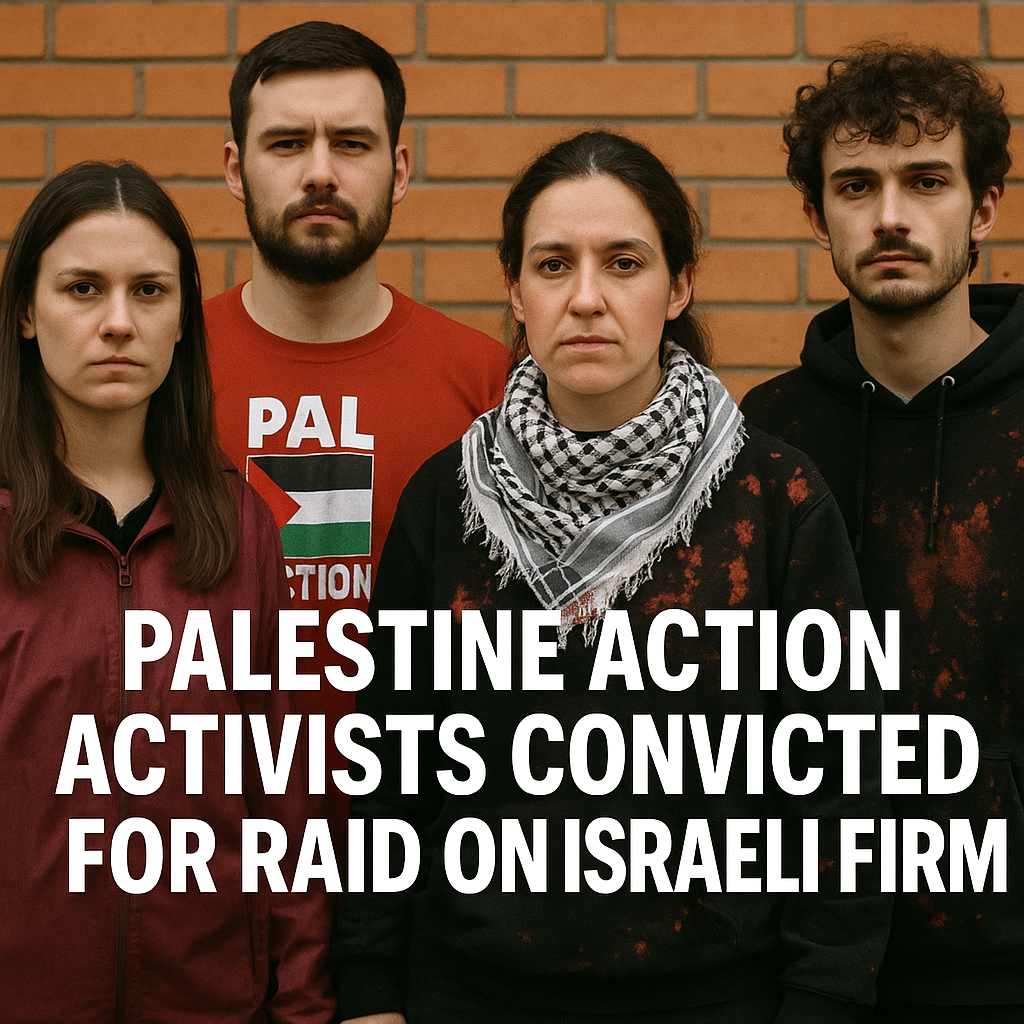
Palestine Action Activists Convicted for Raid on Israeli Firm

Palestine Action Activists Convicted for Raid on Israeli Firm
In a development that has sparked widespread debate, several activists from the group Palestine Action have been convicted for their involvement in a raid on an Israeli aerospace firm in the UK. The activists, who advocate for Palestinian rights, carried out this attack as a means to protest what they describe as complicity in the oppression of Palestine. Their actions reflect a significant intersection of activism, international relations, and human rights discussions.

The Incident: Aims and Reactions
The raid on the Israeli company—known for its production of military technology—occurred in 2021 and was characterized by the activists as a necessary step to “disrupt the supply chain of oppression” against Palestinians. During the incident, windows were broken, and equipment was damaged, which the activists argued was an act of civil disobedience aimed at drawing attention to broader geopolitical issues.


In court, the activists claimed their actions were driven by moral responsibility, asserting that companies that engage in arms manufacturing contribute to violence and suffering in conflict zones. Their conviction has elicited varied responses from the public, ranging from support among pro-Palestinian groups to condemnation from detractors who classify such acts as terrorism rather than protest.


This event highlights the complexities surrounding the debate on freedom of speech and the right to protest. While some view the activists as heroes standing up against injustice, others see them as criminals who undermine the rule of law and jeopardize public safety.
Different Viewpoints on the Conviction
The conviction has drawn attention not only for its implications for the activists themselves but also for its potential impacts on activism as a whole. Reports reflect a divided opinion on whether the judiciary’s actions are supportive of established legal frameworks or if they infringe upon the rights of individuals exercising their right to protest.
– Pro-Activism Perspective: Supporters argue that the ruling sends a chilling message to activists everywhere. Advocates for Palestinian rights emphasize that nonviolent resistance has historical precedent and has often been misconstrued. They maintain that the actions taken by Palestine Action were aligned with principles of civil disobedience, a cornerstone for many social movements around the world.
– Rule of Law Perspective: On the other side, critics contend that such actions cannot be justified, regardless of the underlying cause. They argue that the activists’ violent methods divert attention from peaceful dialogue and negotiations. This viewpoint endorses the notion that laws serve to maintain society’s order, and when individuals step outside these parameters, they threaten public safety and social cohesion.
In examining these contrasting opinions, it’s clear that the unintended consequences of such actions will resonate far beyond the courtroom. The question of how far individuals may go in their quest for justice remains complex and fraught with moral ambiguity.
Societal Implications and Broader Context
The Palestine Action case does not exist in a vacuum; it interacts with larger narratives surrounding international conflicts, human rights, and arms trade. A significant point of discussion among commentators focuses on the role of defense contractors and their responsibilities in conflict zones. Many argue that firms engaged in military production must be held accountable for the repercussions of their products, particularly in sensitive geopolitical environments.
As countries around the world wrestle with their respective positions on the Israeli-Palestinian conflict, actions like this raid remind us that grassroots movements are often born from deep-rooted frustrations about injustice. However, the efficacy and legitimacy of such protests are hotly contested.
Moreover, reactions to the conviction may enlighten or complicate international dialogues about civil unrest and the boundaries of protest. Societies at large have to consider where the line is drawn between righteous anger and lawful conduct.
Conclusion: The Path Ahead
As the Palestine Action activists face sentencing, the implications of their conviction will likely ripple through the fabric of activist movements and human rights discussions. The broader community of activists may grapple with the uneasy balance between advocating for change and adhering to legal boundaries.
While the specific details of the case may fade from headlines, the issues it raises surrounding civil liberties, activism, and geopolitical ethics will continue to resonate. Navigating these waters requires open dialogue and an acknowledgment of the multifaceted challenges that activism presents today. What remains clear is that the intersection of activism and legality will be subject to evolving interpretations and sentiments as society continues to engage in discussions about justice and resistance.















