
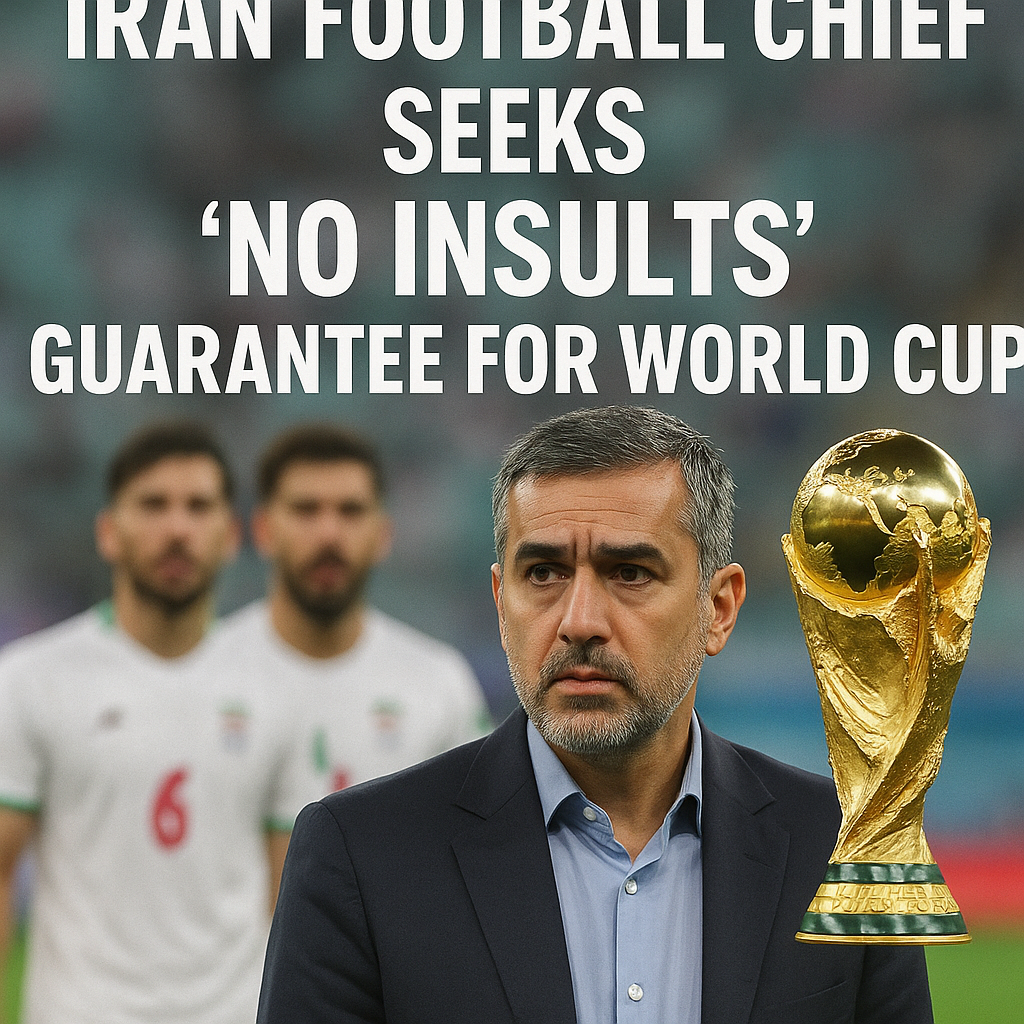
Iran Football Chief Seeks ‘No Insults’ Guarantee for World Cup

Iran Football Chief Seeks ‘No Insults’ Guarantee Ahead of World Cup
As the global sporting community gears up for the World Cup, Iran’s football chief has called for a “no insults” guarantee directed at the Islamic Revolutionary Guard Corps (IRGC). This request highlights the complexities surrounding the intersection of sports, politics, and national identity, especially in a region marked by longstanding tensions.

The Context of the Request
Football has often served as a vibrant platform for expressing national pride and cultural identity. In Iran, the sport is a significant part of the social fabric. However, the recent political climate, particularly regarding the IRGC’s role in the country’s governance and its controversial activities, adds an intricate layer to the World Cup preparations. The escalating tensions between Iran and various international actors are further complicated by internal dissent, particularly from those advocating for human rights and freedom of expression.


The request for guarantees against insults towards the IRGC emerges from a backdrop of potential backlash against the regime, especially during an event that draws global attention. Reports indicate that the Iranian football federation’s president, Mehdi Taj, has approached FIFA for assurances that their players and officials will not face derogatory remarks during the tournament. Taj emphasized the need for diplomacy in sports and called for an atmosphere of respect and understanding.


Divergent Perspectives
The football chief’s position has sparked a range of reactions both domestically and internationally. Some argue that such requests are not just unrealistic but also detrimental to the spirit of the sport, which thrives on competition and often becomes a channel for social commentary. Critics highlight the irony of an authoritarian regime seeking protection from criticism while suppressing dissent at home. This perspective reflects growing frustration over the Iranian government’s approach to sports as a means of propaganda rather than true representation.
On the other hand, supporters of Taj’s request argue that ensuring respect during international events could facilitate a more peaceful dialogue between nations. They contend that the World Cup could act as a rare opportunity for Iran to present a more favorable image on the world stage, fostering interactions that might ease tensions over time.
FIFA’s official response to Iran’s appeal, as of now, remains unclear. While known for valuing the principle of fair play, the organization also faces challenges when navigating the politically charged environments of participating countries. Historical precedents show that sports federations often tread carefully in political matters to avoid alienating nations or fans.
The Broader Implications
This request is not just about one tournament; it resonates with broader themes of identity, sovereignty, and the role of international sports in geopolitical relations. The World Cup, viewed by many as a global celebration of unity, often highlights the fractures within nations—fractures that can be deepened by political disputes and social inequalities.
Iran has a tumultuous relationship with many countries, and issues surrounding human rights abuses have frequently put it at odds with international sentiment. During the tournament, Iranian players may feel the weight of their country’s political realities—balancing their roles as athletes against the expectations of a regime that prioritizes image over genuine representation.
As the tournament nears, Iran’s football chief’s unconventional appeal raises a critical dance between diplomacy, sport, and the current political landscape. There is no clear consensus on whether these guarantees can—or should—be given, reflecting the ongoing tensions in addressing political discourse through the lens of athletic achievement.
In an increasingly globalized world, where the lines between sports and politics often blur, the discussions surrounding the World Cup and Iran will likely reflect more than just football. They pose broader ethical questions about national representation, state power, and the role of international sports organizations in navigating complex social landscapes. Ensuring a respectful and inclusive environment is essential, but the feasibility of achieving that amid deep-rooted conflicts is uncertain.
As the global community keeps an eye on the World Cup, the interplay of sports, politics, and national identity will undoubtedly continue to evolve, raising further questions about the road ahead for Iran and its athletes.















