
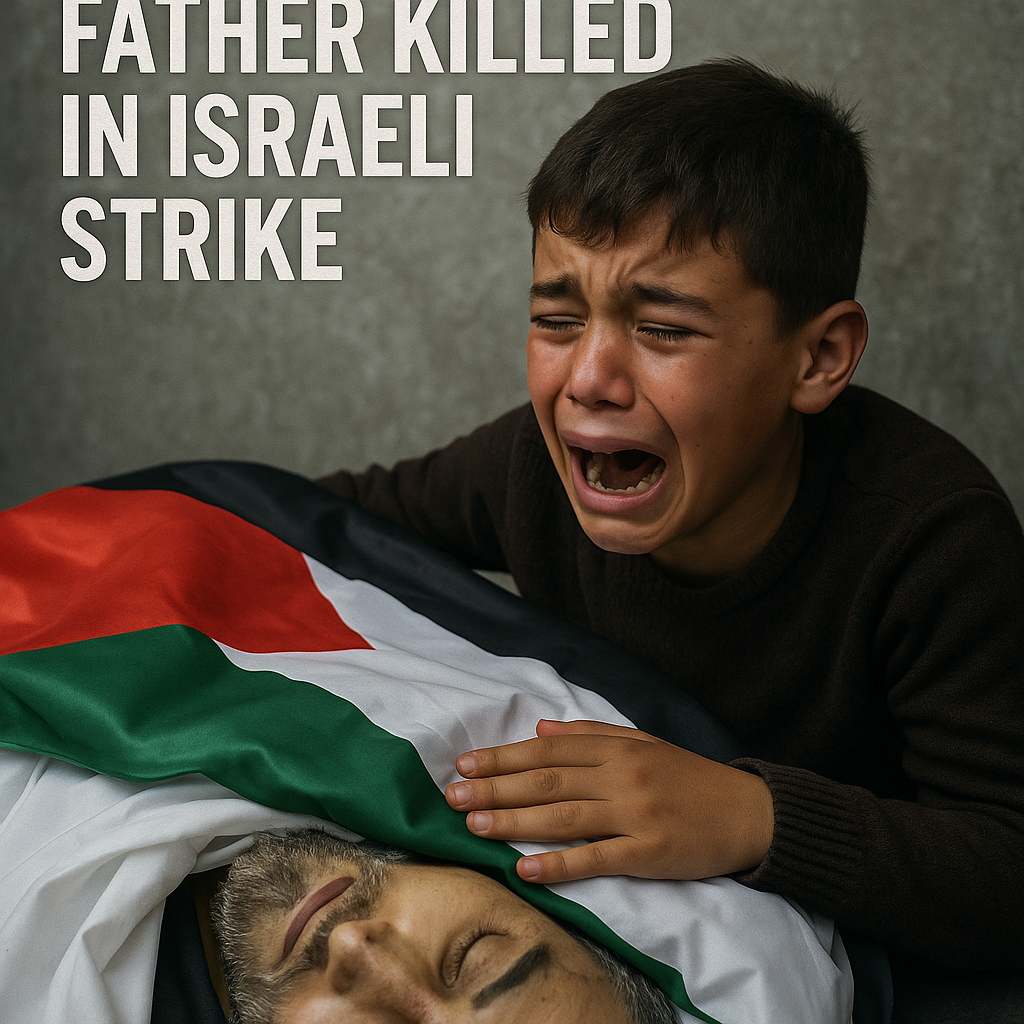
Palestinian Boy Mourns Father Killed in Israeli Strike

A Heartbreaking Loss: Palestinian Boy Mourns Father Killed in Israeli Strike
The ongoing Israeli-Palestinian conflict continues to claim lives and breed heartache, exemplified by the recent story of a Palestinian boy mourning the death of his father in an Israeli strike. Such tragedies not only highlight the devastating impact of war on families but also raise essential questions about the broader implications of continued military action in the region.

The Personal Toll of Conflict
In a harrowing video report, a young boy can be seen expressing his grief over the loss of his father, who was killed during an Israeli airstrike targeting what officials described as a security post. Al Jazeera reported the incident, emphasizing the emotional devastation for the family left behind. The boy’s poignant cries serve as an evocative reminder of the human cost of armed conflict, where the pain of loss is deeply felt by individuals and communities alike.


The Israeli military often justifies such strikes by citing security needs and the targeting of militants. However, the collateral damage, particularly civilian casualties, ignites international outrage and raises moral questions about the use of force. According to statements from various human rights organizations, a significant number of casualties in these strikes tend to be non-combatants, amplifying the cycle of violence and resentment that fuels the conflict.


Differing Perspectives on Accountability
Opinions regarding the responsibilities of both Israeli and Palestinian authorities diverge sharply. On one side, RT reports on Israeli officials defending airstrikes as necessary measures against perceived threats, arguing that they aim to protect its citizens from rocket attacks. The Israeli government has consistently framed their military actions as acts of self-defense in the context of ongoing hostility from various militant groups.
Conversely, Palestinian advocates and several international observers argue that these airstrikes disproportionately impact innocent civilians, violating international humanitarian laws. They call for accountability and a reevaluation of tactics used by both sides in this protracted conflict. The plight of children, such as the boy mourning his father, drives home the urgency of finding a sustainable solution to the violence.
Uncertainties and Complex Realities
A critical aspect of understanding the situation is recognizing the complexities surrounding violent confrontations. Many media narratives focus primarily on immediate casualties without delving into the underlying issues that perpetuate the cycle of violence. Broadly, issues related to territorial disputes, military occupation, and historical grievances shape the backdrop of such incidents.
The responses following the tragedy reflect the ongoing polarization in public opinion. Some viewers empathize with the lost family, while others express unwavering support for their nation’s military actions—creating a stark divide in how these events are perceived. The deep-rooted nature of the conflict complicates public discourse, often leading to heated debates rather than constructive conversation.
Moving Toward a Solution
To prevent further heartbreak, it is essential for global leaders and organizations to facilitate diplomatic dialogue aimed at reducing tensions. Given the emotional weight carried by families like the mourning boy’s, efforts must focus on both immediate humanitarian relief and long-term peace-building initiatives. Many believe that stability can only emerge when both parties engage in meaningful conversations, addressing the core grievances that have fueled conflict for decades.
The international community also has a role to play by advocating for restraint and scrutinizing military actions that result in civilian casualties. As the heart-wrenching video of the young boy’s grief highlights, each loss in this conflict is not just a statistic but a profound tragedy for families who are left to navigate life amidst grief and uncertainty.
In conclusion, while the Israeli-Palestinian conflict remains fraught with historical complexities and contrasting narratives, it is vital to center discussions on the human experiences shaping this ongoing tragedy. The boy’s sorrow encapsulates the profound toll of violence, demanding a reconsideration of strategies employed by both sides to avert further familial devastation. Efforts must amplify the voices of the grieving while striving toward a future where loss is no longer part of daily life, allowing children’s laughter to replace their tears.















