
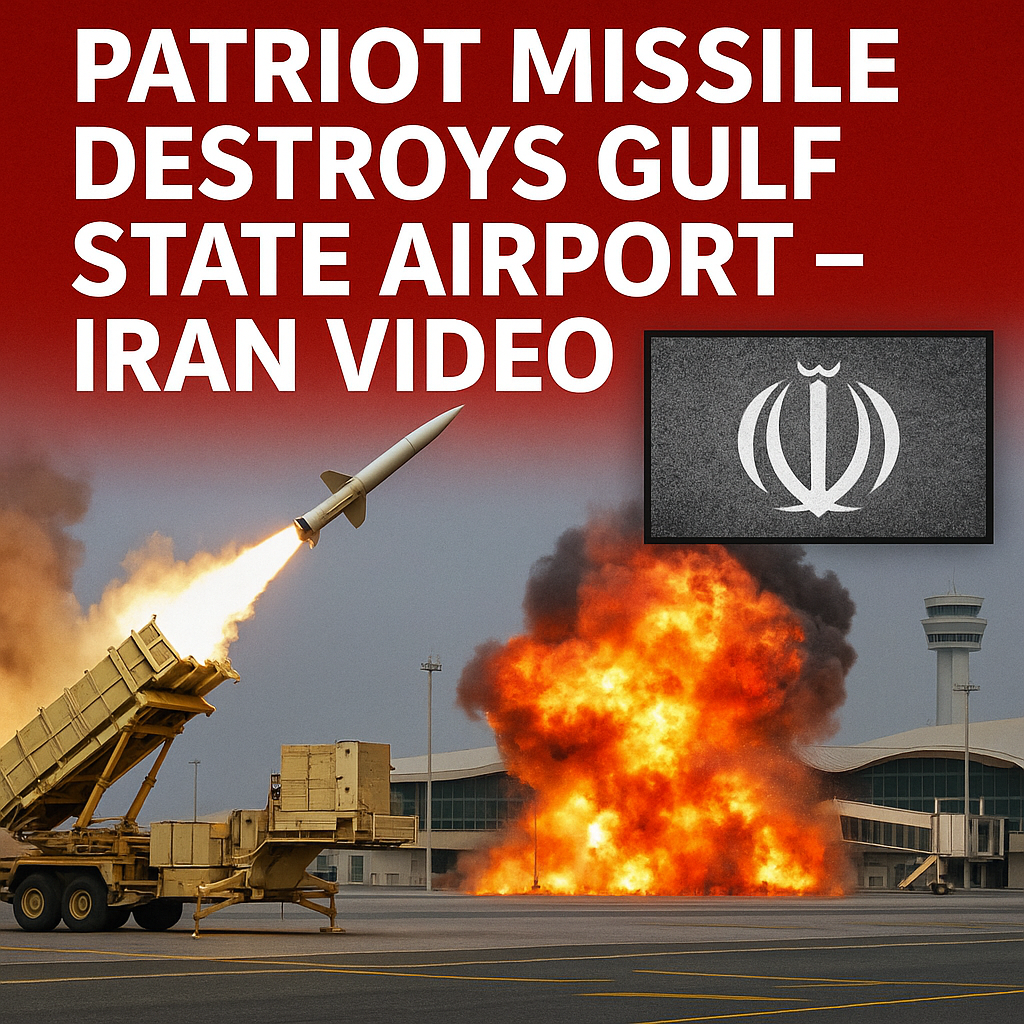
Patriot Missile Destroys Gulf State Airport – Iran Video

The Complex Dynamics of the Gulf State Airport Attack
The recent incident involving a Patriot missile destroying an airport in a Gulf state has reignited discussions about regional security and geopolitical tensions. Reports indicate that the missile strike, widely attributed to Iranian actions, raises serious questions regarding military engagement and international diplomacy in the Middle East.

Context of the Attack
The strike on the airport, claimed by Iranian forces via a video release, illustrates the increasingly volatile nature of Middle Eastern politics. According to various sources, the Patriot missile was part of a broader military strategy aimed at demonstrating Iran’s missile capabilities. Iran has positioned itself as a dominant player in the region, often clashing with U.S. interests and allies.


Responses to the attack have varied dramatically across media outlets. RT News suggests that the incident underscores Iran’s intentions to project power against perceived threats from neighboring states and foreign military presence, particularly from the United States. Their coverage frames the action as a necessary response to external aggression and asserts that such military capabilities are vital for Iran’s national defense.


In contrast, Al Jazeera emphasizes the humanitarian implications of the strike, highlighting the potential civilian toll and questioning the efficacy of military solutions in resolving longstanding conflicts. The focus shifts from military might to the urgent need for diplomatic resolutions, reflecting a viewpoint that prioritizes peace over aggression. Their article suggests that continued military escalations could spiral into broader confrontations, impacting not only the direct participants but also regional stability as a whole.
Perspectives on Military Engagement
The differing narratives surrounding the incident highlight the complexities of military engagement in the region. Supporters of the Iranian action might argue that it serves as a deterrent against perceived threats, reinforcing a narrative of strength. However, critics argue that this approach could lead to catastrophic outcomes for civilians and destabilize the entire Gulf region.
Furthermore, global stakeholders are increasingly concerned about the implications of such military actions. The U.S. response has traditionally involved increased military support for its allies in the region. However, there is an emerging dialogue among international analysts about the precarious balance of power and the risks associated with a further militarized response to Iranian provocations.
As the conflict demonstrates, such military engagements are rarely straightforward or justified solely on the grounds of defense. The ethical considerations of civilian safety and the effectiveness of military deterrence must be weighed carefully. Congressional debates in the U.S. reflect growing skepticism about the long-term efficacy of military interventions, especially when weighed against the backdrop of potential civilian casualties.
The Role of International Diplomacy
Amidst rising tensions, the role of international diplomacy cannot be overstated. Russia’s positioning as an ally of Iran and its recent reassurances of support have complicated the narrative, drawing in a broader spectrum of global power dynamics. With each international player having its vested interests, the pathway toward de-escalation appears fraught with challenges.
Experts argue that an all-encompassing dialogue involving all relevant parties is essential for achieving a sustainable resolution. Diplomatic channels could facilitate negotiations that take into account the security concerns of both Iran and neighboring Gulf states. As cited by various analysts, only a multi-faceted approach that incorporates military, diplomatic, and humanitarian perspectives can yield lasting peace and stability.
A Cautious Path Forward
While each side of the argument has its validity, the path forward remains uncertain. Those who argue for military preparedness may face consequences from escalation, while advocates for diplomatic solutions warn against the naivety of ignoring military capabilities altogether. The differing responses to the missile strike serve as a stark reminder of the intricate web of issues that define Middle Eastern politics.
In conclusion, the missile destruction of the Gulf state airport acts as a catalyst for broader discussions about military engagement and diplomacy in a region marked by historical grievances and modern geopolitical tensions. It illustrates a critical moment that could either lead to further destabilization or an unexpected opportunity for diplomatic progress. The voices of those advocating for peace must resonate strongly in the aftermath of such escalations, reminding all parties that the journey towards resolution is just as vital as the actions taken in response to conflict.















