
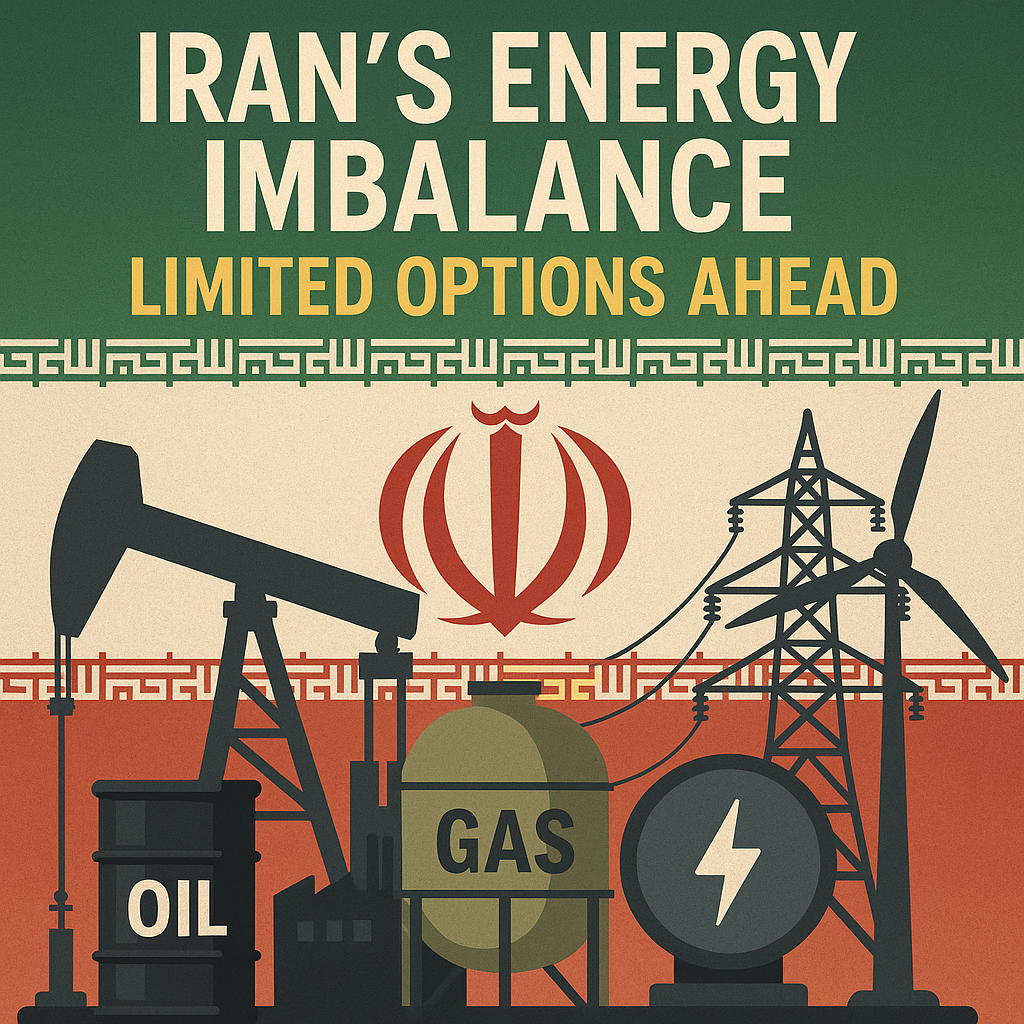
Iran’s Energy Imbalance: Limited Options Ahead

Iran’s Energy Imbalance: Limited Options Ahead
Iran’s energy imbalance presents a complex challenge that highlights the country’s limited options for addressing its growing needs. With a population exceeding 85 million, Iran struggles to meet its energy demand effectively, exacerbated by a series of economic sanctions and internal infrastructural issues. This article aims to explore the nuances of Iran’s energy situation, analyzing diverse viewpoints and emphasizing the multifaceted nature of the problem.

The Current Scenario
Iran’s energy production capabilities have been adversely affected by prolonged international sanctions, particularly those targeting its oil and gas sectors. The International Energy Agency (IEA) reported that Iran’s crude oil output plummeted significantly after sanctions were re-imposed in 2018, straining its already delicate energy infrastructure. According to Al Jazeera, the Iranian government has struggled to manage its energy resources effectively, facing an increasing gap between supply and demand.


In contrast, Iran possesses substantial energy reserves—one of the largest natural gas and oil reserves globally—yet mismanagement and a lack of investment have hampered the utility of these resources. The government aims to pivot towards a more sustainable energy model, but competing priorities and international isolation complicate these plans.


Internal and External Pressures
One of the key factors contributing to Iran’s energy crisis is its heavy reliance on fossil fuels. More than 90% of the country’s energy consumption comes from crude oil and natural gas, limiting diversification efforts. RT News emphasizes that while the government has announced ambitious renewable energy initiatives, actual implementation remains sluggish, primarily due to economic constraints.
Moreover, multiple reports, including those from Sky News, highlight the internal pressures facing Iran’s energy sector, such as obsolete technologies, poor infrastructure, and governmental corruption. These systemic issues hinder the country’s ability to transition toward more sustainable energies effectively. The result is an energy imbalance that not only jeopardizes domestic stability but also hampers economic growth.
Diverse Perspectives on Solutions
Opinions on potential solutions for Iran’s energy imbalance vary widely. Some experts advocate for a greater focus on international partnerships to broaden energy investments. The IEA suggests that restoring foreign investments could yield immediate benefits, allowing for enhanced extraction and production methodologies. In this view, a lifting or softening of sanctions would be crucial for inducing foreign capital back into Iran’s energy market.
Conversely, others argue that relying too heavily on external sources may further complicate Iran’s sovereignty and long-term planning. Some analysts recommend emphasizing domestic capabilities by bolstering renewable energy projects like solar and wind, in addition to addressing technological deficits internally. According to a recent Sky News report, Iran’s geographic advantages in solar energy should be better leveraged to meet both current and future energy requirements.
The Role of Geopolitical Dynamics
Geopolitical tensions also cast a shadow over the country’s energy prospects. Iran’s relationships with neighboring countries and Western powers could significantly affect its ability to engage in energy trade. Al Jazeera notes that while Iran’s government has pursued a “Look to the East” policy, focusing on relationships with countries like China and Russia, this strategy offers limited immediate help due to the specific energy needs and technological contributions of these partners.
Moreover, external factors such as the global shift towards cleaner energy sources may further disadvantage Iran in the long run. The country’s commitment to fossil fuels clashes with a growing global consensus about reducing carbon emissions and achieving sustainability goals. Hence, the path ahead involves not only internal reforms but also a nuanced understanding of global energy trends.
Conclusion: Facing the Future
Iran’s energy imbalance presents a complicated intersection of economic, infrastructural, and geopolitical challenges. While the nation possesses significant energy potential, inadequate management and a restrictive international environment contribute to ongoing difficulties.
The solutions may involve a blend of domestic innovation and cautious international engagement, coupled with a clear acknowledgment of global energy transitions. As Iran navigates this multifaceted crisis, the choices made in the coming years will be critical—not just for the nation, but for its standing in a rapidly evolving world energy landscape. The uncertainty surrounding these dynamics calls for careful monitoring, signaling that the path to equilibrium is neither straightforward nor immediate.















