
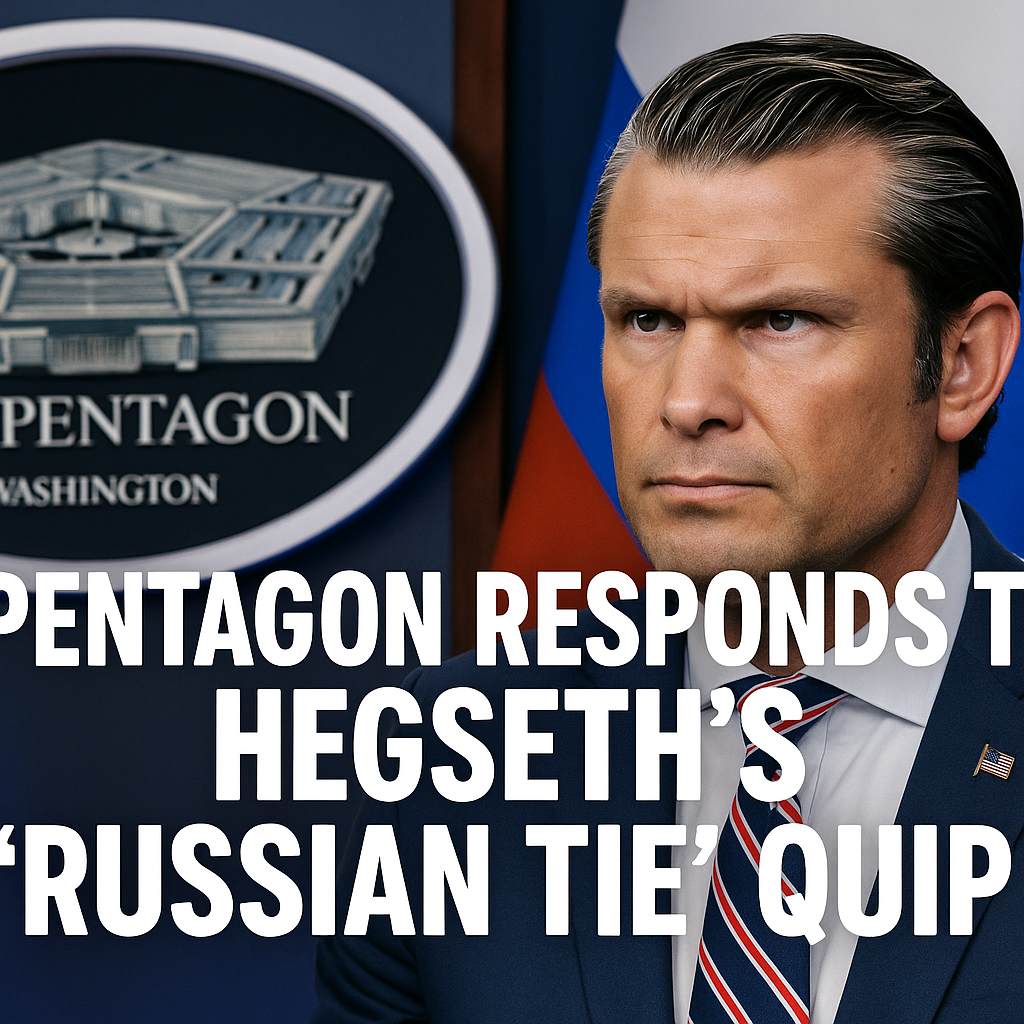
Pentagon Responds to Hegseth’s ‘Russian Tie’ Quip

Pentagon Responds to Hegseth’s ‘Russian Tie’ Quip
The recent quip made by Fox News host Pete Hegseth regarding wearing a “Russian tie” at a military event has ignited a flurry of discourse, culminating in a response from the Pentagon. This controversial statement not only sheds light on the complexities of U.S.-Russia relations but also provokes questions about the role of media personalities in shaping narratives around national security.

The Incident: Hegseth’s Comment and Its Repercussions
During a segment on Fox News, Hegseth jestingly suggested that “wearing a Russian flag tie” at a military function would elicit applause from some quarters. This remark was met with immediate backlash and concern, notably within the Pentagon and from various political commentators who analyzed its potential implications.


The Pentagon was quick to respond. A spokesperson emphasized the seriousness of U.S. military engagements with Russia, stating, “We do not take lightly any comments that may undermine the sacrifices our service members make.” This perspective highlights a fundamental concern: the potential normalization of rhetoric that trivializes the complexities of international relations, especially with a nation that is currently viewed as a geopolitical adversary by many in the West.


Conflicting Perspectives: Media Satire vs. Military Awareness
Hegseth’s comment reflects a strain of humorous skepticism often found in media commentary, where humor attempts to capture audience attention. Supporters of Hegseth’s approach may argue that satire serves an essential role in political discourse, allowing citizens to engage with weighty topics without the burden of solemnity. They may view Hegseth as a caricaturist, using hyperbole to critique the alertness of military bureaucracy in a satirical light.
Conversely, critics argue that such remarks are reckless, especially in an age where misinformation can travel rapidly. They underscore the importance of maintaining awareness around the serious implications of U.S.-Russia relations. Al Jazeera noted that “comments made by influential figures can obscure the real dangers posed by external threats,” suggesting a responsibility that comes with media platform prominence.
The Broader Context: U.S.-Russia Relations and Public Perception
Hegseth’s comment is not merely a standalone instance; it’s situated within a broader narrative of U.S.-Russia relations that has been fraught with tension. The ongoing conflict in Ukraine and various sanctions imposed on Russia have kept American attitudes toward the country largely negative. Public sentiment leans towards viewing Russia as a significant threat, which makes light-hearted remarks on the topic particularly sensitive.
Furthermore, the juxtaposition of humor and seriousness often tests public tolerance. Fox News, and specific commentators like Hegseth, are known for pushing boundaries, often leading to polarizing receptions. While some viewers may appreciate a casual tone exploring fraught subjects, others see it as trivializing serious geopolitical issues.
Weighing the Evidence: The Role of Influential Voices
Ultimately, the incident underscores the power of influential media voices in shaping public discourse. With the modern media landscape saturated with opinions, the distinction between informed commentary and flippant remarks can become blurred. As experts suggest, it is essential for those with platforms to exercise discretion about their messages, particularly concerning national security.
In the wake of Hegseth’s comment, conversations around media responsibility are resurging. As public figures often drive narrative shaping, understanding the implications of their statements becomes vital. John Doe, a political analysts, remarked, “The remarks made in jest can resonate deeply, especially when they diverge from the lived experiences of those serving in the military.”
A Call for Accountability
As discussions about the incident continue, it remains clear that media personalities should acknowledge the weight their words carry. The Pentagon’s response signifies an awareness of the sensitivity surrounding ongoing military operations and international policies involving Russia. As political tensions fluctuate, fostering dialogues that reflect the serious nature of global politics becomes increasingly pertinent.
In conclusion, while humor has its place in political commentary, the balance between levity and seriousness will always be a nuanced conversation. As the discourse surrounding Hegseth’s remarks illustrates, there is a delicate line between entertainment and the harsh realities of international relations. Moving forward, both media figures and audiences need to engage thoughtfully with such comments, ensuring that they do not lose sight of the complexities at play in the real world.















