
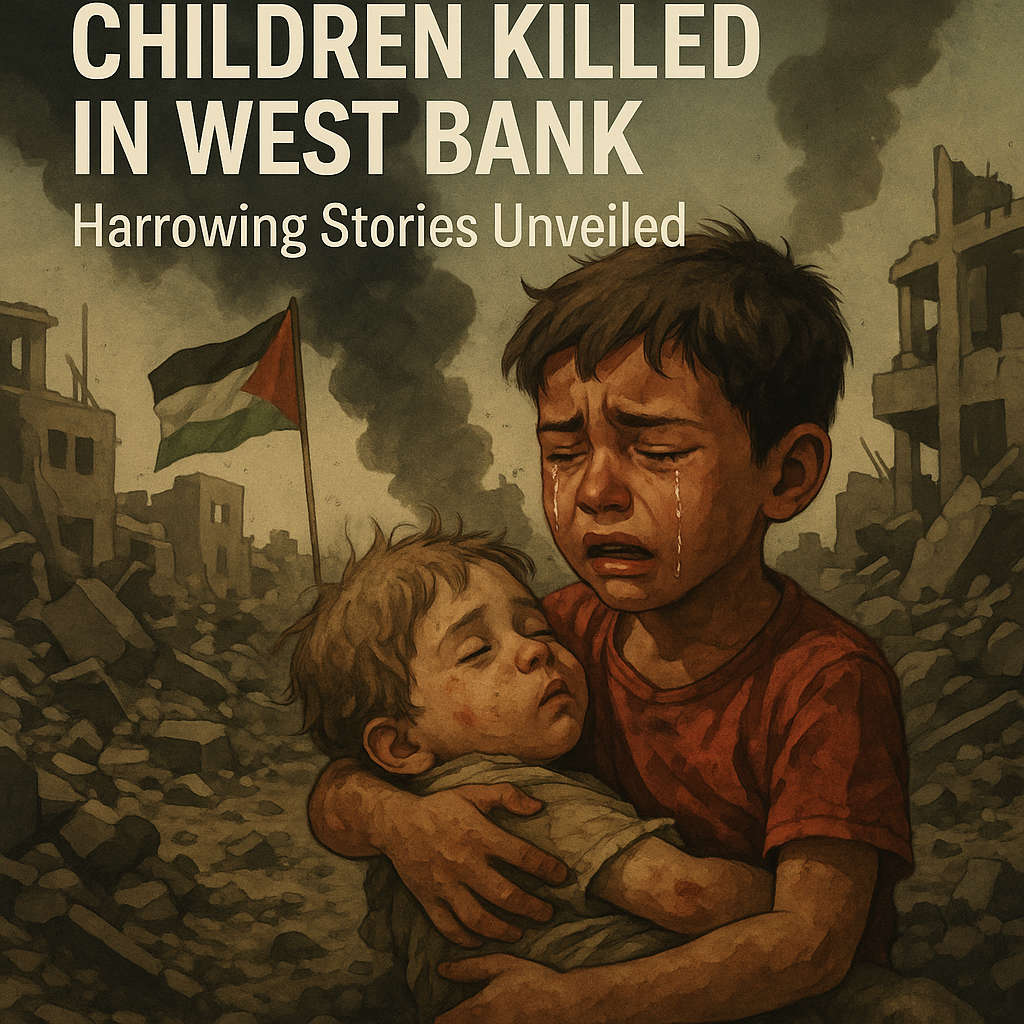
Children Killed in West Bank: Harrowing Stories Unveiled

Children Killed in West Bank: Harrowing Stories Unveiled
The tragic loss of children in the West Bank has sparked widespread concern and condemnation around the world. Recently released reports highlight the harrowing stories of these young victims, shedding light on the human cost of ongoing violence in the region. While facts and figures alone cannot capture the depth of sorrow experienced by families, they serve as a critical backdrop to understanding the complexities surrounding this issue.

The Stories Behind the Numbers
As highlighted in various reports, including detailed accounts from Al Jazeera and Sky News, the death toll among children in the West Bank has reached alarming levels this year. In a moving piece that outlines individual cases, Al Jazeera recounts the heart-wrenching stories of several young lives cut tragically short due to military conflicts. One poignant story is that of 10-year-old Ibrahim, who was killed during a military operation. His family described how he dreamed of becoming a doctor, a reminder of childhood aspirations that were brutally snuffed out.


Statistics reinforce the gravity of this situation. According to Al Jazeera, nearly 100 Palestinian children have lost their lives in the West Bank due to violence, with some reports suggesting that many were unarmed. This stark reality prompts a crucial examination of both the immediate and long-term implications of such tragedies. Families torn apart by grief face not only the emotional aftermath but also psychological ramifications and societal upheaval.


Diverse Perspectives on Accountability
The narratives emerging from various news sources illuminate a landscape rife with contention. Some may argue that the Israeli military actions in the West Bank are a necessary response to perceived threats from militant groups. Reports in outlets like RT emphasize the perspective that such military operations aim to protect Israeli citizens from potential attacks. However, this justification elicits significant pushback from humanitarian groups advocating for the protection of civilians, especially children, during armed conflicts.
Experts emphasize the need for accountability and adherence to international humanitarian laws. Advocates for Palestinian children argue that protections must be reinforced, especially considering the high number of youth casualties. They call for a reassessment of military engagement strategies to ensure that non-combatants, particularly children, are shielded from violence.
Conversely, supporters of Israeli actions cite the complexities of warfare and the challenges of distinguishing between militant and civilian targets in densely populated areas. This argument raises critical questions about military ethics and the tragic consequences of conflict, revealing a spectrum of responses shaped by political, social, and geographical contexts.
Humanitarian Responses and Broader Implications
International responses to the tragic loss of children’s lives in the West Bank reveal a landscape of humanitarian advocacy and political negotiation. Numerous organizations have mobilized efforts to provide relief and psychological support to affected families. However, these initiatives often face obstacles related to funding and access restrictions imposed by ongoing conflict.
Activists argue that addressing the plight of children in conflict zones requires not only immediate humanitarian assistance but also sustained international commitment to conflict resolution. The complexities of the Israeli-Palestinian conflict demand a multifaceted approach that encompasses diplomatic efforts, economic development, and educational opportunities for the youth, who are disproportionately affected by violence.
The Call for a Lasting Solution
As the stories of these young victims resonate globally, there is a growing acknowledgment that lasting peace will not come without addressing the underlying issues driving the conflict. Continued violence breeds more violence, and the cycle is often perpetuated through trauma experienced by children in these regions. Solutions that prioritize children’s rights and protections may form a significant part of any comprehensive peace strategy.
In conclusion, the harrowing stories of children killed in the West Bank are not merely statistics; they are a solemn reminder of the human cost of persistent violence. Multiple perspectives present a complex picture of responsibility, consequence, and the urgent need for action. By engaging with the painful realities faced by families, societies can begin to foster a deeper understanding of the path toward peace and reconciliation, essential for breaking the cycle of suffering.
As the international community grapples with these issues, it becomes increasingly clear that advocating for the safety and well-being of children must be at the forefront of any dialogue aimed at achieving lasting resolution and justice.















