
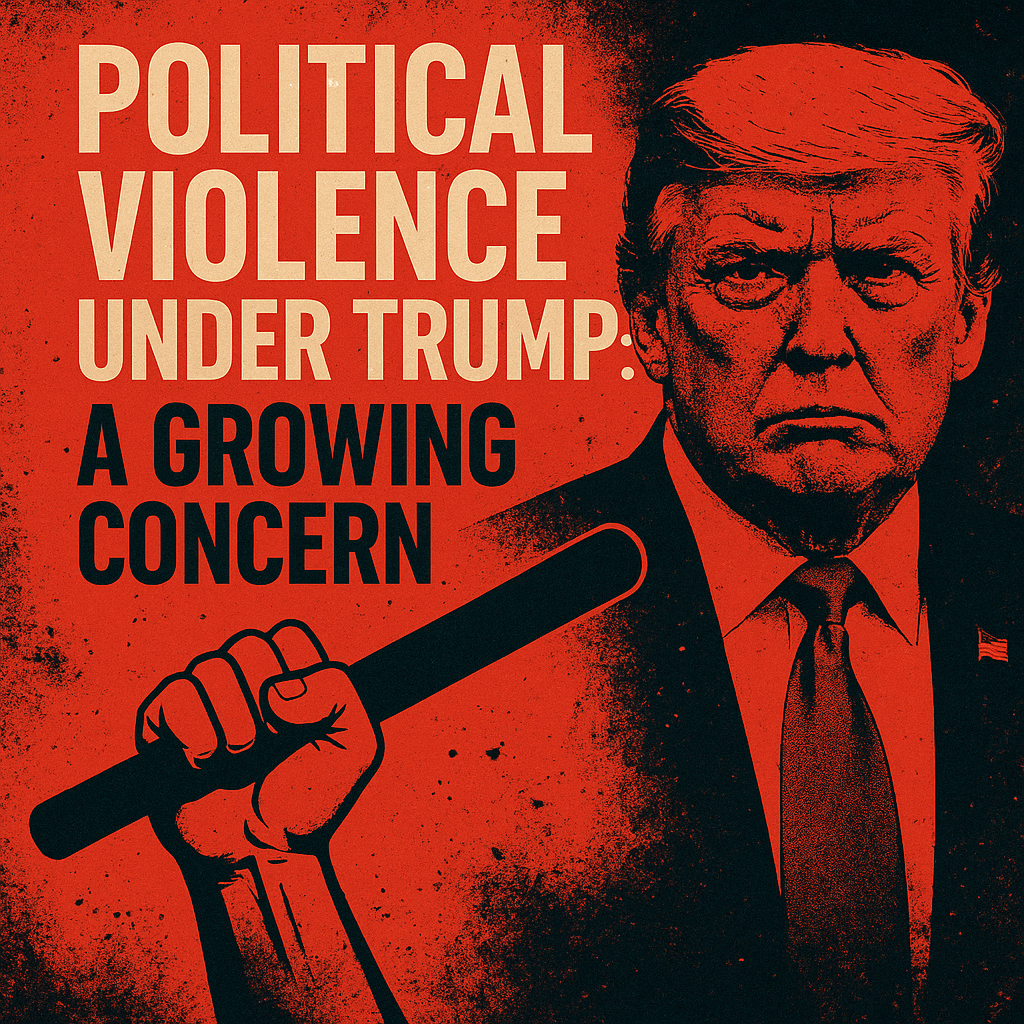
Political Violence Under Trump: A Growing Concern

Political Violence Under Trump: A Growing Concern
Political violence has emerged as a pressing issue in the United States since Donald Trump took office in 2017. This phenomenon raises alarms not only about its immediate effects but also about its lasting implications on democratic norms. Analysts and commentators from various outlets have documented a concerning trend that showcases an increased polarization and hostility within American politics.

The Escalation of Hostility
One of the most striking characteristics of political violence during the Trump administration is the alarming rise in both rhetoric and actions associated with it. A report from Al Jazeera highlighted numerous incidents where Trump supporters clashed violently with protestors, as well as reports of threats directed at public officials. The political climate has created a ripple effect, where extreme factions feel emboldened to act on grievances.


Data presented by the Federal Bureau of Investigation (FBI) illustrates a troubling uptick in politically motivated violence. The agency’s reports indicate a 200% increase in hate crimes linked to political affiliations in major cities since 2016. Such statistics underscore that this is not merely a perception issue but a distinct and quantifiable trend.


While many pundits argue that Trump’s incendiary rhetoric, including terms like “witch hunt” and “fake news,” has fueled the flames of division, others suggest that the landscape of political violence is rooted in broader societal factors. Economic inequality, social media echo chambers, and long-standing racial tensions also play a significant role. According to an article from RT, extremism has historical roots, and Trump’s presidency merely amplified existing issues rather than creating them from scratch.
White Supremacy and Militia Groups
One category of political violence that has garnered extensive attention is the rising influence of white supremacist groups and militia organizations. According to data compiled by the Southern Poverty Law Center (SPLC), the number of active hate groups in the U.S. has soared to nearly 1,000, with many gaining traction in the Trump era. Sky News reports that these organizations often cite Trump’s ideology as a justification for their actions, feeling legitimized by his statements and policies.
The January 6 Capitol insurrection is perhaps the most prominent example of how political rhetoric can lead to violence. The attack went beyond typical protest and underscored the potential for mob mentality when supporters perceive their electoral defeats as injustices. Analysts attribute the readiness of certain factions to resort to violence as a manifestation of deep-seated grievances that Trump’s presidency has seemingly rallied around.
The Complexity of the Debate
While it is tempting to attribute the rise in political violence solely to Trump’s influence, an in-depth examination reveals a much more complicated landscape. The polarization that characterizes American political discourse is reflective of ideological divides that have intensified over decades. Some commentators argue that focusing exclusively on Trump minimizes the systemic issues at play, such as media sensationalism and the role of technology in fostering conflicts.
Nevertheless, it is undeniable that Trump’s leadership style and communication strategies have sparked fervent emotional responses among his base and his detractors alike. The Trump era has tested the limits of political expression, leading to calls for greater accountability regarding rhetoric used by public figures. Al Jazeera spoke to experts advocating for a nuanced approach, emphasizing the need for political leaders to recognize their influence on public behavior.
Moreover, as the wounds of division deepen, some advocates highlight the role of mental health in understanding political violence. The stresses associated with economic downturns, the pandemic, and general societal turbulence may exacerbate individual tendencies toward violence, making it crucial to address this aspect holistically.
Conclusion: A Country at a Crossroads
As political violence continues to evolve under the shadow of the Trump administration, it is vital to engage in an informed conversation about its causes and solutions. There is no singular cause, nor is there an easy fix—entrenched societal issues are at play that demand a multipronged approach.
Furthermore, addressing political violence should involve not merely scrutinizing the actions of individuals but also critically evaluating how societal dynamics—such as media portrayals, economic divides, and historical tensions—interact with political narratives. By cultivating a nuanced understanding rooted in evidence, we can begin to chart a path toward a more civil political environment that mitigates the risk of violence.
In grappling with these complexities, we move beyond assigning blame and venture into a discussion focused on healing – vital for a nation yearning for unity amid chaos.















