
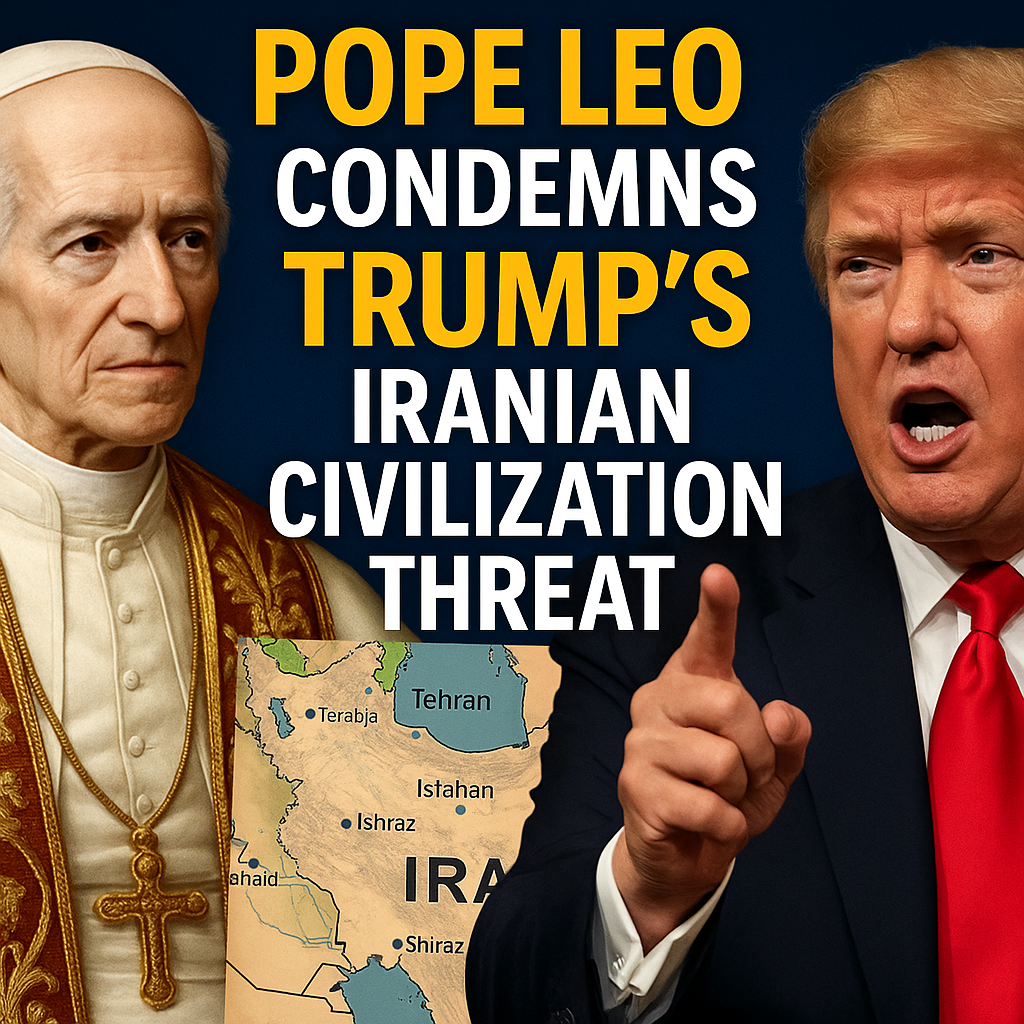
Pope Leo Condemns Trump’s Iranian Civilization Threat

Pope Leo Condemns Trump’s Iranian Civilization Threat
In a surprising statement, Pope Leo has voiced strong disapproval of former President Trump’s remarks regarding Iran’s civilization, alleging that they threaten the fabric of global peace and cultural integrity. This condemnation has sparked varied reactions from political leaders, scholars, and the general public, showcasing the complexities of international relations and cultural identity in today’s world.

The Historical Context of Irano-Cultural Identity
Iran’s civilization boasts a rich history that spans thousands of years. Its cultural contributions, not limited to art and literature, have significantly shaped global civilization. The significance of Iran’s cultural heritage raises the question: why did Trump’s comments warrant such a strong reaction from religious and cultural leaders, including Pope Leo?


Trump’s remarks, aimed at portraying Iran’s influence in a negative light, could be seen as part of a broader political strategy to solidify his base by emphasizing the “America First” agenda. However, the repercussions of such statements extend beyond national politics. Critics, including Pope Leo, argue that such rhetoric undermines diplomatic efforts and alienates a nation steeped in history and tradition.


A Spectrum of Reactions
Responses to Pope Leo’s condemnation highlight the divided opinions on how to approach Iran. On one hand, some commentators agree with the Pope, viewing Trump’s language as inflammatory and counterproductive to peace-building efforts in the Middle East. Irina Kasatkina, a geopolitical analyst, suggests that such statements only serve to entrench existing tensions and divert attention from more pressing global issues, such as climate change and humanitarian crises.
Conversely, supporters of Trump argue that the former President’s comments were meant to take a hard stance against what they see as an authoritarian regime that threatens regional and global stability. Brenna Holt, a political strategist, pointed out that tough talk was necessary to stand up against Iran’s regional ambitions, which include support for proxy groups across the Middle East. This perspective underscores a national security approach that sees Iran not just as a nation, but as a potential existential threat.
Another contrasting viewpoint also arises from historians who argue that framing an entire civilization through a narrow political lens is impolitic and detrimental to constructive dialogue. Dr. Mohammad Reza Khorrami, a historian of Middle Eastern cultures, emphasized that collaboration and understanding must underpin any discourse regarding Iran. He stated, “Engaging with diverse cultures opens pathways to solutions, whereas demonizing them only serves to reinforce division.”
Navigating Complexity in Diplomatic Language
The complexity of international relations requires leaders to navigate their language with care. Trump’s remarks and Pope Leo’s subsequent condemnation reflect a landscape where words carry immense weight. The use of charged language can polarize opinions and stymie diplomatic relations, particularly in an era where cultural narratives are crucial in shaping public opinion and policy.
Finding a balanced approach is essential, but also challenging. Engaging with communities while addressing security concerns necessitates a nuanced understanding of the sociopolitical landscape. Leaders must recognize the power of their platform and the importance of fostering dialogue rather than division.
Moving Forward: A Call for Understanding
In light of these events, the conversation surrounding Trump’s comments and Pope Leo’s response serves as a vital reminder of the need for respect and understanding in global discourse. Acknowledging the historical and cultural significance of Iran is crucial, as is recognizing the fears associated with its current political landscape.
Moving forward, stakeholders in international relations must prioritize diplomacy and cultural appreciation over antagonism. Understanding diverse histories can pave the way for collaborative strategies that respect the past while working toward a more peaceful future.
In conclusion, the condemnation of Trump’s comments by Pope Leo opens up deep questions regarding our responsibilities as global citizens. It underscores the importance of how we perceive and interact with one another in an increasingly interconnected world. As we reflect on these issues, it’s paramount to foster discussions that are both informed and compassionate, recognizing the intricate balance between national security and cultural respect.















