
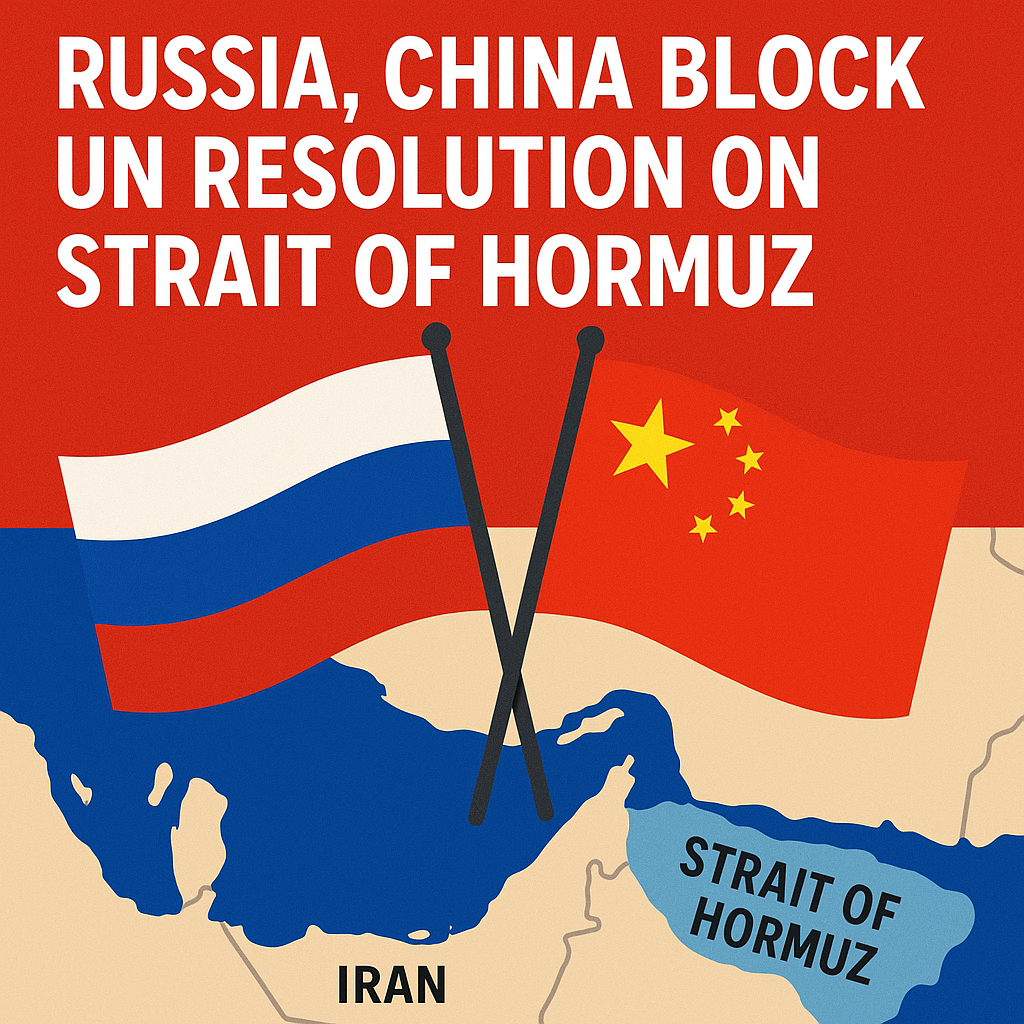
Russia, China Block UN Resolution on Strait of Hormuz

Russia and China Block UN Resolution on Strait of Hormuz
The recent decision by Russia and China to block a UN resolution aimed at enhancing security in the Strait of Hormuz has drawn significant attention and debate. This vital shipping lane is crucial for global oil transport, making its security a matter of international concern.

Background of the Resolution
The proposed resolution sought to bolster maritime security in the Strait of Hormuz through cooperative measures among member states, addressing rising tensions in the region. The Strait, connecting the Persian Gulf to the Gulf of Oman, is one of the world’s busiest maritime chokepoints. It is particularly vital for oil shipments, with around a third of the world’s liquefied natural gas and a substantial portion of oil passing through this narrow waterway.


However, during a recent UN Security Council session, Russia and China exercised their veto power, leading to a standoff that continues to highlight the complex geopolitical landscape surrounding the Strait. Both countries argued that the resolution lacked adequate consideration of regional complexities and was overly focused on military solutions.


Different Perspectives on the Issue
Russian and Chinese Justifications
Russia has expressed concerns that the resolution could escalate military tensions in the area. A spokesperson for the Russian government stated that such decisions should involve comprehensive dialogue with regional stakeholders rather than imposing a unilateral framework. Their stance emphasizes a preference for diplomatic engagements and partnerships that consider the broader context of Middle Eastern geopolitical dynamics.
Similarly, China has underscored its commitment to preserving peace and stability in the region. A Chinese diplomat articulated that the proposed measures could exacerbate the situation rather than alleviate it, calling for a more collaborative and less confrontational approach to maritime security.
Counterarguments from Western Nations
In contrast, Western nations have voiced strong criticisms of the veto, emphasizing the necessity of international cooperation to ensure safety in the Strait of Hormuz. Analysts argue that growing tensions—exacerbated by incidents involving Iranian naval forces and oil tankers—call for immediate action. Countries like the United States have articulated that the UN resolution was essential not only for the security of oil shipments but also for upholding international maritime law.
Moreover, proponents of the resolution argue that blocking it sends a troubling signal regarding the willingness of Russia and China to engage with broader international security concerns. These sentiments highlight a perceived urgency to counter threats posed by Iran’s military presence and behavior in the region, which could hamper global economic stability.
The Broader Implications
The implications of this veto extend beyond immediate maritime security. They illustrate a shifting dynamic in international relations, signifying increased polarization among global powers. Analysts warn that this situation might lead to an escalation of tensions in the region as Western countries may pursue alternative security alliances.
A Call for Dialogue
Amidst contrasting perspectives, there is a growing recognition that dialogue is crucial for a sustainable solution. Experts point out that unilateral approaches or coercive measures often lead to backlash and further complicate already fraught situations.
Many suggest that a multilateral approach involving diverse regional stakeholders could advance the discussion on security in the Strait of Hormuz. Engaging countries like Iran, which holds significant influence in the region, could pave the way for shared security interests and de-escalation.
Conclusion: A Complex Path Forward
The blocking of the UN resolution regarding the Strait of Hormuz by Russia and China underscores the complexities of modern diplomacy. While differing viewpoints illustrate the range of national interests and priorities, the urgent need for a balanced and cooperative approach remains clear. The path forward necessitates a concerted effort to engage all relevant parties in dialogue aimed at fostering a stable, secure maritime environment.
In light of the stark contrasts in international response, it is essential to weigh the challenges and opportunities carefully. As tensions rise and the stakes increase for global oil supplies, the ability to navigate these turbulent waters diplomatically will be crucial for all parties involved.















