
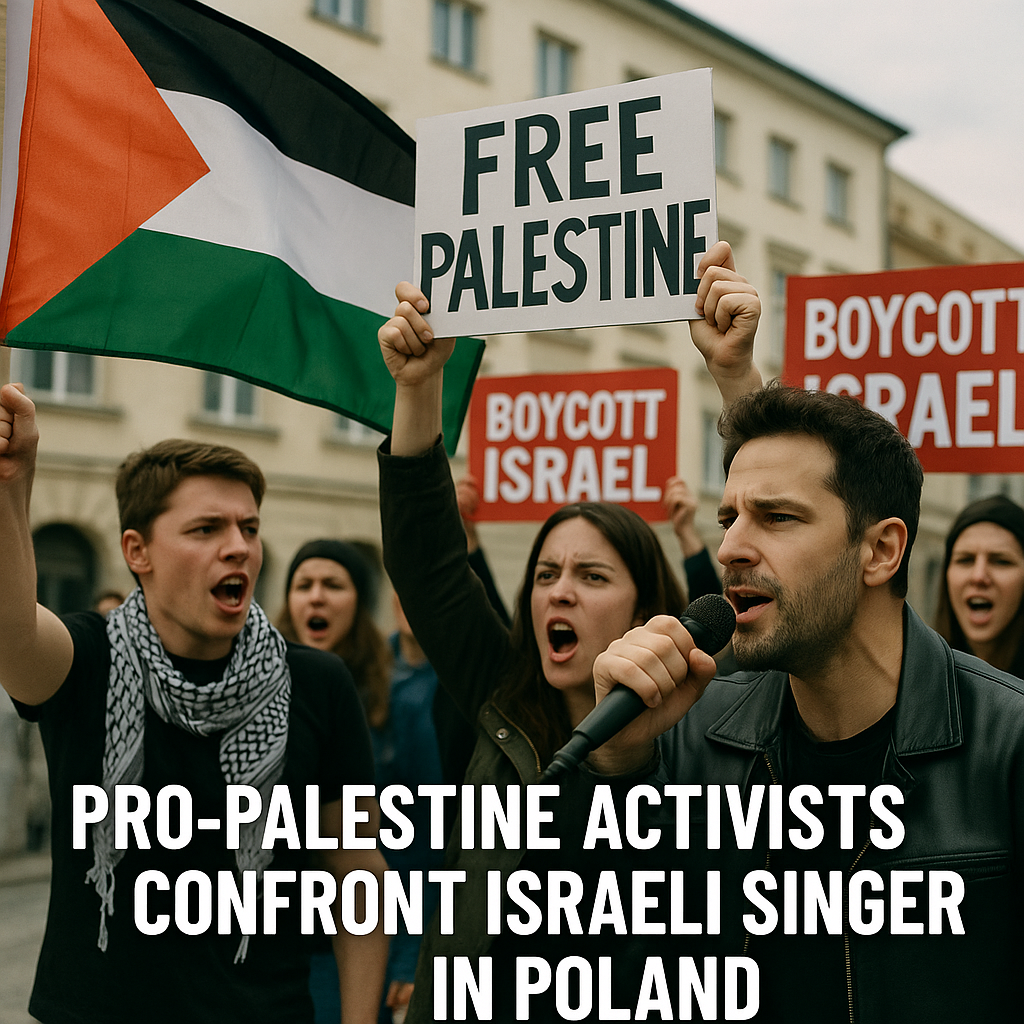
Pro-Palestine Activists Confront Israeli Singer in Poland

Pro-Palestine Activists Confront Israeli Singer in Poland
In recent weeks, a confrontation in Poland involving pro-Palestine activists and an Israeli singer has stirred debates globally about the intersections of art, politics, and free expression. This incident serves as a focal point reflecting broader tensions in ongoing discussions surrounding the Israeli-Palestinian conflict.

The Incident: A Multifaceted Confrontation
The encounter unfolded during a concert performance by Israeli singer Noa Kirel in Warsaw. Pro-Palestine activists attempted to disrupt the event, vocally expressing their opposition to Israel’s policies toward Palestinians. This moment was not merely an outburst but rather a manifestation of longstanding frustrations that many feel regarding the Israeli state’s actions in the occupied territories.


The activists argue that cultural figures like Kirel, who enjoy international acclaim, have a moral responsibility to acknowledge the suffering inflicted upon Palestinians. Activists were seen calling for justice and visibility about the ongoing humanitarian crisis in the region, utilizing the concert as a platform to raise awareness.


This protest raises crucial questions regarding the role of artists in political discourse. While some defend the right of activists to voice dissent, others argue that disrupting cultural events may alienate potential allies and hinder productive dialogue. Kirel has garnered a significant following, and her presence at concerts is viewed by supporters as a celebration of cultural achievement rather than an endorsement of any political agenda.
Diverging Perspectives on Artistic Freedom
The incident has sparked considerable discussion among various stakeholders, underscoring a divide in how to approach the intertwining of art and politics. Pro-Palestine activists view their actions as a necessary form of protest aimed at stimulating conversations about human rights. For them, confronting an Israeli artist symbolizes a broader fight against oppression.
However, critics of the protest argue that it undermines artistic freedom. They assert that art should remain a space for cultural dialogue and should not be co-opted for political aims. In a statement to RT, Kirel expressed that music should unite rather than divide, suggesting that protests such as those seen in Warsaw could harm the message of peace many artists wish to convey.
Moreover, some voices within the artistic community voice concern over the impact of such confrontations on international perceptions of the Israeli-Palestinian conflict. They argue that the focus should remain on the humanitarian issues at hand, rather than creating further division among communities through public disruption.
The Broader Context: Polarity and Potential Solutions
This incident occurs against the backdrop of a polarized discourse surrounding the Israeli-Palestinian conflict. While activists on both sides of the debate assert their narratives fervently, the reality is often more complex. The polarized reactions to Kirel’s concert reflect a growing sentiment that many feel is symptomatic of broader societal fractures.
Making progress in this contentious space necessitates a willingness to engage in open, constructive dialogue. This challenge prompts questions not only about who should be held accountable for their respective narratives but also about how music and the arts can play roles in either bridging gaps or exacerbating them.
One potential solution emerges from the notion of collaborative events that include diverse voices from both sides of the conflict. These could serve as a platform for dialogue, moving beyond protest toward meanings that embrace unity rather than division.
Conclusion: The Need for Informed Dialogue
The confrontation involving pro-Palestine activists and Israeli singer Noa Kirel serves as a microcosm of the larger discourse surrounding the Israeli-Palestinian conflict. While the right to protest and express dissent remains paramount, so does the imperative for constructive dialogue in addressing deeply rooted issues of injustice.
In navigating this complex landscape, stakeholders must be mindful of the impact their actions may have on promoting understanding, empathy, and ultimately positive change. Whether through art, protest, or dialogue, the ongoing quest for peace in the region requires an unyielding commitment to listening and learning from one another.















