
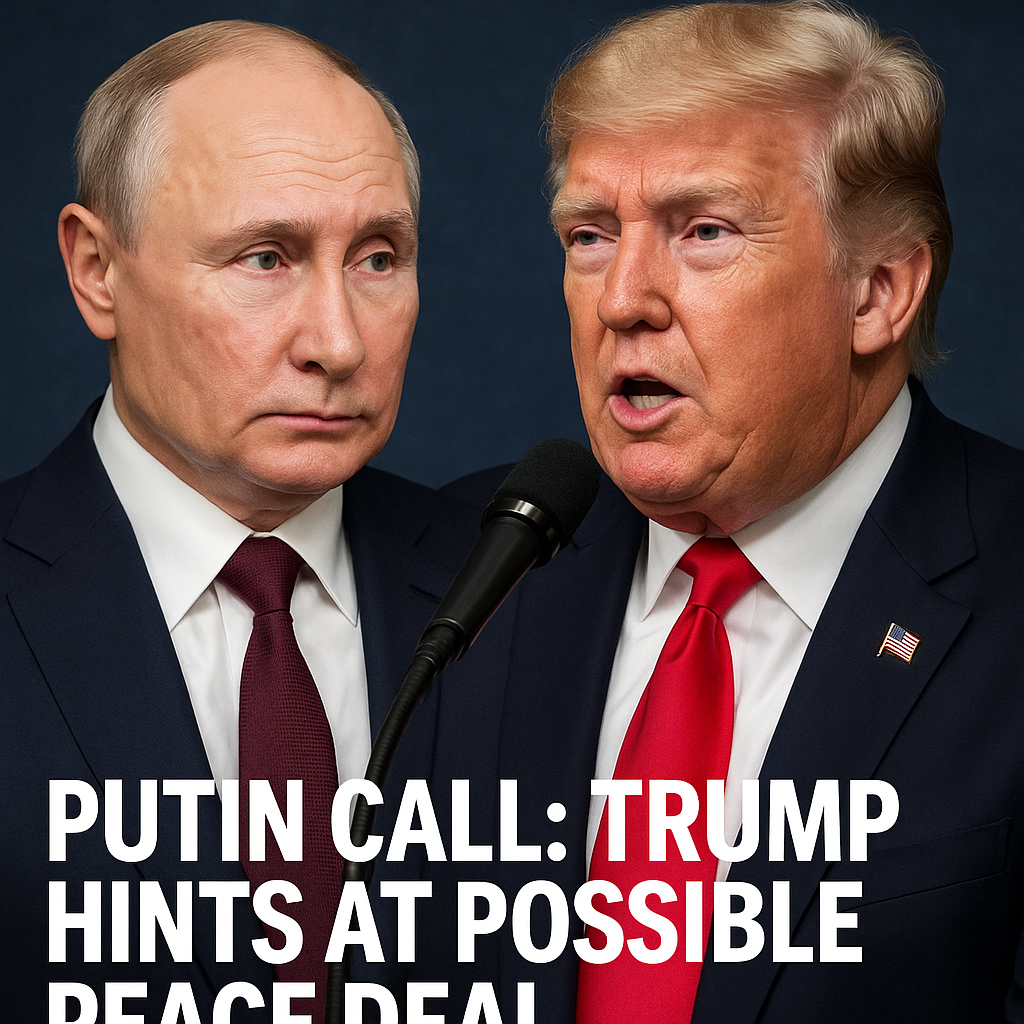
Putin Call: Trump Hints at Possible Peace Deal

Putin Call: Trump Hints at Possible Peace Deal
In the complex web of international relations, the prospect of a Trump-led mediation with Russia remains a focal point of speculation and debate. In recent discussions, former President Donald Trump suggested that he could negotiate a peace deal in the ongoing conflict involving Russia and Ukraine. This proposition comes amid a backdrop of polarized opinions from various stakeholders within the political landscape.

The Context of Trump’s Remarks
Trump’s hints at a potential peace deal arose during a recent interview, where he emphasized the importance of dialogue over conflict. He stated, “If I were in charge, I would get it done in 24 hours,” asserting his confidence in handling international negotiations. His supporters argue that Trump’s unorthodox approach to foreign policy could lead to innovative solutions, potentially breaking through the current stalemate.


On the other hand, critics remain skeptical about the feasibility of such a deal, especially given both the historical and ongoing complexities between the U.S., Russia, and Ukraine. The crisis has seen a significant escalation since Russia’s annexation of Crimea in 2014, compounded by the military actions initiated in February 2022. According to a report from Al Jazeera, negotiations would require more than charismatic leadership; they necessitate addressing intricate geopolitical interests and significant public sentiments on both sides.


Diverse Views on Negotiation
Analyzing multiple viewpoints reveals a societal rift regarding Trump’s diplomatic strategy. Proponents of his negotiation skills suggest that his prior presidency demonstrated an ability to engage with adversaries. Trump’s outreach to North Korea is often cited as a phase of diplomacy that bridged gaps and opened dialogue when tensions were at their peak.
Conversely, critics assert that the stakes are astronomically higher with Russia and Ukraine. A piece from RT highlights that negotiation may be undermined by Russia’s current posture, suggesting that the Kremlin is unlikely to concede ground without the promise of returning its territorial losses. As the war has unfolded, both Russia and Ukraine have solidified their positions, complicating any peace efforts by introducing more rigid demands.
The Role of the International Community
International reactions to Trump’s statements have varied widely. Many alliances, particularly within NATO and the European Union, find themselves at a crossroads. The consensus among several analysts is that any peace initiative must include not just the U.S. and Russia but also NATO and key European nations to create a comprehensive settlement.
For instance, in a discussion piece from Sky News, experts note that unilateral approaches, especially from figures like Trump who have previously expressed skepticism towards NATO, might provoke further distrust among European allies. Balancing national interests while ensuring security and territorial integrity for Ukraine will be pivotal in any negotiation scenario.
The Path Forward: Uncertainties Ahead
While Trump’s declaration has sparked renewed interest in the possibility of dialogue, significant uncertainties prevail. Important questions linger about the legitimacy of Trump’s influence in the current political climate, as well as the capacities of any potential agreement. The historical context of U.S.-Russia relations reveals long-standing animosities and complicates the potential for a harmonious resolution.
Additionally, public sentiment in Ukraine plays a critical role; many citizens are reluctant to endorse any negotiation perceived as surrendering their territories. For many, the scars of conflict and loss remain too vivid to accept terms without substantial guarantees of security.
In conclusion, while Trump’s hints at a peace deal with Russia might galvanize interest in diplomatic discussions, the reality is fraught with complexities and divergent perspectives. As the situation evolves, stakeholders across the globe must remain engaged, balancing hope for peace with the necessity of pragmatic realism in addressing the multi-dimensional factors at play.















