
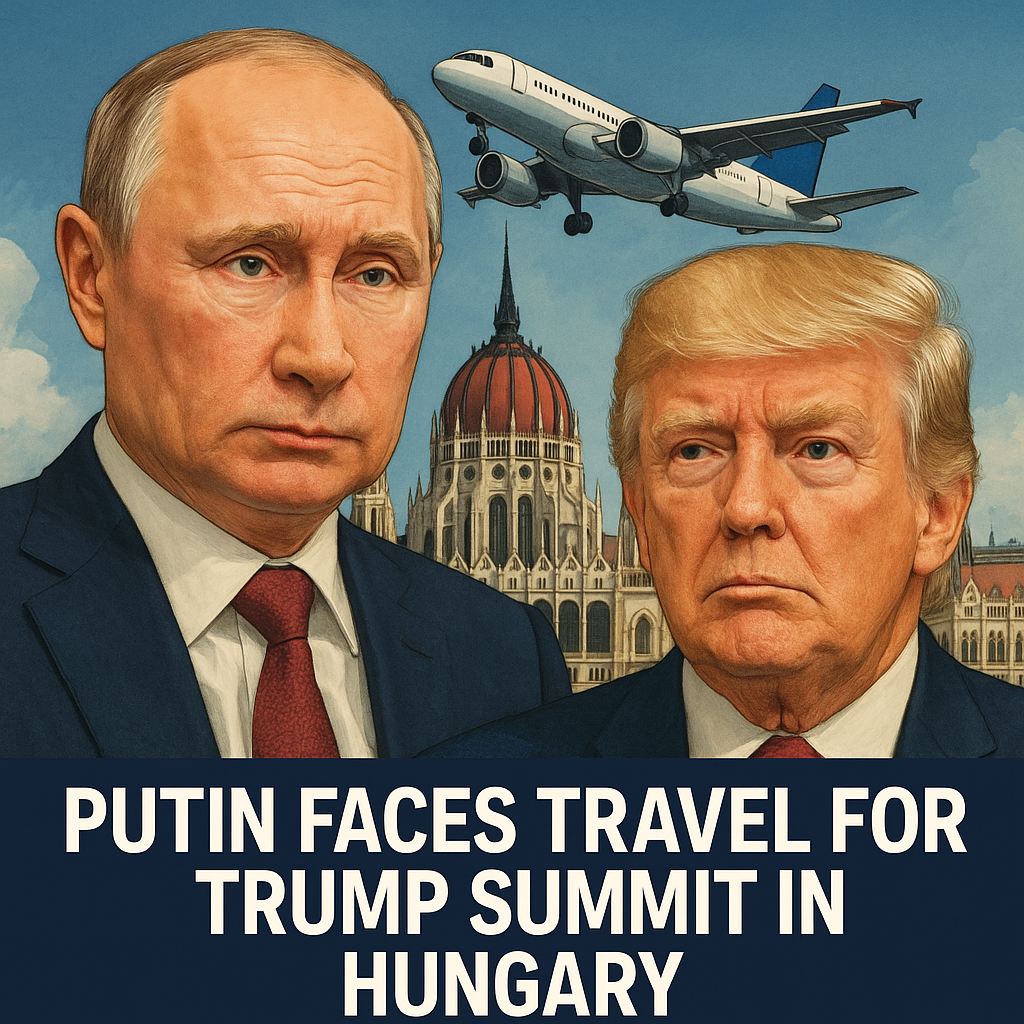
Putin Faces Travel Troubles for Trump Summit in Hungary

Putin Faces Travel Troubles for Trump Summit in Hungary
The upcoming summit between Vladimir Putin and Donald Trump in Hungary is generating significant attention, not just for its geopolitical implications but also for the logistical challenges that Putin may face in attending. As leaders from around the globe prepare for what is anticipated to be a pivotal meeting, it seems the very journey to Hungary could be fraught with complications for the Russian President.

The Venue’s Appeal and Potential Challenges
Choosing Hungary as the summit’s location certainly offers strategic advantages. Hungary, strategically located in Central Europe, allows for easier access to both Eastern and Western powers. As reported by Sky News, the decision to hold the meeting in Budapest cleverly positions Hungary as a neutral ground, catering to both leaders’ interests while enabling discussions on sensitive issues like NATO relations and trade agreements.


However, this convenient venue poses its own set of travel difficulties for Putin. As underscored by Al Jazeera, European Union (EU) sanctions against Russia complicate travel for Russian officials. If the travel restrictions remain in place, Putin might have to navigate through potential hurdles, including additional scrutiny at border checkpoints or even the risk of being denied entry into EU member states while en route. Such circumstances could delay his arrival or force route alterations, thereby complicating the summit logistics.


Navigating Diplomatic Waters
The nature of international relations today means that logistics are rarely a simple matter. As underscored by the RT News analysis, existing tensions between Russia and the EU, particularly regarding sanctions and ongoing geopolitical conflicts, further mar the intricacies surrounding Putin’s travel. The political climate resembles a game of chess where every move could have repercussions.
While past summits have often been heralded as opportunities for diplomacies, the current environment requires both leaders to tread lightly. Trump’s own fluctuating support for NATO and his occasionally critical stance toward the EU have brought additional unpredictability to the summit landscape. This raises questions about how supportive or obstructive the host nation, Hungary, will be regarding Putin’s travel. Hungary’s government has previously aligned itself with Russia on several issues, which may work in Putin’s favor as Hungarian Prime Minister Viktor Orbán has expressed a keen interest in fostering closer ties with the Kremlin.
Diverging Opinions and Uncertainties
The expected meeting has drawn divergent viewpoints across the political spectrum. Proponents of the summit argue that dialogue between two world leaders can lead to de-escalation of conflicts and positive outcomes. Some experts believe that allowing both leaders to share their grievances could improve bilateral relations, even if only marginally.
Conversely, critics caution that meeting under current circumstances could further embolden Russia, giving the appearance of legitimacy to its actions that have drawn international condemnation. As reported in various sources, there remains a palpable skepticism regarding the nature of discussions and what, if any, progress might emerge from them.
While the discussions will likely touch on significant topics, some analysts, including voices from Al Jazeera, doubt whether real cognitive alignment or substantive agreements can be achieved. Given the deep-rooted issues surrounding sanctions and military engagements in Ukraine, many speculate whether either leader will walk away with any tangible benefits or simply engage in diplomatic platitudes.
Conclusion: A Summit Surrounded by Questions
As the summit looms, the logistics surrounding Putin’s travel add another layer of complexity to this important event. While the strategic choice of Hungary may facilitate discussions, the underlying tensions inherent in the geopolitical climate raise significant uncertainties. Furthermore, the broader ramifications of travel restrictions and sanctions present challenges that could overshadow the summit’s intended outcomes.
In light of these factors, both leaders would do well to prepare for a summit that might offer more questions than answers. The path forward remains rocky, filled with diplomatic landmines and the challenge of navigating a minefield of historical grievances. As Putin and Trump gear up for this momentous meeting, it becomes clear that logistics may be the least of their concerns as they confront the larger, swirling geopolitical currents ahead.















