
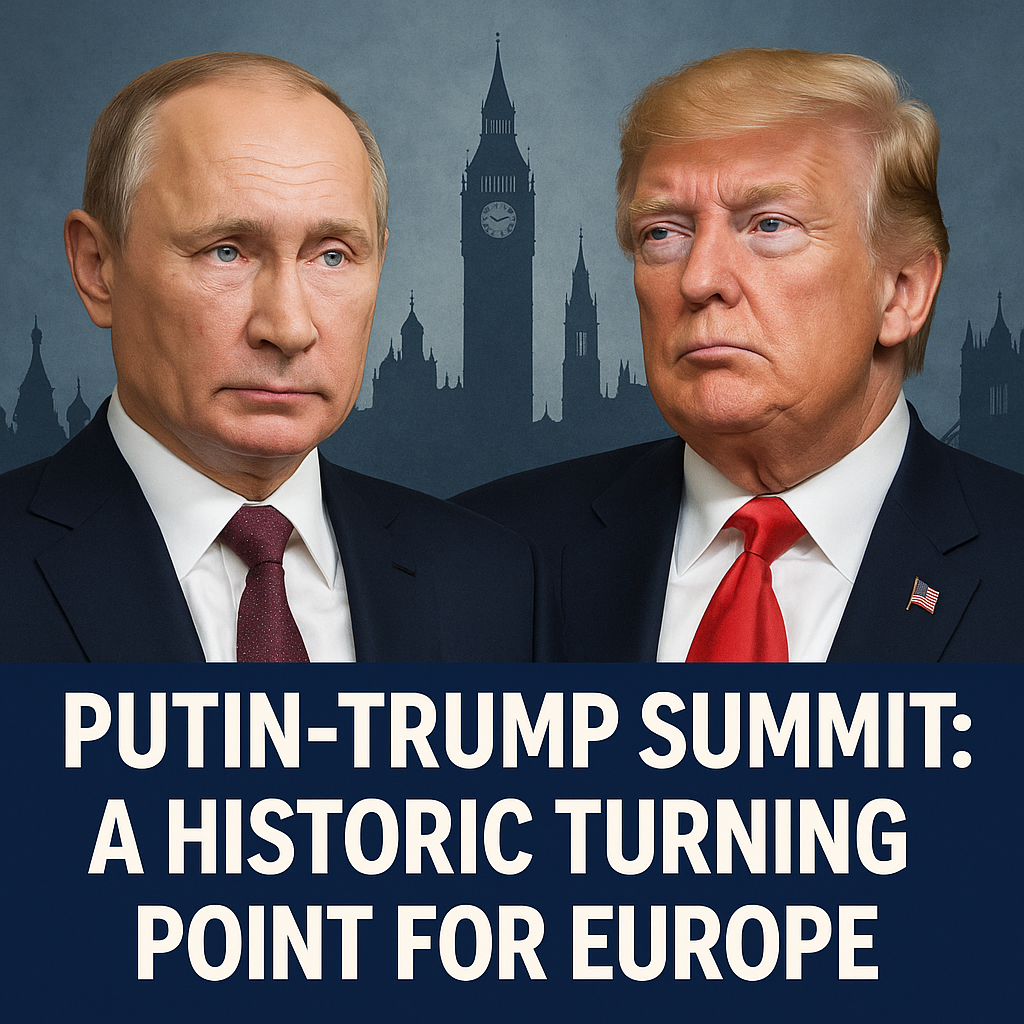
Putin-Trump Summit: A Historic Turning Point for Europe

Putin-Trump Summit: A Historic Turning Point for Europe
The recent summit between Vladimir Putin and Donald Trump has sparked significant debate regarding its implications for Europe. As geopolitical tensions simmer, this meeting is being perceived as a potential inflection point in international relations, particularly for European nations grappling with shifting allegiances and security concerns.

Reactions from Europe: Optimism and Skepticism
Responses to the summit have varied considerably across European nations. On one hand, there is a contingent that views the meeting as a much-needed opportunity for diplomatic dialogue. Leaders from countries like Hungary, with Prime Minister Viktor Orbán praising the summit, argue that open communication can serve as a stabilizing force in an increasingly fragmented world. Orbán stated, “In the context of global and European security, it is vital that direct talks take place.”


Conversely, skepticism looms large among other European leaders. Germany’s Foreign Minister expressed concerns that the summit may embolden authoritarian actions. This sentiment reflects a broader frustration within the European Union about Russia’s actions in Ukraine, its aggressive posture towards NATO, and a perceived lack of accountability from the United States in addressing these issues. A senior EU official noted that the summit risks undermining the collective security framework that has been a cornerstone of European stability since the Cold War.


The Broader Geopolitical Context
The backdrop of this summit cannot be overlooked. Europe’s security landscape has changed dramatically in recent years, marked by the annexation of Crimea, ongoing tensions in Eastern Europe, and contentious relations with China. This context makes the dynamics of U.S.-Russia relations particularly poignant.
Analysts are divided on the longer-term ramifications of the summit. Supporters of the Trump administration argue that engaging directly with Russia might lead to progress on crucial issues like nuclear disarmament and tensions in Syria. They contend that diplomatic engagement is more effective than isolation, as it allows for the pursuit of mutual interests amidst a complex geopolitical chessboard.
However, critics warn that such an approach could normalize Russia’s aggressive behavior. The concern is that a perceived thawing of relations between Washington and Moscow could lead to decreased pressure on Russia regarding its military interventions and cyber activities. A key point raised by Eastern European countries is the need for the West to maintain a strong stance against what they perceive as existential threats.
A Future of Uncertain Alliances
As Europe navigates this precarious landscape, the Putin-Trump summit serves as a reminder of the continent’s intricate web of alliances. Countries like Serbia have embraced opportunities to balance their foreign policies amid shifting tides between the West and Russia. Serbian President Aleksandar Vučić expressed a pragmatic view of the summit, suggesting that smaller nations should leverage relationships with both superpowers to best serve their national interests.
For many European nations, the summit’s implications may extend beyond immediate diplomatic outcomes. The evolving U.S.-Russia relationship poses challenges as countries must balance their historical ties and security dependencies with the need to adapt to new geopolitical realities. Discussions are emerging about increasing defense cooperation among EU countries as apprehensions about Russian intentions grow.
Conclusion: A Diplomatic Balancing Act
The Putin-Trump summit marks a pivotal moment for Europe, but its true impact remains uncertain. As various nations react in real-time, the nuanced responses indicate a complex intertwining of cooperation and confrontation. It prompts a significant question: how will Europe recalibrate its strategies in light of this summit?
Overall, leaders must tread carefully, weighing the benefits of engagement against the risks of emboldening malign actions. The need for a unified European stance is paramount, and how European leaders navigate this crossroads will ultimately shape the continent’s future stability and security. The historical significance of this summit will only crystallize in the months and years ahead as the geopolitical landscape continues to evolve.















