
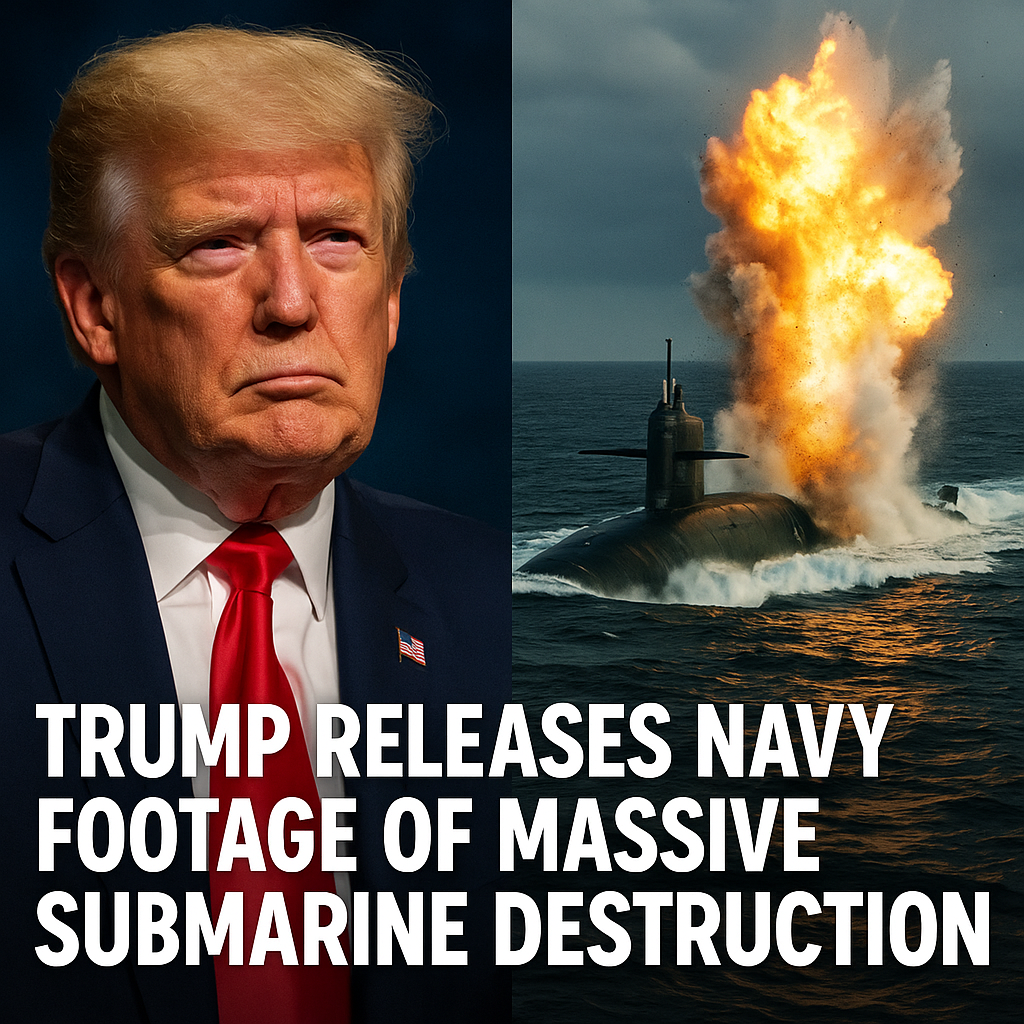
Trump Releases Navy Footage of Massive Submarine Destruction

Trump Releases Navy Footage of Massive Submarine Destruction: An Analysis
In a surprising move, former President Donald Trump has recently released Navy footage showcasing the substantial destruction of a submarine. This incident has sparked a plethora of opinions and speculations across diverse media outlets. The vivid imagery displayed in the footage raises significant questions about military accountability, political motives, and national security.

Contextual Background of the Footage
The footage, shared by Trump, reportedly shows the aftermath of a naval exercise that led to a simulated destruction of a submarine. While the exact details surrounding the event remain somewhat murky, experts suggest that military exercises often serve multiple purposes, including testing new technologies and training personnel.


A source from RT notes that such exercises may sometimes involve high-stakes realism to prepare military forces for real-world engagements. However, critics are questioning whether releasing this particular footage serves a tactical purpose or is merely a political maneuver.


Diverse Reactions from Analysts and Politicians
The release of the footage has drawn varied responses from both political analysts and military experts. Some commentators from Al Jazeera emphasize the potential implications for U.S. military transparency and national security. They argue that showcasing military capabilities can serve to deter adversaries but can also inadvertently expose strategic vulnerabilities.
On the other hand, certain political commentators suspect this release might be tied to Trump’s ongoing efforts to maintain relevance within the Republican Party and the public eye. Among those voices, some speculate that the timing of this release may be strategical, correlating with Trump’s continuous narrative around military strength as a cornerstone of his political identity.
Weighing Evidence and Sentiments
From a broader perspective, the conversation surrounding the footage delves deeper into themes of military ethics and governmental transparency. While supporters of Trump may view the footage as a demonstration of military prowess, detractors argue that such releases should be approached with caution.
– Pro-Transparency Argument: Supporters of military transparency argue that citizens deserve insight into the workings of their armed forces, including simulations and exercises that showcase capability. This perspective aligns with democratic principles of accountability and openness.
– Security Concerns: Conversely, security analysts express concern that revealing too much about military strategies and operations could equip adversaries with critical intelligence, thereby compromising national security.
The divide between these viewpoints illustrates the tension between the need for transparency and the pragmatic requirements of national defense.
What Lies Ahead?
As discussions around the Navy footage unfold, uncertainties remain. Will the release of such sensitive material lead to a greater demand for military transparency, or will it incite increased scrutiny over the motivations behind such disclosures? The nuanced reactions reflect a society grappling with complex issues surrounding military affairs and political expression.
Furthermore, as the public continues to compete for attention in an increasingly polarized media landscape, similar events will likely emerge, challenging the boundaries between political posturing and genuine transparency efforts in military operations.
Conclusion
Trump’s release of Navy footage regarding substantial submarine destruction is emblematic of broader themes in contemporary American defense and political discourse. As various sources weigh in on the implications, the public faces a complex, multifaceted narrative. Understanding the balance between transparent governance and national security remains essential as the landscape evolves. In the end, while the footage itself may ignite debates, it also reflects the ongoing dialogue about accountability and the nature of modern warfare—valuable considerations for both policymakers and voters alike.















