
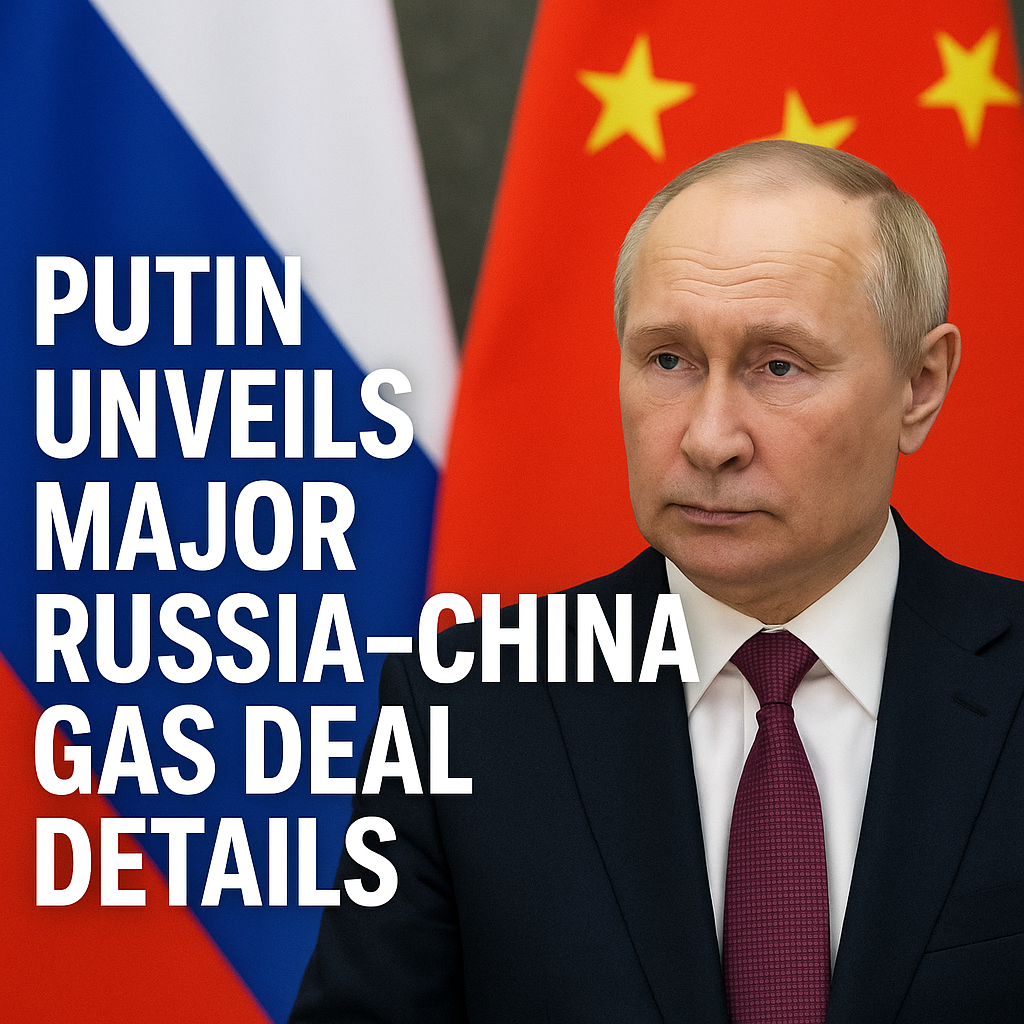
Putin Unveils Major Russia-China Gas Deal Details

Putin Unveils Major Russia-China Gas Deal Details
The recent announcement of a landmark gas deal between Russia and China heralds a new chapter in energy cooperation, with significant implications for global energy markets and geopolitical dynamics. As President Vladimir Putin detailed the project’s framework, the potential benefits and challenges associated with this partnership have started to emerge prominently in the media narrative.

Exploring the Deal’s Framework
The gas deal, described as one of the largest in history, is set to significantly boost China’s energy supplies while further solidifying Russia’s position as a leading energy supplier. According to multiple sources, the agreement encompasses a substantial volume of natural gas—estimated to reach about 100 billion cubic meters per year, which will be transported via a new pipeline network.


Putin emphasized that this partnership represents not just an economic agreement but also a strategic alliance. The collaboration with China comes at a time when Russia is seeking to pivot its energy exports towards Asia amid escalating tensions with Western nations due to geopolitical conflicts. This shift is particularly crucial as Europe continues to look for alternatives to Russian energy supplies following recent sanctions.


This development has been met with mixed sentiments. Proponents argue that the deal marks a significant step in the evolution of a multipolar world where energy needs are met through collaborations outside traditional Western frameworks. Supporters also highlight the potential for energy independence in China, which has been reliant on a variety of sources to satisfy its booming energy demands.
Geopolitical Implications of the Russia-China Energy Pact
While the deal appears beneficial in the short term for both nations, the long-term implications are complex and multifaceted. Observers point out that this increased reliance on Russian energy could give Moscow substantial leverage over Beijing. Historical tensions and the contest for influence in Central Asia might complicate this burgeoning relationship, as economic dependency can lead to power imbalances.
Critics from Western perspectives have raised concerns about the environmental ramifications of increased fossil fuel consumption. The climate crisis remains at the forefront of global discourse, and an expansion of fossil fuel projects contradicts international commitments to reduce carbon emissions. Additionally, they warn that boosting energy ties between Russia and China may solidify geopolitical blocs, leading to increased tensions among existing powers, particularly the United States and European nations.
Furthermore, analysts suggest that this deal may drive energy prices down in the near term due to increased supply; however, in the long run, it might engender volatility. The interconnectedness of global energy markets means that any geopolitical fracture or conflict in this partnership could reverberate throughout Asia and beyond.
Balancing Perspectives: Economic Opportunity vs. Risk
In examining the diverse viewpoints surrounding the deal, the economic opportunities it presents stand out. For Russia, the partnership signifies a potential economic lifeline as it navigates sanctions and isolation from Western markets. For China, it assures the continued accessibility of energy crucial for sustaining its economic growth.
On the flip side, there are undeniable risks involved. The success of the deal will largely depend on the reliability of infrastructure development, supply chain efficiency, and regional stability. Some analysts argue that China’s increasing leverage could embolden it to negotiate more favorable terms in the future, altering the dynamics of their partnership.
In summary, while Putin’s unveiling of the major gas deal with China highlights a significant pivot in energy supply strategy, it also encapsulates the intricate web of economic, environmental, and geopolitical factors at play. As these two nations further align their interests, it remains essential to assess the balance between immediate economic benefits and potential long-term consequences.
Conclusion
The Russia-China gas deal marks a decisive moment in global energy dynamics, characterized by emerging alliances that challenge traditional power structures. Although both countries stand to gain significantly from this partnership, the complexities and uncertainties it introduces cannot be overlooked. As these developments unfold, stakeholders across the globe will be watching closely to gauge the implications for energy policy, international relations, and environmental stewardship. The true test for this monumental agreement lies not just in its execution, but in its ability to adapt to the rapidly changing landscape of global energy needs and geopolitical realities.















