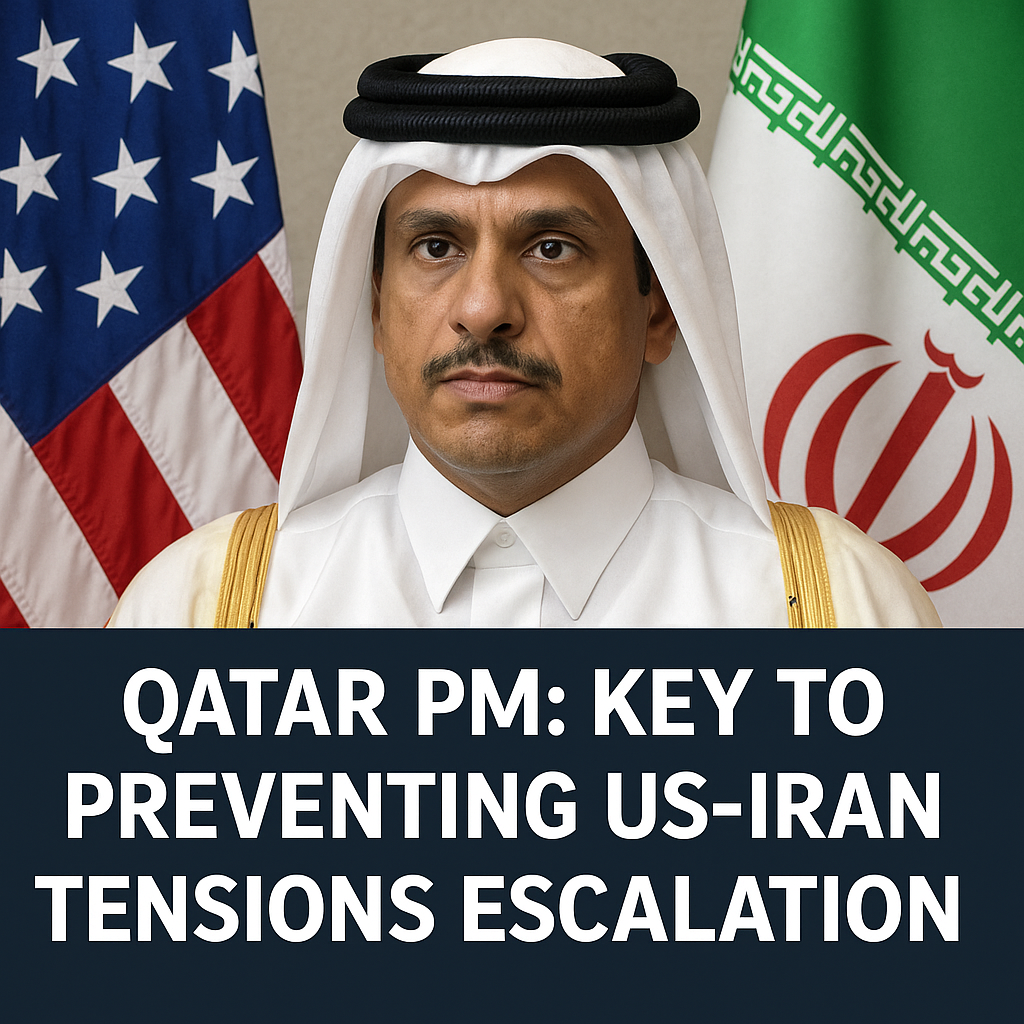
Qatar PM: Key to Preventing US-Iran Tensions Escalation

Qatar PM: Key to Preventing US-Iran Tensions Escalation
The escalating tensions between the United States and Iran have emerged as a significant focal point in international relations, and recent statements from Qatar’s Prime Minister highlight the complex diplomacy needed to navigate this volatile landscape. Qatar’s leadership is positioning itself as a vital mediator, advocating for dialogue as a solution to avert conflict.

The Role of Qatar in US-Iran Relations
Qatar’s Prime Minister, Sheikh Mohammed bin Abdulrahman Al Thani, has emphasized that open channels of communication are crucial in mitigating the risks of military confrontation. In a recent interview, he stated, “Dialogue is the only way to address the issues between the US and Iran,” underscoring Qatar’s dedication to preventing escalation in the region. This perspective is not merely wishful thinking; it reflects historical precedents where Qatar has successfully facilitated discussions between conflicting parties.


The backdrop of these tensions includes long-standing grievances surrounding Iran’s nuclear program, U.S. sanctions, and military posturing in the region. Al Thani articulated that while countries may have differing perspectives, it is essential for them to come to the table and engage in constructive conversations. This sentiment is echoed by various sources, indicating a growing recognition of the need for a more diplomatic approach.


Divergent Views on Engagement Strategies
While Qatar’s approach has been largely positive, it exists within a complex tapestry of opinions regarding the future of US-Iran relations. On one hand, some analysts argue that dialogue facilitated by neutral parties like Qatar could prevent misunderstandings that lead to military actions. A recent report from Al Jazeera supports this, stating that collaborative diplomacy is more necessary than ever given the potential for a direct confrontation, which could destabilize the entire Middle East.
Conversely, there are skeptics who argue that Iran’s past behavior raises doubts about its commitment to any diplomatic efforts. Reports from RT have pointed out that Iran has shown inconsistent willingness to engage in meaningful dialogue, particularly under the current U.S. administration which has taken a hardline stance. Critics suggest that without tangible changes in Iran’s actions, diplomatic overtures may be futile, raising concerns around the viability of Qatar’s mediation efforts.
The Complexity of Regional Dynamics
The geopolitical implications of US-Iran relations are far-reaching, involving not just the two nations but also their allies and adversaries throughout the region. Qatar’s strategic location and its relationships with the U.S. and Iran contribute to its unique position as a mediator. However, the challenge lies in balancing these relations without alienating any parties involved.
For instance, the Gulf Cooperation Council (GCC) nations, including Saudi Arabia, may view increased engagement with Iran as a direct threat, complicating Qatar’s efforts. A delicate dance is required, one that can maintain economic ties while pursuing a diplomatic resolution. Analysts warn that the interdependencies in the region make it imperative for leadership to tread carefully.
Seeking a Balanced Approach
The call for dialogue from Qatar’s Prime Minister reflects a broader understanding that unilateral actions and increased military presence can exacerbate tensions rather than resolve them. Encouragingly, both the U.S. and Iran have engaged in backchannel communications at various points; yet, the issue remains whether these communications can evolve into a more formal peace process.
Ultimately, the path forward requires patience and a commitment to sustained dialogue. Qatar’s involvement showcases a model of diplomacy that prioritizes understanding over posturing. As the situation develops, continued international support for such initiatives will be crucial in helping to navigate this fractured aspect of global politics.
In conclusion, while Qatar’s Prime Minister has laid out a constructive framework for preventing tensions from escalating between the U.S. and Iran, the effectiveness of this approach will depend on the willingness of all parties to actively participate in the dialogue process. The complexities involved are profound, and it is clear that a multifaceted strategy will be essential to achieve lasting peace in a historically turbulent region.