US Judge Blocks Trump Subpoena Against Minnesota Officials

US Judge Blocks Trump Subpoena Against Minnesota Officials
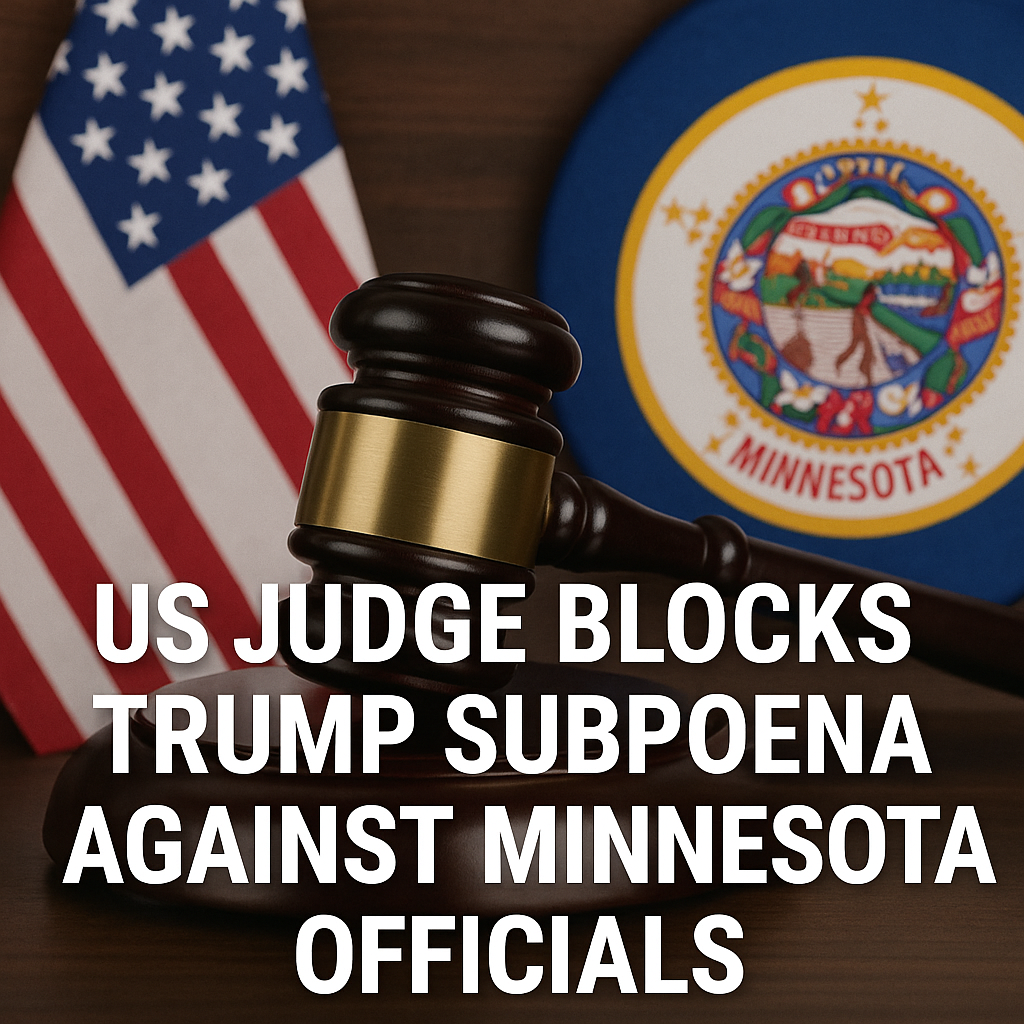
In a significant legal development, a U.S. federal judge has blocked a subpoena issued by the Trump administration against Minnesota officials, adding another layer to ongoing tensions surrounding political accountability and governance. This ruling highlights the complexities of federal versus state authority, especially in a politically charged environment.

The Context of the Subpoena
The subpoena sought documents and testimonies from state officials, aiming to investigate alleged irregularities related to the 2020 presidential election. Following his loss, former President Donald Trump has consistently claimed widespread voter fraud, though numerous courts and election officials have largely dismissed such allegations.


Opponents of the subpoena argued that it represented an encroachment on state sovereignty by a federal administration seeking to maintain a grip on political narratives. Concerns were particularly centered around the potential for the federal government to misuse its authority in this context.


Attorney General Keith Ellison of Minnesota expressed approval of the judge’s decision, characterizing the subpoena as an attempt to instill fear within state departments. Ellison was quoted stating, “This ruling confirms that the law protects our state officials from unjustified interference.” This sentiment echoes concerns voiced by other state officials who have stressed the importance of safeguarding election integrity and upholding states’ rights against perceived federal overreach.
Legal Perspectives and Implications
The judge’s decision has formidable implications, extending beyond the immediate case at hand. Legal analysts point out that it affirms the notion that federal entities cannot impose undue influence on state matters, particularly those as critical as elections. This rift suggests deeper fractures in the system, where both sides of the political spectrum are engaging in increasingly contentious battles over jurisdiction and authority.
Supporters of the Trump administration, however, view the ruling as another instance where the judiciary has purportedly hindered efforts to address what they consider legitimate concerns about electoral integrity. While detractors may cast such initiatives as harassment, proponents argue that oversight is paramount for democracy.
In balancing these perspectives, it’s crucial to consider that while the legal framework provides certain protections, the robustness of on-the-ground accountability and transparency measures is equally vital to establish public trust in electoral outcomes.
The Broader Political Landscape
This incident is emblematic of a larger struggle unfolding across the U.S., as political leaders and institutions grapple with the ramifications of the 2020 election cycle. The divide among American citizens regarding election integrity remains pronounced, presenting challenges for leaders seeking to foster a unified political environment.
Polls indicate a considerable portion of the population continues to harbor doubts about the legitimacy of the previous election, a sentiment that is notably reflected in ongoing legislative efforts across various states. These initiatives aim to tighten voting regulations, often framed by proponents as necessary for security but criticized by opponents as attempts to restrict access for marginalized communities.
The 2024 presidential election is fast approaching, and actions like these subpoenas could play pivotal roles in shaping voter sentiment and legislative agendas as states navigate the murky waters of legal, ethical, and political considerations. Engaging citizens in informed discussions about electoral processes may be integral to restoring public confidence, especially as polarized views dominate the political landscape.
Conclusion
The U.S. judge’s decision to block the subpoena against Minnesota officials underscores significant questions about the balance of power in the American political system. As the country moves closer to the 2024 presidential election, the implications of this ruling will likely reverberate through ongoing debates about election integrity, state rights, and federal oversight. While various viewpoints emerge, the necessity for a reasoned discourse and fair treatment in all political facets remains critically important as citizens navigate an increasingly complex governmental structure. As these discussions unfold, the focus must remain on ensuring transparency and integrity within the electoral process to foster trust among the electorate.