
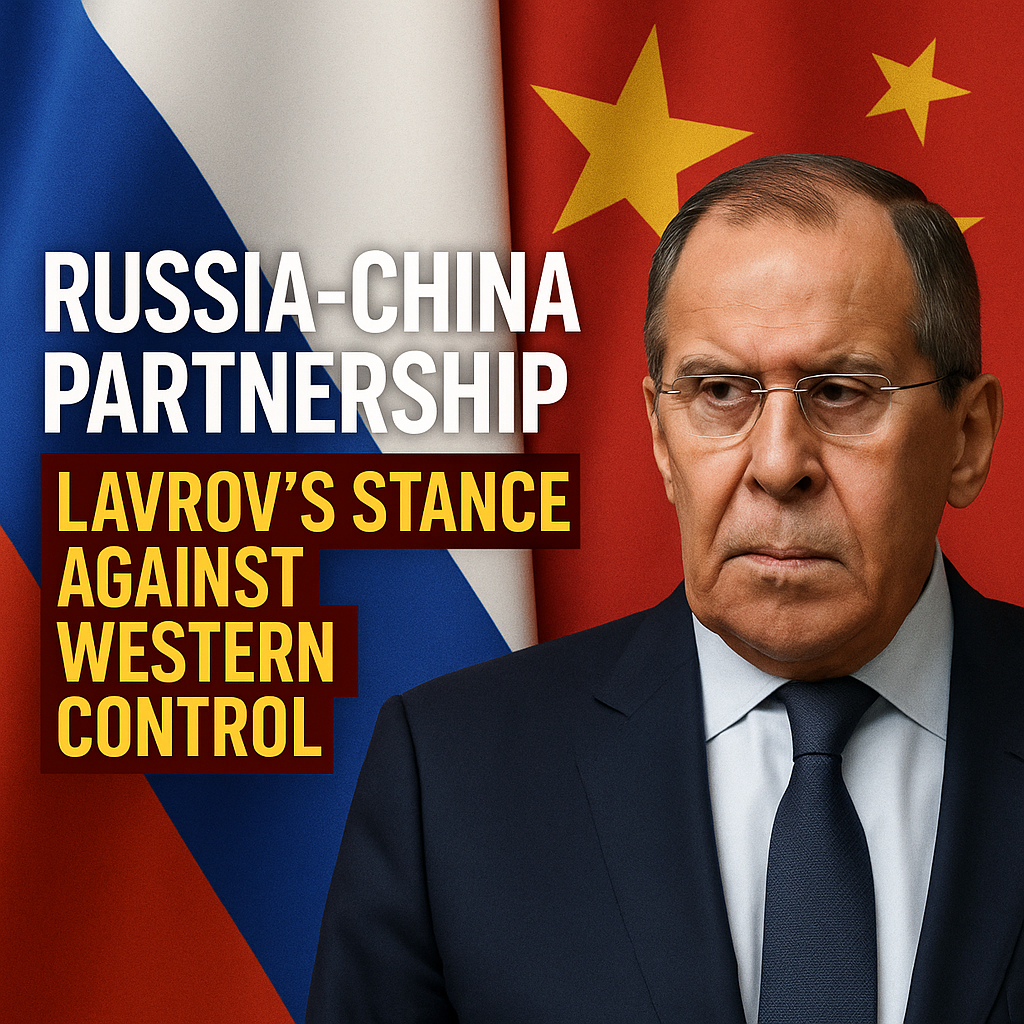
Russia-China Partnership: Lavrov’s Stance Against Western Control

Russia-China Partnership: Lavrov’s Stance Against Western Control
In recent discussions, Russian Foreign Minister Sergey Lavrov has articulated a robust stance on the growing partnership between Russia and China, positioning it as a counterbalance to perceived Western dominance. This perspective reflects a deepening geopolitical alliance that both countries believe is essential to assert their interests and sovereignty in an increasingly polarized global landscape.

The Foundations of the Russia-China Partnership
The relationship between Russia and China has significantly evolved over the past two decades. Historically characterized by skepticism and rivalry, the dynamic has shifted toward a pragmatic partnership focused on mutual benefits. Lavrov’s recent visit to China underscored this collaboration, marked by diplomatic and economic frameworks intended to strengthen bilateral ties.


Lavrov emphasized that the partnership is not a mere counterweight to Western influence but a pragmatic alignment based on shared interests. In a world increasingly shaped by unilateral actions from Western powers, both nations view their alliance as a means of asserting a multipolar world order. This sentiment is echoed by various analysts who argue that the relationship serves as a strategic hedge against the unpredictable actions of Western nations, particularly the United States.


Diverse Perspectives on Western Influence
While Lavrov frames the partnership as a natural evolution of strong ties, perspectives on Western influence diverge. Some commentators suggest that the partnership could lead to isolation for both countries, risking economic and diplomatic repercussions from the West. For example, nations aligning closely with China and Russia may find themselves subject to sanctions or diplomatic pressures, complicating their international relationships.
Conversely, supporters of the Russia-China partnership view it positively, asserting that it offers a viable alternative to a dominated Western framework. As both nations strengthen cooperation in sectors like technology and energy, there is optimism regarding the potential to reshape global economic norms.
Recent reports suggest increases in trade volumes between Russia and China, illustrating a growing interdependence. According to the Russian Ministry of Economic Development, trade surged by approximately 30% year-on-year, demonstrating the tangible benefits of enhanced relations. However, skepticism about the sustainability of this partnership abounds, particularly concerning China’s reliance on Russian energy exports in an uncertain economic climate.
Bridging Differences and Future Directions
As the partnership progresses, experts believe that the ability to manage internal differences will be crucial. Issues such as regional ambitions, historical grievances, and economic competition could pose challenges if not addressed effectively. For example, while both nations share common goals, their individual agendas could occasionally conflict, particularly in regions like Central Asia, where both seek influence.
Observers note that Lavrov’s rhetoric emphasizes mutual respect and understanding in navigating these complexities. This approach aims to mitigate potential frictions and portray a united front against Western criticism. However, the actual application of these principles in practice remains to be seen.
The Challenge of Global Perceptions
As Russia and China continue to strengthen their alliance, the challenge remains in how this partnership is perceived globally. The West has frequently labeled the collaboration as a threat to democratic values and global stability. This perception is echoed by several Western commentators who warn of an emerging authoritarian axis.
In contrast, advocates within Russia and China argue that their partnership promotes a rebalancing, offering nations an option devoid of Western imperialism. They envision a future where non-Western countries can navigate their interests independently, free from the pressures of imposed ideologies.
Conclusion: The Complexity of a Shifting Landscape
The evolving Russia-China partnership, as articulated by Lavrov, is emblematic of a larger geopolitical response to Western hegemony. It highlights the complexities of international relations and the varied viewpoints surrounding such alliances. While there are unmistakable benefits, apprehensions persist about the long-term viability and unintended consequences of such a partnership.
As both countries navigate this intricate landscape, the ability to foster cooperation while managing divergent interests will be pivotal. While the path forward is fraught with uncertainties, one thing remains clear: the dynamics of global power are shifting, and the Russia-China partnership will play a significant role in shaping the future of international relations.















