
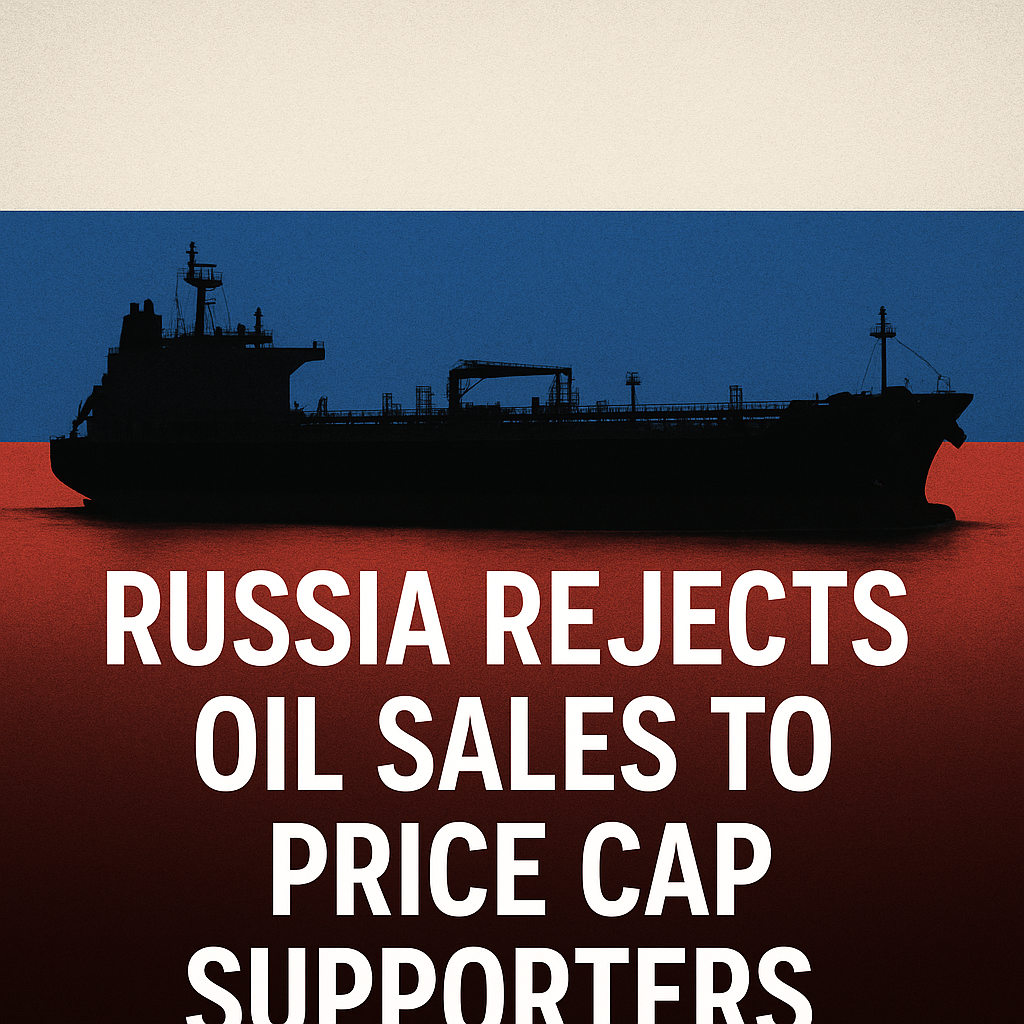
Russia Rejects Oil Sales to Price Cap Supporters

Russia Rejects Oil Sales to Price Cap Supporters
In an increasingly complex global energy landscape, Russia’s recent decision to refuse oil sales to nations endorsing a price cap has garnered considerable attention. This bold move further emphasizes the ongoing tensions between Russia and Western countries, particularly in the context of the ongoing conflict in Ukraine and subsequent sanctions.

The Price Cap Debate: A Closer Look
The price cap, introduced by G7 nations and the European Union, aims to limit the revenue that Russia can generate from its oil exports, fundamentally altering the dynamics of global oil markets. While proponents argue that this measure is essential for undermining Russia’s war funding, critics assert that such actions could have unintended consequences, including potential spikes in global oil prices.


On one side of the debate, some analysts assert that the price cap could benefit consumers and help stabilize the energy market. A report from Al Jazeera indicates that lowering Russia’s oil revenue could diminish its capacity to finance military operations while pushing for alternative energy sourcing among Western nations. The G7’s intent was to strike at the heart of Russia’s economic interests in light of geopolitical tensions.


Conversely, Russian officials, including Deputy Prime Minister Alexander Novak, have condemned the price cap as an illegitimate tool of economic warfare. In response, Novak declared, “We will not supply oil and oil products to countries that directly or indirectly support the price cap.” This statement underscores Russia’s resolve to shield its economic interests despite external pressures and signals a willingness to play hardball in global trade.
Impacts and Reactions
Economic Repercussions
The repercussions of Russia’s decision are multifaceted. Firstly, the refusal to engage in oil sales with price cap-supporting nations could lead to a notable reduction in supply to these markets, potentially resulting in higher oil prices worldwide. According to reports from Sky News, energy imports from Russia have already seen notable declines as countries attempt to align with the sanctions.
Additionally, the move could force countries, particularly those in Europe reliant on Russian fossil fuels, to explore other energy sources or suppliers. Such a transition may present logistical challenges, leading to short-term fluctuations and volatility in the international energy market.
Moreover, other oil-exporting nations may seize the moment to increase their market shares, creating further strain on existing supply chains. Countries like Saudi Arabia and the United States may find new opportunities to fill the void left by Russian oil, potentially reshaping the global oil economy.
Political and Strategic Considerations
Politically, Russia’s rejection of the price cap illustrates its defiance against Western sanctions, showcasing a determination to maintain its sovereignty in energy sales. This strategic stance may resonate well with countries looking to counter Western influence, such as those in Asia or Africa, who may view Russia’s resilience as a form of resistance against Western hegemony.
However, not all international actors may share this perspective. Some countries dependent on Russian oil might face economic instability as they navigate the realities introduced by the price cap. A nuanced understanding of global politics is essential for appreciating how these developments affect various nations differently.
While some would argue that Russia’s firm stance strengthens its position in the marketplace, it may also isolate the country further, potentially pushing it to rely on a limited set of partners who are willing to engage under these conditions.
The Road Ahead: Uncertainties and Opportunities
As the situation evolves, several uncertainties loom regarding the long-term effects of Russia’s ban on oil sales to price cap supporters. Will this lead to a significant recalibration of global oil prices, or will alternate arrangements neutralize the intended economic sanctions?
Furthermore, the ramifications extend beyond simple economics; they touch on the geopolitical motivations of nations worldwide. The pursuit of energy independence has never been more critical, and the global community must navigate these waters carefully to avoid unintended consequences that may deepen divides among nations.
In conclusion, while the decision by Russia to reject oil sales to certain countries creates immediate tension in the energy markets, its long-term impact remains to be fully understood. As countries reevaluate their energy strategies in light of such deflections in trade dynamics, the ongoing discourse surrounding energy security will likely grow more complex and multifaceted. Staying attuned to the evolving geopolitical landscape will be essential for understanding the implications for global energy, economics, and international relations.















