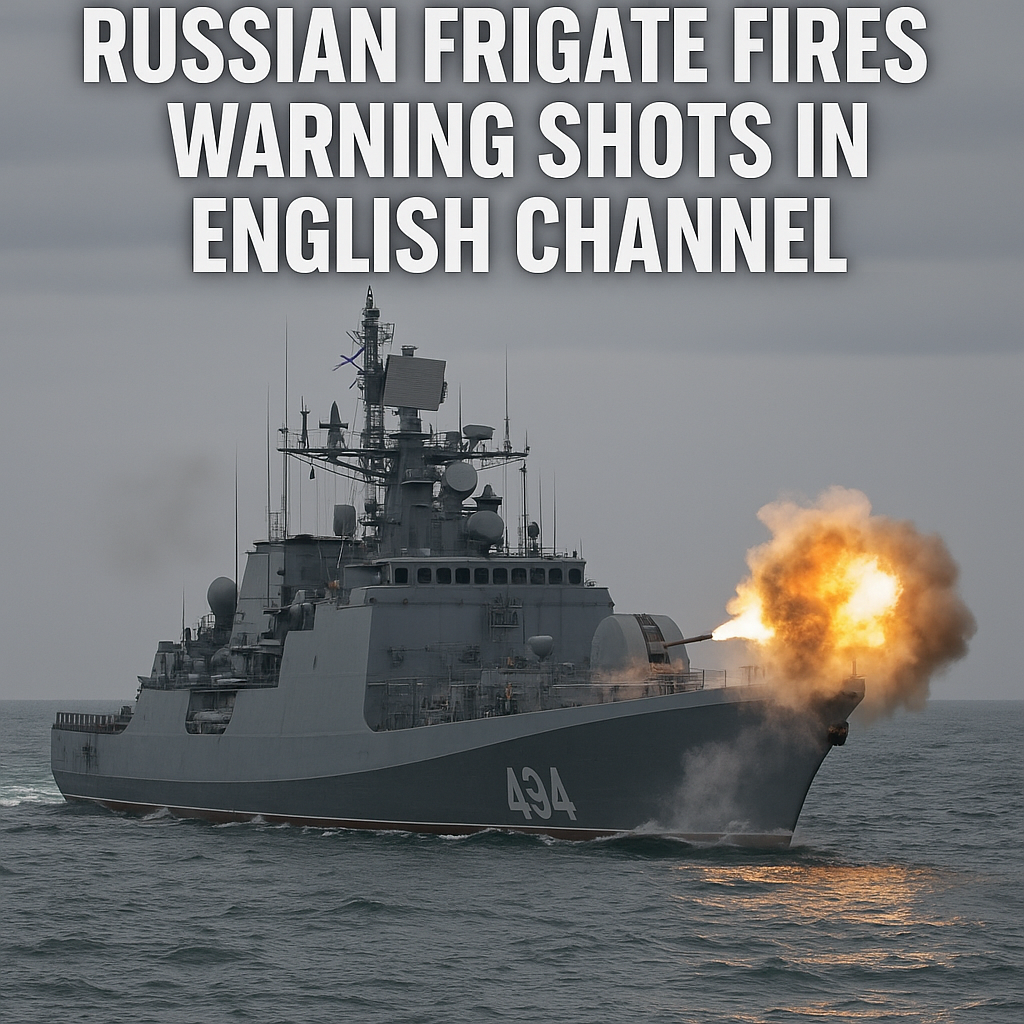
Russian Frigate Fires Warning Shots in English Channel

Tensions Rise: Russian Frigate Fires Warning Shots in English Channel
A recent incident in the English Channel involving a Russian frigate has spotlighted ongoing geopolitical tensions between Russia and the West. The frigate reportedly fired warning shots toward a British warship, prompting both concern and condemnation from various stakeholders. This provocative act raises important questions about maritime safety, international law, and the broader implications for East-West relations.

The Incident: What Happened?
On [insert specific date], the Russian frigate Admiral Gorshkov was involved in a contentious altercation with the UK warship HMS Defender. According to reports from RT, the Russian vessel fired warning shots after allegedly perceiving the British ship as aggressive. The incident unfolded during a time when military exercises were ongoing in the region, making the waters particularly sensitive. The Admiral Gorshkov had been navigating through what Russia claims as its territorial waters, while the UK maintains that the ship was operating in international waters.


Contrastingly, Sky News emphasized that the British government deemed Russia’s actions as “unprofessional,” reinforcing NATO’s commitment to ensure freedom of navigation. Officials from the UK Ministry of Defence stated that the HMS Defender was conducting routine operations and had not strayed into any territorial waters, thereby bolstering claims by Western nations of their right to operate unhindered in open seas.


Evolving Perspectives: Russia’s Justification vs. Western Critique
From the Russian perspective, the commanding officials argue that their response was necessary in light of what they describe as increasing provocations from NATO forces. A spokesperson for the Russian Defence Ministry was quoted saying, “We will not tolerate the aggressive behavior of foreign warships in our waters.” This sentiment echoes broader Russian military doctrine which has increasingly highlighted the need to respond robustly to perceived threats.
In stark contrast, Western analysts tend to frame the incident within a larger context of Russian aggression in the region. Al Jazeera pointed out that such incidents are not isolated but form part of a series of escalations. The HMS Defender incident could be viewed as a direct challenge to Russian maritime authority, positioning the UK and NATO as steadfast defenders of international norms against perceived Russian expansionism.
Geopolitical Implications: A Worrying Trend?
The firing of warning shots is emblematic of a rapidly deteriorating security environment in European waters. Experts fear that these types of incidents could inadvertently escalate into more significant military confrontations. Concerns have been raised about the potential for miscommunication or miscalculation resulting in armed conflict.
Furthermore, international law, particularly maritime law, complicates the matter. Both sides have made legal claims to support their narratives, but the interpretations vary widely. The Law of the Sea recognizes specific territorial waters, but definitions vary, especially in politically charged contexts. This ambiguity may exacerbate tensions as naval forces conduct maneuvers that challenge each other’s assertions of sovereignty.
The Way Forward: Navigating Conflict
Moving forward, diplomatic channels must remain open to ensure that such incidents do not spiral into larger conflicts. Analysts suggest a renewed focus on establishing confidence-building measures, such as agreed-upon protocols for military interactions in shared waters. Enhanced communication between NATO and Russian military forces could also reduce the likelihood of future confrontations.
While some experts caution against overreacting to these warning shots, others argue that they signal a concerning trend of increasing assertiveness from Russia, demanding vigilant responses from Western nations. European leaders have called for a firm but measured approach, balancing the need for national defense with the importance of maintaining diplomatic relations.
In conclusion, the recent incident involving the Russian frigate serves as a stark reminder of the complex, multifaceted nature of international relations in the region. Navigating the delicate balance between deterrence and diplomacy will be crucial in the coming weeks and months as both sides take stock of the repercussions of this maritime standoff.