
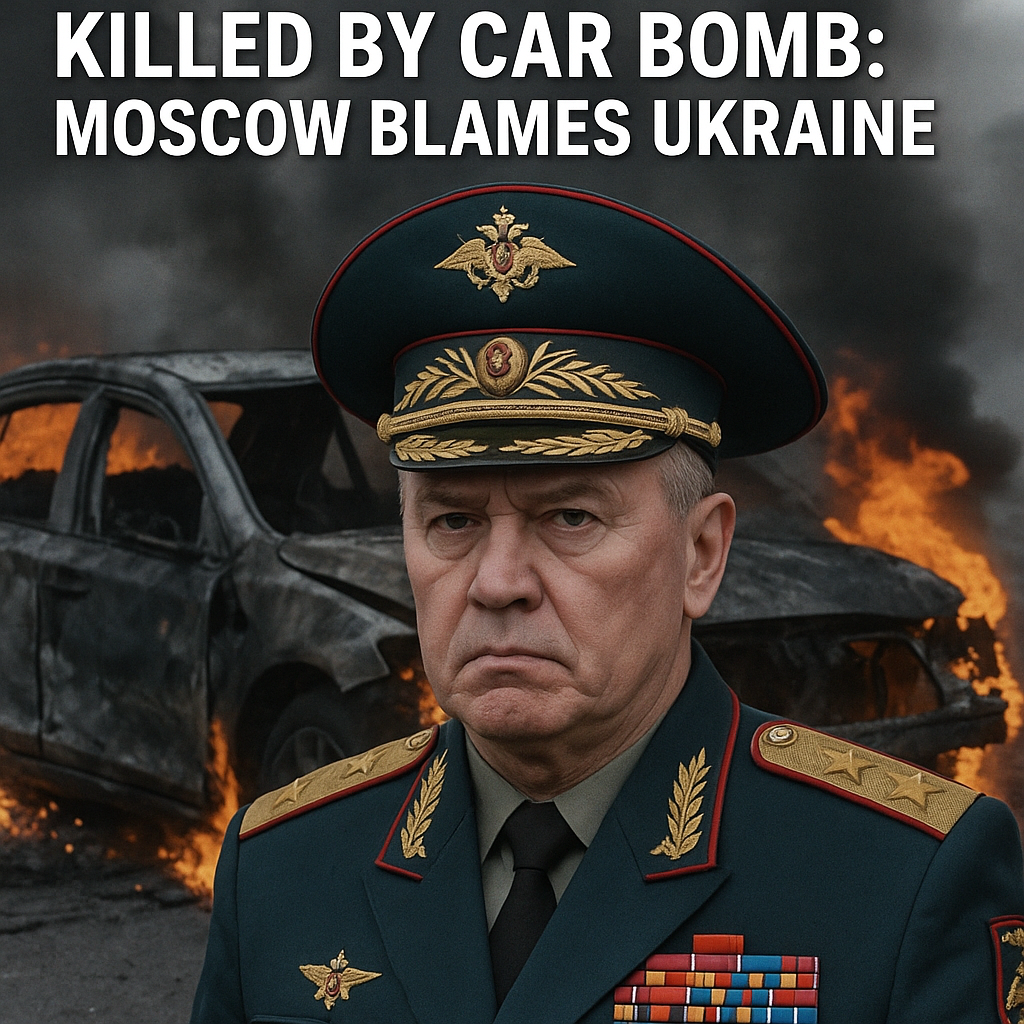
Russian General Killed by Car Bomb: Moscow Blames Ukraine

Russian General Killed by Car Bomb: Moscow Blames Ukraine
In a significant escalation of the ongoing conflict, the death of a Russian general due to a car bomb has intensified the blame game between Moscow and Kyiv. This act of violence raises questions about the implications it could have on the war and the broader regional dynamics.

The Incident and Immediate Reactions
The Russian defense ministry reported that Major General Vitaly Gerasimov was killed in a car bomb explosion near Kharkiv, a key battleground in eastern Ukraine. Officials in Moscow quickly characterized the bombing as a deliberate attack orchestrated by Ukrainian forces, underscoring the deteriorating relationship and persistent accusations exchanged between the two sides.


Reports indicate that this incident marks a notable loss for the Russian military, as Gerasimov had played a critical role in operations in Ukraine. Experts emphasize that such high-profile fatalities can significantly impact troop morale and operational strategies on the battlefield.


Conversely, Ukrainian officials have quipped that Russia is seeking to shift the narrative by blaming Ukraine for its internal failings. “They always have something to blame us for, but the real issue lies within their command structures,” stated an anonymous source within the Ukrainian military. This statement reflects a broader sense of defiance and resilience among Ukrainian forces, who seem unperturbed by accusations aimed at them.
Implications for the Ongoing Conflict
The killing of a senior military officer naturally raises questions regarding the repercussions for both armies involved and the trajectory of the conflict itself. Analysts are divided over whether such events could prompt a more aggressive Russian response or lead to a reevaluation of strategy.
Escalation vs. Strategy Reevaluation
1. Potential for Escalation
– Some analysts argue that the assassination could trigger a heightened military response from Russia. Historical precedents suggest that significant losses often provoke retaliatory measures aimed at both the immediate perpetrators and broader targets.
– The Kremlin may view this as a rallying cry to mobilize more resources and consolidate support at home, potentially justifying further military actions in Ukraine. Public sentiment may be swayed by the narrative of heroism and sacrifice, as portrayed in state media.
2. Reevaluation of Military Strategies
– On the flip side, the loss of a prominent general may catalyze a strategic reassessment within the Russian military. Experts point to this potential pivot as an opportunity for Russian leadership to reconsider its operational tactics and minimize exposure of high-ranking officers to the front lines.
– Such a shift may involve greater reliance on drone warfare, artillery, or remote operations to diminish risk. It remains to be seen how this will play out in terms of troop deployments and changes in operational planning.
A Complex Landscape of Accusations
The highly politicized nature of this situation reveals complexities that go beyond mere bombings and military operations. Both Russia and Ukraine use narratives strategically to bolster internal and international support for their causes.
Diverging Perspectives
– Russian Narrative: Moscow frequently frames its military efforts as necessary for national security; the death of a general reinforces their portrayal of Ukraine as a hostile force employing terror tactics. State-controlled media outlets emphasize the need for a united front in the face of external threats.
– Ukrainian Counter-Narrative: Conversely, Ukraine’s leadership contends that they are fighting for sovereignty and freedom from aggression, portraying such attacks not as acts of terrorism but as legitimate resistance against an occupying force. The Ukrainian sentiment stresses their right to defend their homeland, displaying a contrast in the outlook on military engagements.
Conclusion: An Uncertain Future
The assassination of Major General Gerasimov highlights the volatile nature of the conflict between Russia and Ukraine. While it is clear that this incident escalates tensions and contributes to the ongoing discourse of blame, the future of military strategies and international relations remains fraught with uncertainty.
As the war continues to unfold, the narratives crafted by both sides will play a crucial role in shaping public perception and influencing the course of events. The implications of this bombing extend beyond immediate military concerns, resonating with issues of governance, national identity, and international diplomacy. Both parties will likely continue to wield tragedies such as this one as instruments of propaganda, while the humanitarian cost of the conflict grows ever larger.















