
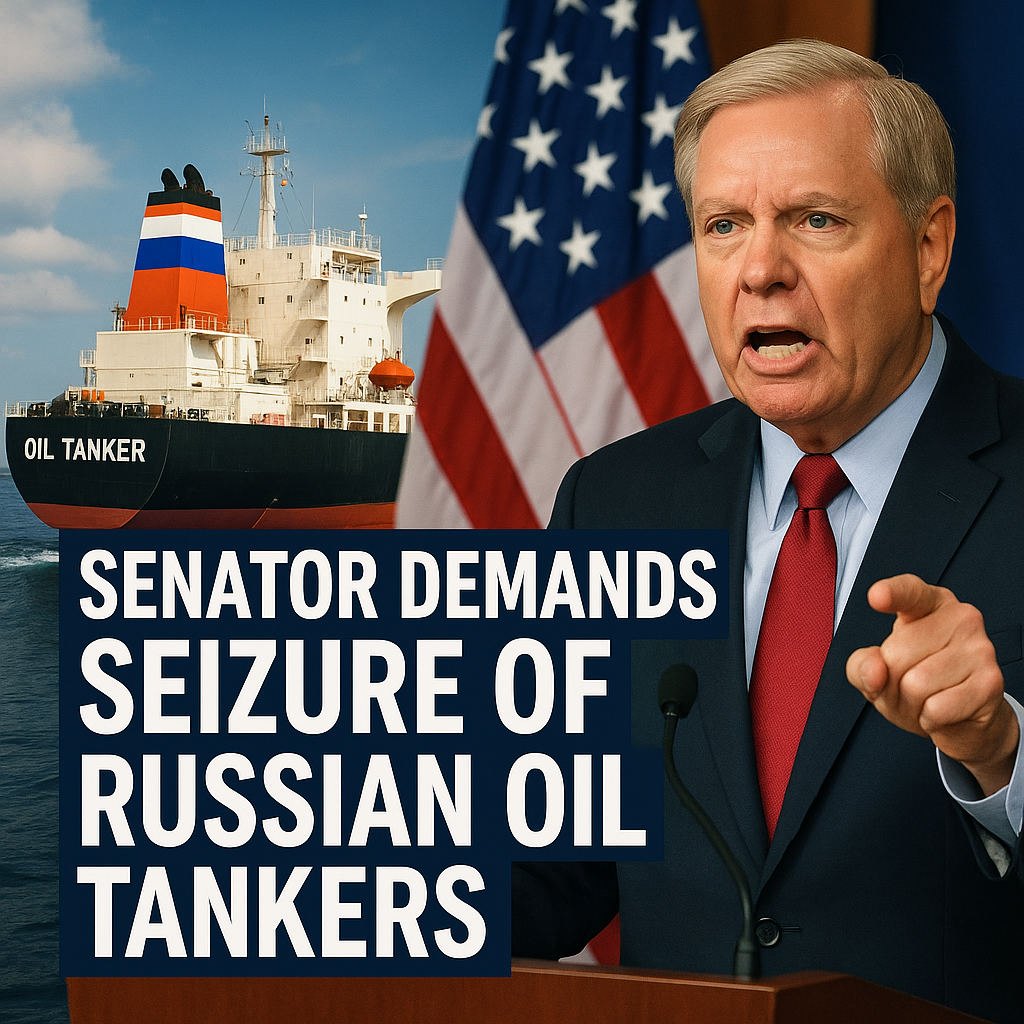
US Senator Demands Seizure of Russian Oil Tankers

US Senator Demands Seizure of Russian Oil Tankers
In recent developments, US Senator Lindsey Graham has advocated for the seizure of Russian oil tankers as part of broader sanctions aimed at applying pressure on Russia due to its ongoing military actions. This proposal has elicited a spectrum of reactions, reflecting the complexities of geopolitical relations and the global energy landscape.

The Call for Action
Senator Graham’s demand arises from the escalating tensions between the United States and Russia, particularly following the latter’s invasion of Ukraine. Graham’s stance aligns with the growing consensus among some US lawmakers advocating for stringent measures against Russia. His proposal includes not just the seizure of oil tankers but also introduces the idea of enforcing penalties on countries that continue to buy Russian oil.


This perspective is grounded in the belief that economic sanctions are essential tools for pressuring the Kremlin to change its course. For Graham, the stakes are high. “We should look at every single dollar that goes into Putin’s pocket,” he stated, underscoring the need for comprehensive action.


Diverse Viewpoints on Seizure Proposals
While the idea of seizing Russian oil tankers finds support among some policymakers, the international community exhibits cautious apprehension. Critics argue that such actions could trigger retaliatory measures and further escalate tensions between Russia and the West. A significant point from those against the seizures is the potential disruption to global oil markets, which might lead to increased prices and economic instability.
In addition, experts warn that enforcing such seizures could run afoul of international maritime law, complicating US efforts to navigate existing frameworks that govern global trade. Several analysts have pointed out that while sanctions can impact Russia economically, their effectiveness diminishes over time, particularly if countries like China and India, who maintain beneficial trade relations with Russia, continue to import crude oil.
Moreover, a recent article from Al Jazeera highlights that while Western nations grapple with diminishing supplies and rising energy prices, seizing oil tankers may have unintended consequences that could exacerbate an already fraught economic climate.
The Economic Implications
The call for action from Senator Graham intersects with broader economic realities. Oil is a critical commodity in global markets, affecting everything from consumer behavior to national economies. The potential seizure of oil tankers could disrupt supply chains, leading to volatility in global oil prices.
1. Impact on Global Oil Prices: Experts warn that such actions could prompt a spike in prices. If supply is curtailed, even temporarily, prices may rise, affecting consumers across the globe.
2. Geopolitical Ramifications: Beyond economics, the geopolitical implications of seizing Russian assets could be profound. It risks creating a precedent for maritime conflicts and undermining international cooperation in law enforcement at sea.
3. Energy Independence for the U.S.: As the US continues to ramp up its domestic production capabilities, it might stand to benefit from less reliance on foreign oil, making such aggressive steps less necessary. However, oil markets are interconnected; instability will reverberate.
Navigating Uncertainty and Outcomes
The proposal to seize Russian oil tankers thus embodies a contentious intersection of ethics, economics, and international relations. While the intent aims to hold Russia accountable, the long-term ramifications are layered with uncertainty. The potential for escalating tensions, disrupting global trade, and economic backlash raises critical questions:
– Can the US and its allies strike a balance between sanctioning Russia and maintaining stability in global markets?
– What strategies can be employed to prevent collateral damage to economies reliant on the energy supply chain?
– How can international maritime laws be navigated without compromising the underlying principles of free trade?
As the situation continues to evolve, the need for careful deliberation becomes increasingly apparent. Policymakers must balance their moral imperatives to respond to aggression with the pragmatic considerations that affect millions globally.
Conclusion
Senator Graham’s call for the seizure of Russian oil tankers stands as a pivotal move in a complex geopolitical chess game. It echoes the urgent need for decisive action against aggression while encapsulating the multifaceted challenges inherent in such strategies. The discussion surrounding this topic remains open-ended, with nuanced perspectives needed from both policymakers and the international community to ensure a comprehensive understanding of the implications ahead. Navigating these turbulent waters will require not just boldness but also prudence and foresight.















