
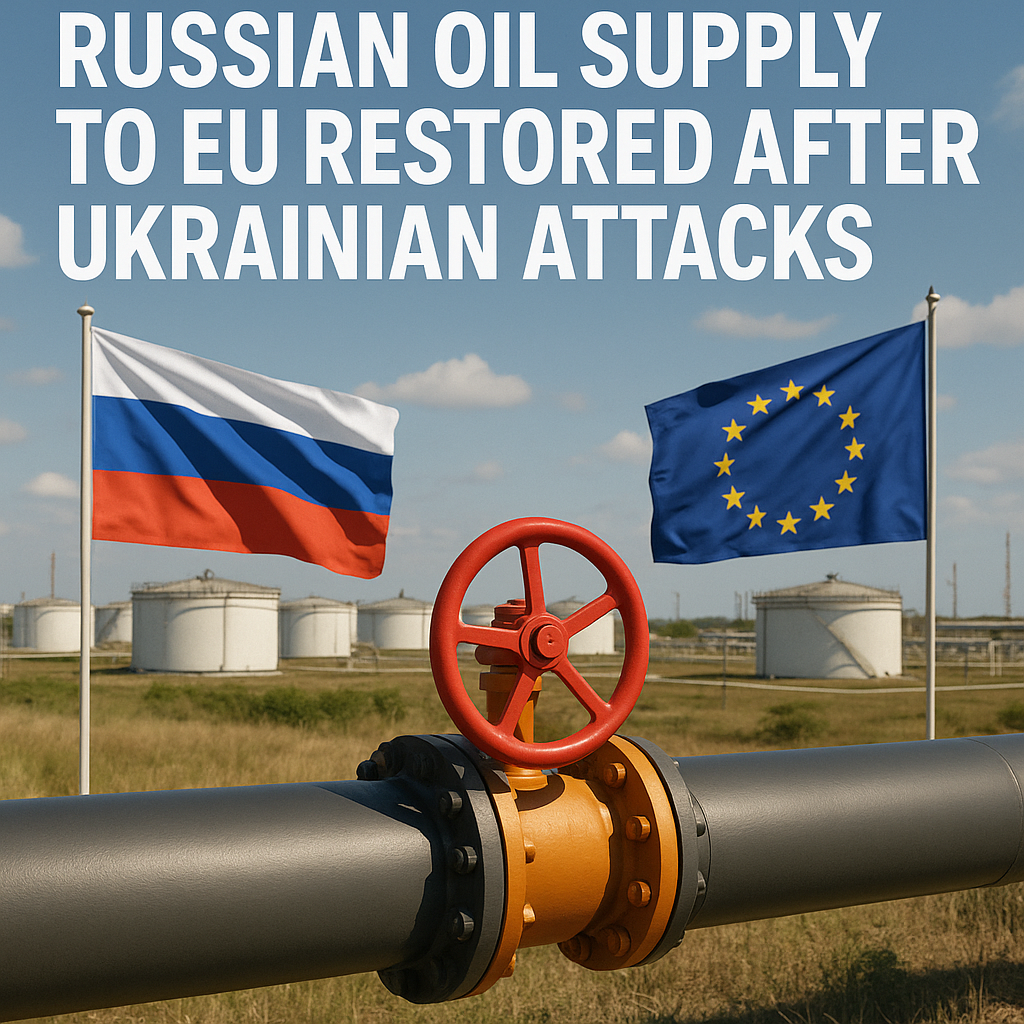
Russian Oil Supply to EU Restored After Ukrainian Attacks

Russian Oil Supply to EU Restored After Ukrainian Attacks
Recent developments following Ukraine’s ongoing conflict have led to the restoration of Russian oil supply to Europe, a move that has sparked discussions about energy security, geopolitics, and economic implications. The decision comes amid complex global dynamics, with opinions varying widely within political and economic spheres.

Restoration of Oil Supply: A Response to Disruption
Following a series of disruptions due to the escalating conflict in Ukraine, Russian oil shipments through the Druzhba pipeline have reportedly resumed. This pipeline is one of the largest infrastructure projects, allowing for the transport of crude oil across Eastern Europe. After attacks on the supply route, which reduced flow significantly, officials affirmed that deliveries were back to pre-disruption levels.


Russia’s Ministry of Energy announced the restart, signaling the country’s relentless commitment to maintaining its oil output, a crucial aspect of its economy and influence in global markets. Proponents argue that this restoration reflects Russia’s resilience and ability to navigate the challenging landscape posed by international sanctions and fluctuating demand.


However, critics point out the implications of such a restoration. Given the EU’s ongoing efforts to decrease reliance on Russian energy sources, the reintroduction of oil flows raises eyebrows regarding the bloc’s commitment to achieving energy independence. This contradiction also illustrates the significant role energy plays in diplomatic relations and economic strategies between nations.
European Response: Balancing Energy Needs and Ethical Considerations
The European Union finds itself at a crossroads, weighing its energy needs against ethical and geopolitical considerations. On one hand, restoring Russian oil supply could ensure stability in energy prices and availability, particularly as Europe faces rising costs and inflation. According to Al Jazeera, some EU member states are still heavily reliant on Russian energy supplies, raising concerns about the implications of cutting ties completely.
Conversely, there’s a strong sentiment among member nations advocating for a decisive shift away from Russian energy dependence. This faction argues that increasing reliance on Russia undermines European unity and compromises the EU’s stance against aggression in Ukraine. “The supply restoration is a pragmatic choice, but it also fuels the fire of Russian aggression,” stated a political analyst in a recent news piece.
The question of whether European economies can transition away from Russian oil without succumbing to economic instability remains a contentious issue. While some nations might continue to engage Russian supplies for immediate needs, others are pushing for renewable energy investments and other sources to diversify options long-term.
Potential Outcomes of Oil Supply Restorations
1. Stabilization of Energy Prices:
– A steady flow of Russian oil could alleviate some pressure on rising energy prices in the EU, especially in light of winter demands.
2. Geopolitical Tensions:
– Restored supplies might send mixed signals to Ukraine and NATO allies, potentially increasing tensions in diplomatic circles. How the West reacts to these developments will shape future relations.
3. Energy Transition Challenges:
– The continued reliance on Russian oil complicates the EU’s ambition for a swift transition to green energy solutions, with many analysts suggesting that immediate cuts may be economically infeasible.
4. Long-Term Strategic Implications:
– Engaging Russia for oil might provide short-term comfort but risks entrenching geopolitical vulnerabilities in the longer term. The EU must weigh the immediate benefits against future dependency risks.
Conclusion: A Delicate Balancing Act
The restoration of Russian oil supplies to Europe exemplifies the complex interplay of energy security, economic stability, and geopolitical strategy. While the immediate need for oil is clear, the longer ramifications of such decisions warrant careful consideration. As the EU navigates this tightrope, the focus will likely be on achieving a sustainable and resilient energy strategy that doesn’t compromise on ethical considerations or geopolitical stability.
In an era where energy politics increasingly dictate international relations, one thing remains certain: the situation is dynamic, with evolving implications that necessitate ongoing scrutiny and robust debate.















