
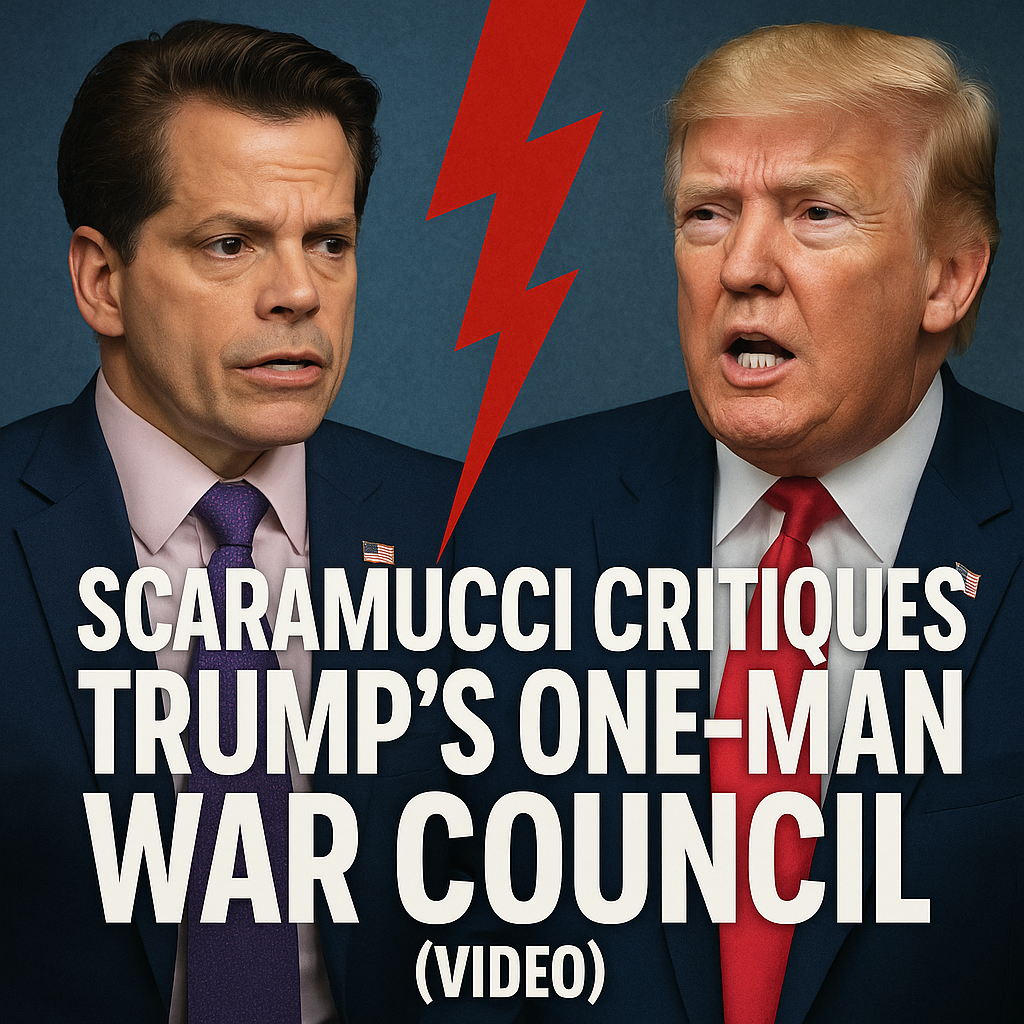
Scaramucci Critiques Trump’s One-Man War Council (VIDEO)

Scaramucci Critiques Trump’s One-Man War Council
In a recent discourse, Anthony Scaramucci has expressed significant criticisms regarding former President Donald Trump’s approach to foreign policy, particularly his reliance on a self-appointed “one-man war council.” This approach has generated considerable debate, stirring contrasting viewpoints from various political commentators and analysts.

The One-Man War Council: A Flawed Concept?
Scaramucci’s primary contention is that Trump’s governance style undermines traditional diplomatic frameworks and collaborative decision-making processes. During a discussion on recent televised interviews, he articulated concerns that Trump’s unilateral approach could lead to miscalculations, particularly in volatile regions like the Middle East. Scaramucci noted that a “one-man show” creates risks that could jeopardize U.S. interests globally.


Supporters of Trump tend to frame this approach as a demonstration of decisive leadership. By positioning himself as the key decision-maker, Trump presents an image of strength that some believe resonates with voters who favor a more aggressive foreign policy. This perspective is echoed in several conservative outlets, which argue that having a singularly focused strategy might cut through bureaucratic indecision, streamlining responses to international crises.


Reactions from Political Analysts
Contrarily, many analysts warn against the potential dangers inherent in Trump’s unilateralism. According to Al Jazeera, experts argue that effective foreign policy requires a nuanced understanding of global dynamics and alliances. The lack of consultation with seasoned diplomats or military advisors may lead to hasty decisions that could embroil the nation in conflicts without adequate justification.
A poignant example can be drawn from the Trump administration’s withdrawal from the Iran nuclear deal. Critics, including Scaramucci, argue that this move exemplified a disregard for the complexities of diplomacy, where collaborative approaches might have yielded more beneficial outcomes for U.S. interests. The former White House Communications Director pointed out that such choices underscore a troubling tendency toward isolationism.
Conversely, Trump’s defenders maintain that such bold tactics are necessary in navigating a world riddled with adversarial states. They argue that Scaramucci’s critiques may overlook the democratic mandate that Trump was given by his supporters to change the status quo.
The Broader Impact: Security and Diplomacy
The implications of Trump’s one-man war council extend beyond mere decision-making styles; they also touch upon the broader themes of security and diplomacy. The constant push and pull between unilateral action and multilateral negotiations remains a contentious topic historically and continues to shape modern political discourse.
Recent reports from RT emphasize the disharmony created within the Trump Administration, where conflicting opinions among advisors often lead to confusion and errors in judgment. The chaotic nature of these decision-making processes can result in a weakened strategic posture. While some view Trump’s direct engagement with foreign leaders as a means of cultivating relationships, others see it as potentially destabilizing, suggesting that consistent and inclusive dialogue is essential for long-term peace.
Weighing the Evidence
In weighing these diverse opinions, certain trends emerge. On one hand, Trump’s critics argue that an autocratic style of governance could lead to international backlash or unintended military engagements. They lean on historical precedents, such as the involvement in Iraq, to caution against impulsive decisions borne from singular authority.
On the other hand, proponents believe that Trump’s direct approach signals a departure from traditional constraints that may sometimes stifle prompt action. They assert that his candid nature may encourage authenticity in international relations, fostering relationships that could otherwise be stymied by over-cautious bureaucracy.
Conclusion: A Complex Terrain
The debate surrounding Trump’s one-man war council reveals a complex intersection of leadership style, foreign policy effectiveness, and international diplomacy. While Scaramucci’s critiques underscore significant concerns about the implications of unilateral decision-making, supporters of Trump argue for a necessary upheaval of conventional diplomatic practices.
As the political landscape continues to evolve, it remains essential for analysts, commentators, and policymakers to engage holistically with these issues. The uncertainties surrounding the effectiveness of such leadership models highlight an ongoing debate that is far from settled. Effective foreign policy will likely require striking a nuanced balance between decisiveness and accountability—one that transcends individual personalities in favor of collaborative governance aimed at fostering global stability.















