
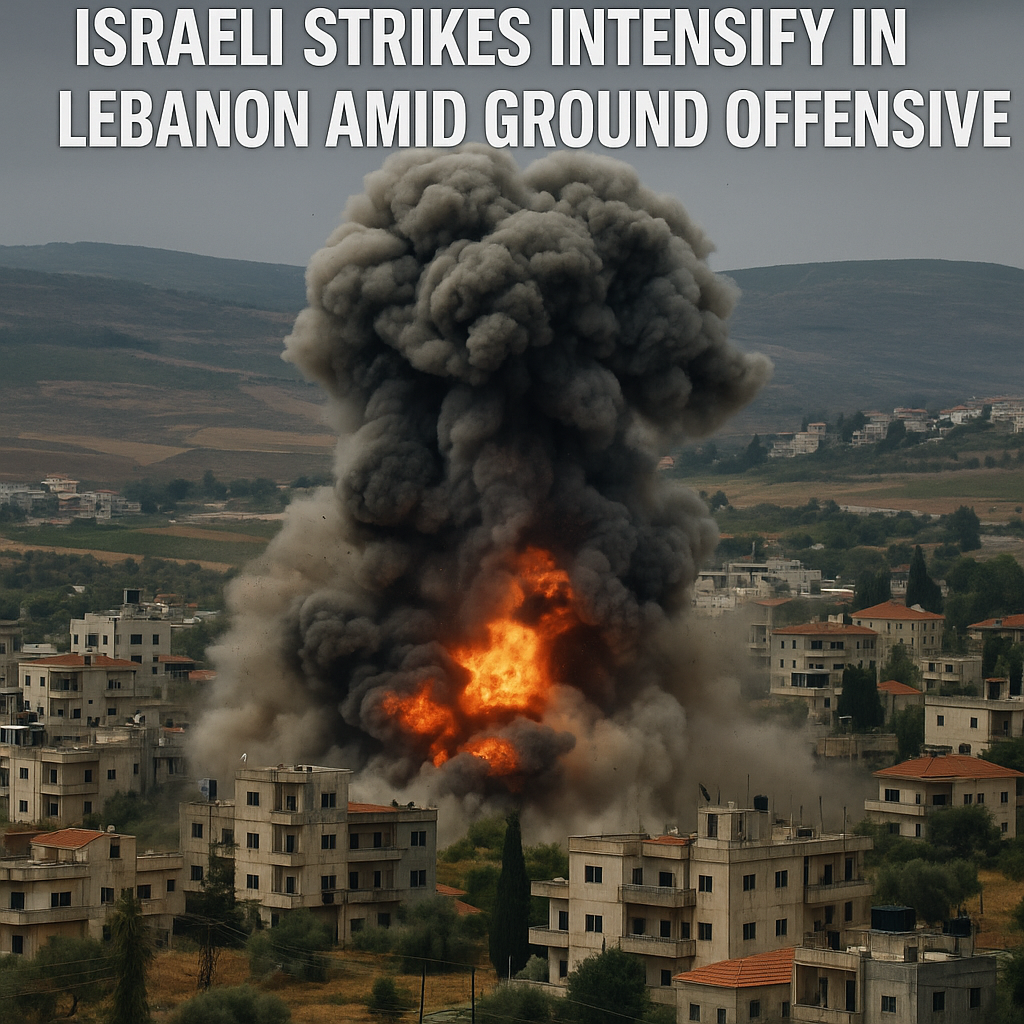
Israeli Strikes Intensify in Lebanon Amid Ground Offensive

Israeli Strikes Intensify in Lebanon Amid Ground Offensive
Israeli strikes have intensified in Lebanon, showcasing a significant escalation in military operations. The geopolitical landscape has become increasingly complex, with implications extending well beyond national borders. Understanding the multifaceted nature of this conflict requires a careful examination of recent developments and their broader context.

Context of the Escalation
The recent uptick in violence comes amid heightened tensions in the region. Israel has launched a series of airstrikes targeting what it claims are Hezbollah positions within Lebanon. The Israeli government justifies these actions as necessary to protect its national security, especially in light of cross-border attacks that have reportedly originated from Lebanese territory. As the situation escalates, the humanitarian implications for civilians in both Israel and Lebanon cannot be overlooked.


Perspectives from the Ground
Multiple sources provide diverse perspectives on the current escalation. According to reports from Al Jazeera, Israeli airstrikes have struck areas in southern Lebanon, where officials claim they are aiming to dismantle Hezbollah’s military capabilities. In contrast, Hezbollah has vowed to retaliate, reiterating its commitment to resist what it views as Israeli aggression. This cycle of retaliation raises questions about the potential for an even broader conflict in the region.


RT News presents a viewpoint that underscores the historical context of such hostilities. It’s essential to recognize that this is not an isolated incident but part of a prolonged conflict that has deep roots in territorial disputes and nationalist sentiments. The historical grievances between Israel and Lebanon, particularly regarding Hezbollah’s role as a resistance movement, play a significant role in shaping the narrative around these strikes.
Humanitarian Concerns Are Paramount
As military operations escalate, the humanitarian costs become increasingly pressing. Reports indicate that civilian casualties are rising in Lebanon due to the ongoing airstrikes. Sky News has highlighted that regions heavily populated by civilians have not been spared, underscoring the urgent need for international actors to intervene and facilitate a ceasefire.
The United Nations has called for restraint on both sides, stressing that civilian lives should be prioritized amidst ongoing military engagements. The consequences of sustained airstrikes on infrastructure in Lebanon could lead to a long-term humanitarian crisis, something that both Israeli and Lebanese authorities must weigh heavily in their strategic calculations.
The International Response
Reactions from the international community have been varied. While some nations express support for Israel’s right to defend itself, others have condemned the airstrikes, emphasizing the need for dialogue over military solutions. The responses highlight a significant division within the international community regarding how to approach the burgeoning crisis.
Moreover, regional players have been vocal, with several Arab nations urging for a peaceful resolution. The situation reflects a broader struggle for influence in the Middle East, where power dynamics are constantly shifting. Iran’s support for Hezbollah complicates matters further, as they view the group as a critical ally in countering Israeli actions.
Conclusion: A Path Forward?
As the dust settles on these intensified strikes, the path to de-escalation remains uncertain. Dialogue between Israel and Hezbollah appears to be a slim possibility under the current circumstances. The international community faces a steep challenge in mediating a situation that is deeply entrenched in historical grievances and national interests.
In a scenario laden with complexities, open communication and a focus on humanitarian concerns are critical. As military actions continue to unfold, the world is reminded that lasting peace can only be achieved through negotiation and understanding rather than continued conflict. While the situation remains fluid, the hope for a resolution must not wane, as the stakes are high—not only for the immediate parties involved but also for regional stability and global peace.















