
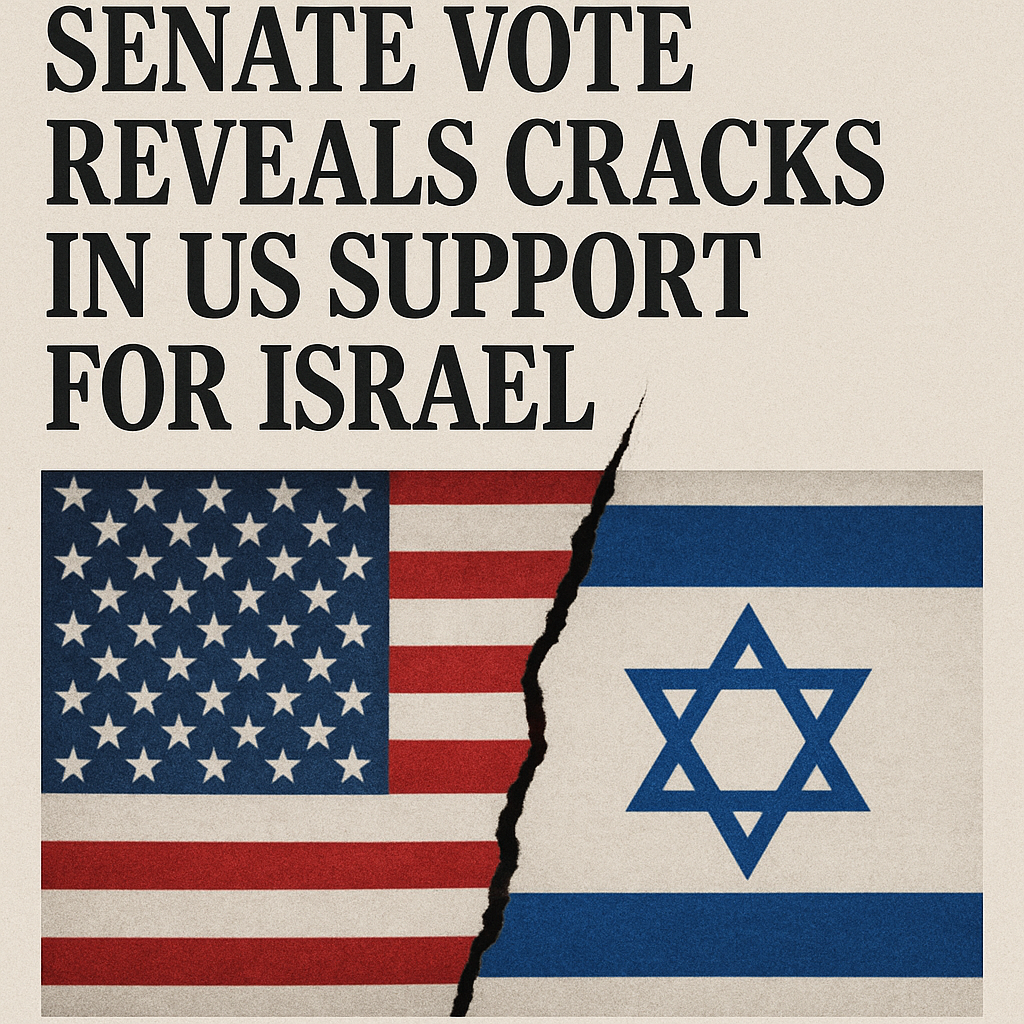
Senate Vote Reveals Cracks in US Support for Israel

Senate Vote Reveals Cracks in US Support for Israel
Recent Senate votes have spotlighted significant fissures in the longstanding bipartisan support for Israel in the United States. This growing divergence reflects a broader debate about U.S. foreign policy and its implications not only for American interests but also for the geopolitical dynamics in the Middle East.

A Shift in Consensus
The Senate’s recent discussion surrounding arms sales to Israel illustrates a burgeoning divide between traditional advocacy for Israel within the legislative branch and a growing number of lawmakers questioning the implications of unconditional support. Historically, U.S. backing for Israel has been robust, characterized by military aid and political alliances. However, recent votes have shown increased reluctance among some Senators, indicating a potentially transformative moment in U.S.-Israel relations.


According to Al Jazeera, a rare bipartisan dissent occurred, with a number of Senators expressing concerns about the human rights implications of Israel’s military actions and the potential consequences of U.S. military aid. This critique is not just coming from self-identified progressives; moderates have also begun to voice opposition, signaling a significant shift in the political landscape.


Competing Views on U.S. Policy
The complexities surrounding U.S. support for Israel are amplified by varying perspectives within Congress. On one hand, proponents of continued support argue that Israel is a crucial ally in a tumultuous region, essential for U.S. strategic interests. As one senator stated, “Israel faces constant threats, and our support is vital for its security and democratic values.” This viewpoint underscores the Israeli narrative about the pressing threats that the nation faces.
Conversely, as reported by RT, opponents within the Senate highlight the moral implications of enabling military actions seen by many as aggressive. Critics argue that the U.S. should reconsider its role as an unwavering supporter of one side in the Israeli-Palestinian conflict. A growing number of lawmakers advocate for a more balanced approach that also acknowledges the rights and humanitarian needs of Palestinians. This shifting sentiment is increasingly reflected in grassroots movements throughout the country, which call for a reassessment of traditional policies that have long been taken for granted.
The Role of Public Opinion
Crucially, public sentiment regarding Israel has also started to reflect these changing perspectives. Data from various polls indicates that younger Americans are more inclined to support Palestinian rights, a trend that aligns with the increasing calls to reassess the U.S. financial support of Israel’s military capabilities. This disconnect between younger voters and more established political views in Washington may motivate future legislative changes.
The recent discord in the Senate not only sheds light on political dynamics but also highlights a broader reconsideration of foreign policy and human rights advocacy. While supporters of Israel stress the strategic importance of military aid, critics argue for a more equitable stance that respects human rights across the board.
Navigating Uncertainty and Complexity
The implications of these Senate votes extend beyond immediate political chatter. They suggest a NAScent reevaluation of what support for Israel should entail in a modern context, one where humanitarian considerations cannot be sidelined. The tensions observed in the Senate could represent a pivotal moment, one where traditional bipartisan consensus begins to fray and where lawmakers are pressured to reflect their constituents’ evolving views.
The uncertainties are palpable, with no clear consensus emerging on how best to achieve a sustainable relationship with Israel while advocating for peace and justice in the region. As such, this complexity requires not only careful scrutiny but also open dialogue among policymakers, stakeholders, and the public.
Conclusion: The Path Forward
The Senate’s recent vote on military aid to Israel signifies more than just a legislative decision; it is a reflection of a society in flux, grappling with critical questions about ethics, justice, and international relations. The cracks in U.S. support for Israel reveal a broader narrative of change, and it is vital that the dialogue continues to evolve in a manner that is thoughtful and conscious of both Israeli and Palestinian narratives. As discussions proceed, the challenge will be balancing security needs with a commitment to human rights—a tightrope that will require nuanced policy-making and vigilant engagement from all sides.















