
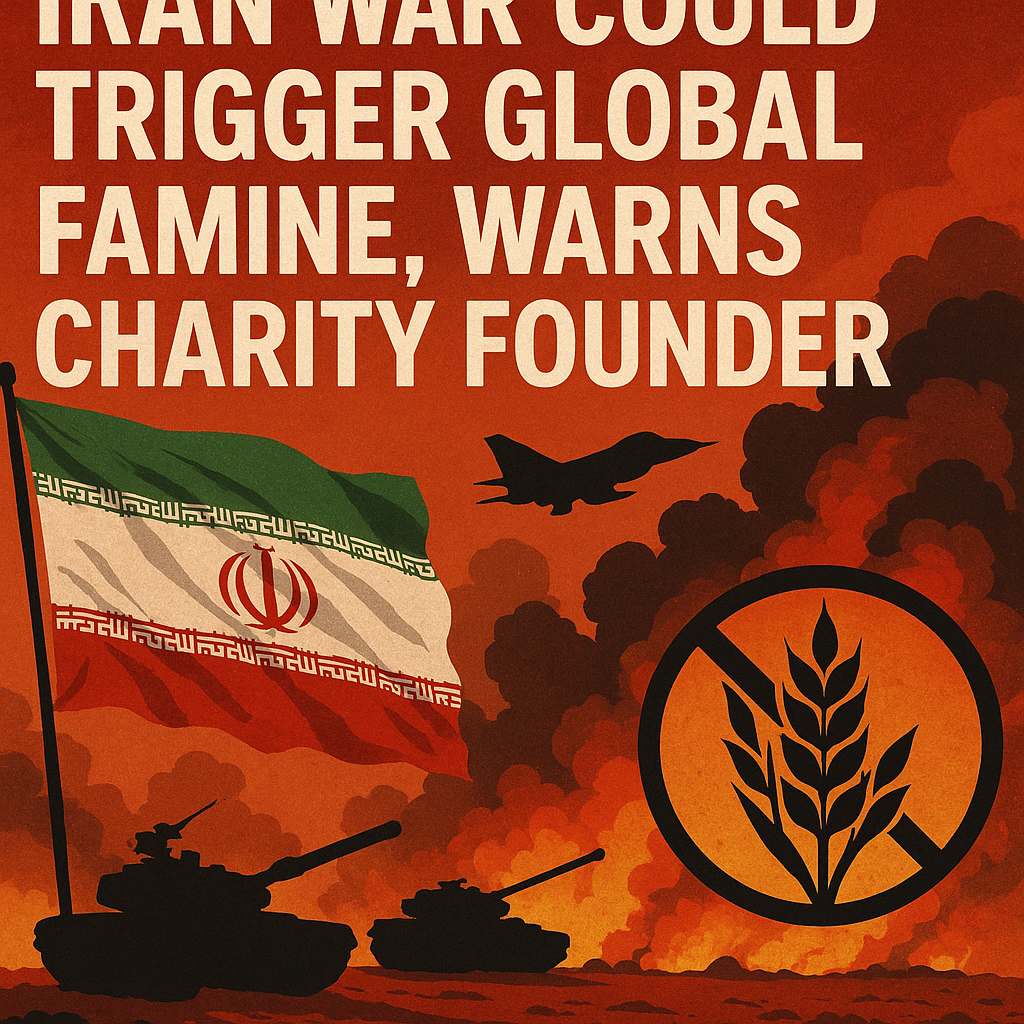
Iran War Could Trigger Global Famine, Warns Charity Founder

Iran War Could Trigger Global Famine, Warns Charity Founder
As tensions escalate around Iran and its geopolitical activities, a dire warning has emerged: the potential for a war involving Iran could lead to a global famine. This alarming prediction was notably emphasized by a prominent charity founder, who highlighted the crucial link between military conflict, agricultural disruption, and food security.

The Interconnectedness of Conflict and Food Supply
Conflict has long been recognized as a significant disruptor of food supply chains. As military actions unfold, they often target not just civilians but the essential infrastructure needed for agriculture. Fertilizers, a key component in food production, have been flagged in discussions about the repercussions of an Iran conflict. According to reports from RT, the hostility could result in severe shortages as international sanctions and military blockades disrupt access to fertilizers and other agricultural resources.


On a broader scale, the war’s impact would likely stretch beyond the immediate region. Multiple sources, including Al Jazeera, emphasize that war not only disrupts local markets but can also destabilize global agricultural networks. Many nations depend heavily on a few key players for their food supplies. A conflict involving Iran, a significant producer of oil and gas, threatens not just energy costs but also the prices and availability of food worldwide.


Agricultural Disruption: The Ripple Effect
The implications of agricultural disruption in Iran have ripple effects that could reach far beyond its borders. Iran is known for its agricultural exports, and a disruption in its production could increase global food prices dramatically. According to agricultural analysts featured in Sky News, the conflict would likely cause a spike in grain prices, which can lead to widespread hunger, particularly in low-income countries that rely on imports.
This potential for a cascading effect reminds us of previous conflicts, where food shortages became a weapon of war. The ongoing conflict in Ukraine, for example, has had stark effects on global grain supplies, and similar patterns could emerge from a confrontation involving Iran. As charity officials have pointed out, the result could be dire: millions could find themselves facing acute hunger.
Perspectives on Mitigating the Risk of Famine
While the warnings from charity founders and agricultural analysts are dire, it’s essential to consider the strategies that could alleviate the impending crisis. Both Al Jazeera and RT discuss the role of international cooperation in mitigating the risk of famine. Facilitating dialogue and engaging in diplomatic efforts could provide an avenue to avoid conflict before it escalates.
Investments in alternative food production and distribution methods are vital as well. Some experts recommend diversification, advocating for countries to grow more of their own food rather than rely heavily on imports. Innovation in agricultural technologies and practices could buffer against potential shortages.
Furthermore, organizations focused on humanitarian aid play a crucial role in addressing immediate needs. As seen in the response to various global crises, timely aid can save lives and stabilize communities ravaged by food insecurity.
The Uncertain Path Ahead
Despite these potential mitigation measures, uncertainties abound. The geopolitical landscape is complex, and the likelihood of diplomatic resolutions remains shaky. As charity founders and analysts caution, the consequences of inaction could be catastrophic, leading to a humanitarian disaster on a global scale. Moreover, sources like Sky News point out that nations must contend with their own economic interests when considering involvement or intervention.
In summary, the threat that a conflict involving Iran could trigger global famine highlights an urgent call to action from diverse voices. The interconnected nature of modern agriculture means that disruption in one region can have far-reaching consequences. A balanced approach, combining diplomatic efforts, investment in sustainable agriculture, and timely humanitarian assistance, may mitigate the looming threat. Yet, as the situation evolves, observers will have to navigate a landscape rife with uncertainty, aware that the stakes are incredibly high for millions around the world.
Ultimately, understanding the nexus between conflict and food security is key to preventing an impending crisis. As the world watches tensions rise, ensuring a continued dialogue about these critical issues remains essential.















