
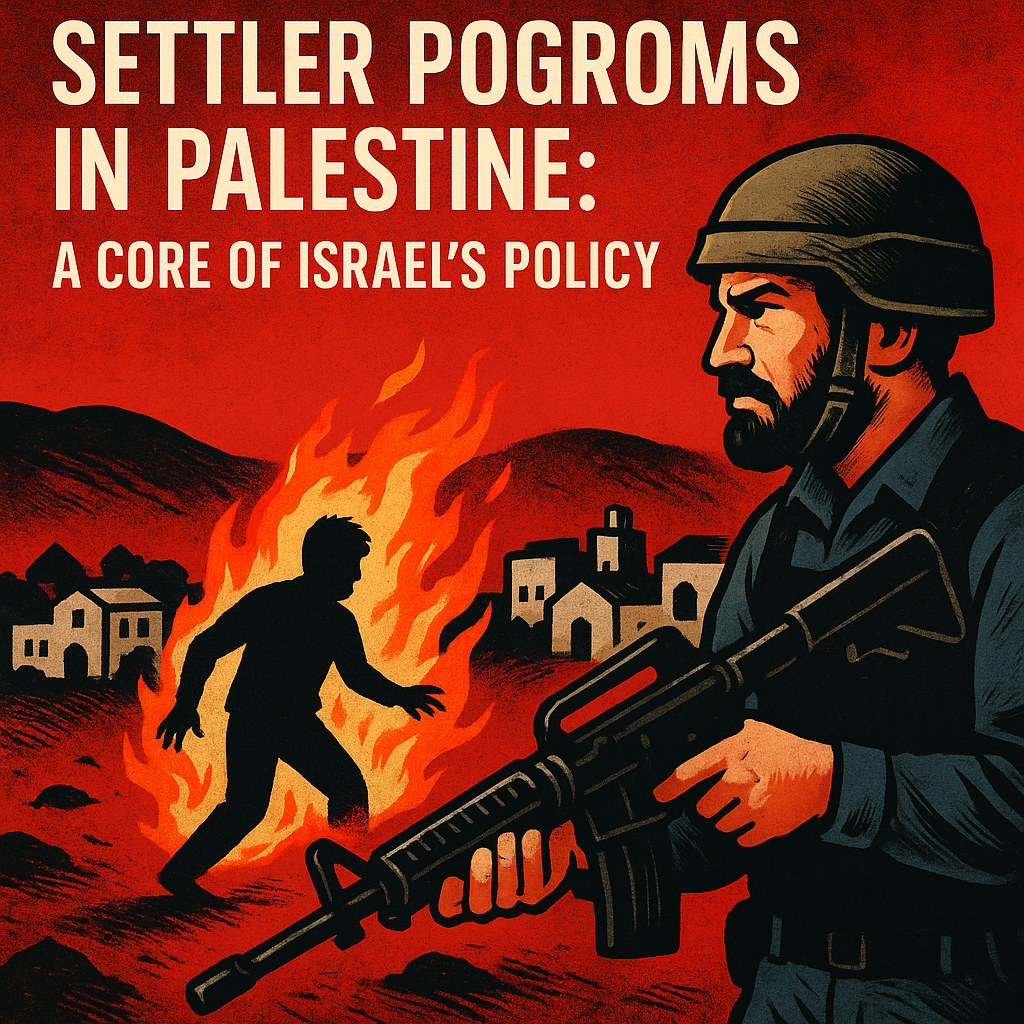
Settler Pogroms in Palestine: A Core of Israel’s Policy

Settler Pogroms in Palestine: A Core of Israel’s Policy
Settler pogroms in Palestine have become a contentious issue, reflecting deeper geopolitical tensions and igniting fervent debates over Israel’s policies and their implications for both Palestinians and Israelis alike. As the conflict evolves, understanding these violent episodes and the broader context surrounding them is essential for apprehending their significance in the ongoing strife.

Historical Context of Settler Violence
The phenomenon of settler violence against Palestinians is not a recent development; rather, it has roots in the broader Israeli-Palestinian conflict that dates back decades. Settlements are often viewed as manifestations of Israel’s policy aimed at occupying and asserting sovereignty over Palestinian territories. According to reports, these settlements are often accompanied by violence, coercion, and intimidation directed toward Palestinian communities.


Critical viewpoints such as those presented by Al Jazeera emphasize that these pogroms are not isolated incidents but are often tolerated or even encouraged by state mechanisms. Citing various instances of violence, Al Jazeera notes that settlers frequently engage in aggressive actions under what some consider a “culture of impunity.” On the other hand, sources like RT argue that recent governmental policy changes reflect a more pronounced support for settlers, indicating a strategic shift that may further entrench these violent actions into the fabric of Israeli policy.


The Dichotomy of Perspectives
A striking dichotomy exists in how these incidents are interpreted. Proponents of the Israeli government often frame this violence as a response to Palestinian actions, portraying settlers as individuals defending themselves and their communities. Reports from RT contend that many of the settlements sit in areas where security concerns are heightened, justifying actions taken by settlers as self-protective measures.
Conversely, human rights organizations and activists strongly criticize this justification. They argue that the systematic violence perpetrated by settlers against Palestinian citizens often goes unchecked, arguing that the Israeli government embodies a permissive attitude towards such acts of violence. Al Jazeera details incidents where even the Israeli Defense Forces (IDF) appear complicit by failing to intervene or by providing a semblance of support, reinforcing claims that these pogroms are integral to a wider policy of dispossession and displacement of Palestinians.
Factors Fueling Escalation
Several factors exacerbate this cycle of violence, making understanding them crucial for any nuanced discussion.
– Political Climate: The rise of far-right political entities within Israel has institutionalized support for settlements, emboldening settlers to act more aggressively against Palestinians. Recent elections have seen parties advocating for a hardline stance on settlements garnering significant political capital.
– Socioeconomic Conditions: Economic hardship among Palestinian communities contributes to tensions. Settlers often control valuable resources such as land and water, leading to escalating disputes, especially as drought and scarcity become more acute.
– International Dynamics: Geopolitical support for Israel from countries like the United States complicates international responses to settler violence. The lack of substantial repercussions continues to enable construction of new settlements and perpetrators of violence to operate with little fear of consequence.
Toward a Sustainable Solution
Negotiating a sustainable solution in light of these realities requires acknowledging the complexity of the situation. Critics argue that without addressing the underlying systemic issues driving settler violence, any peace negotiations will merely serve as a facade. As reported by both Al Jazeera and RT, bold steps toward re-evaluating policy and fostering dialogue between settlers and Palestinians must occur for lasting change to take root.
The Role of International Community
The international community has a critical role in fighting against these injustices. Measures such as diplomatic pressure, monitoring human rights violations, and ensuring accountability for acts of violence can provide a foundation for renewed dialogue. However, consensus on effective international intervention remains elusive, with different nations offering contrasting interpretations based on their geopolitical interests.
In summary, the topic of settler pogroms in Palestine encapsulates a multifaceted conflict characterized by historical grievances, nationalistic fervor, and international entanglements. The complexity demands an informed, balanced perspective that transcends simplistic narratives and engages with the realities on the ground. While some may argue for a more assertive Israeli policy of settlement and control, the long-term consequences of such actions could further destabilize an already fraught region.















